
Are you tired of watching your hard earned capital vanish due to slippage, emotional decisions, and unpredictable market reversals? You are not alone. The reality of active trading is harsh, and without a rigid system, the market will efficiently transfer your wealth to institutional players who thrive on retail inconsistency. In this article, you will discover the exact day trading strategies required to identify high probability setups, manage your downside risk, and protect your psychological capital. Read on to transform your market approach from gambling into a highly structured, profitable business that treats every trade as a calculated tactical maneuver.
For the modern entrepreneur, the financial markets represent the ultimate scalable business model. There is no physical inventory to manage, no shipping logistics to troubleshoot, and no supply chain bottlenecks. However, this absolute freedom is precisely why undisciplined individuals fail. When you are the CEO, the risk manager, and the executioner of your trading desk, you must operate with cold, mechanical precision. Adopting day trading strategies is not about predicting the future; it is about exploiting repeating psychological patterns in the market. By treating your capital as business inventory and your losses as standard operating expenses, you can build a sustainable framework that capitalizes on daily volatility.
The Core Elements of Profitable Day Trading Strategies
Before deploying capital, every trader must understand that strategy is only one piece of the puzzle. Liquidity and volatility dictate your potential for profit. You need markets that move enough to generate returns but possess enough depth to allow seamless entries and exits without significant price impact. This is where choosing the right instrument becomes critical. Whether you prefer forex pairs or indices, your success relies on precise execution and a deep understanding of market microstructure. Understanding how to properly enter a position is your first defense against unnecessary losses. You can master these mechanics by learning how to execute a profitable CFD trade.
Decoding Liquidity and Volatility for the Business Mind
To truly master day trading, you must understand the environment in which you are operating. “Liquidity” refers to the sheer volume of buyers and sellers actively participating in a specific asset at any given second. The EUR/USD currency pair or the S&P 500 index are highly liquid. If an entrepreneur i decides to execute a massive 10-lot buy order on the EUR/USD, the deep liquidity pool instantly absorbs that order without drastically changing the market price. High liquidity results in tight spreads, which lowers your cost of doing business.
“Volatility,” on the other hand, is the engine of profit. It measures how much the price fluctuates over a specific period. A market can be highly liquid but exhibit zero volatility (moving completely sideways), offering no opportunity for a day trader. Conversely, an illiquid market can be hyper-volatile, leading to dangerous price gaps and severe slippage. The elite day trader seeks the sweet spot: highly liquid instruments experiencing elevated, predictable volatility, often found during the overlapping hours of the London and New York trading sessions.
Momentum Trading: Riding the Institutional Wave
Momentum trading focuses on assets exhibiting strong directional price movement on high volume. Instead of trying to predict reversals, you simply join the existing trend until signs of exhaustion appear. This approach requires intense focus and rapid reaction times because trends can dissipate as quickly as they form. Herd behavior often drives these moves, as market participants rush to capitalize on a breaking news event or a technical breakout. For example, if a major central bank announces an unexpected interest rate hike, the relevant currency pair will experience an immediate volatility spike. A momentum trader waits for the initial consolidation and buys the subsequent breakout, effectively riding the backs of the institutional flow that fuels the move. Major financial outlets like Bloomberg frequently report on these macroeconomic catalysts, providing the fundamental backdrop for technical breakouts. To execute this effectively, you cannot afford platform lag. Your infrastructure must be absolutely flawless to ensure you enter at the optimal price point. Trade with precision: High spreads and slow execution will eat your profits alive. Secure ultra fast execution speeds and minimal latency by upgrading to our advanced MT5 trading platform today.
The Mechanics of Momentum Execution
Momentum is the physics of the financial markets: an object in motion tends to stay in motion until acted upon by an opposing force. Institutional capital acts as the initial thrust. When a massive hedge fund begins allocating billions into a specific asset sector, the price action creates a visible footprint on the charts—often characterized by large, consecutive, full-bodied candlesticks with very little wicking.
For entrepreneurs utilizing ultra-fast strategies like 1-Minute Scalping, momentum is your best friend. You do not need to capture the entire macroeconomic move; you only need to extract a small, highly probable slice of the pie. A classic momentum setup involves applying a fast Exponential Moving Average (EMA), such as the 9-EMA or 20-EMA, to your chart. When the price is surging and consistently finding dynamic support along the 9-EMA without breaking below it, the momentum is aggressively bullish. The strategy dictates buying the micro-pullbacks that touch the EMA, setting a tight stop loss just below it, and riding the institutional wave until a candle definitively closes below the moving average, signaling exhaustion.
Mean Reversion: Profiting from Overextended Markets
Markets rarely move in straight lines; they fluctuate in cycles of expansion and contraction. Mean reversion relies on the statistical probability that extreme price deviations will eventually return to their historical average. This strategy requires identifying overbought or oversold conditions using oscillators like the Relative Strength Index. The core philosophy is that prices act like a rubber band; the further they are stretched from the equilibrium, the greater the force pulling them back. A common doubt among new traders is: “What if the trend continues and never reverts?” This is the exact reason why mean reversion requires strict stop losses placed just beyond recent structural extremes. You are playing probabilities, not certainties. When a price stretches too far from its moving average, institutional profit taking often triggers a sharp pullback. If you prefer rapid, small gains over longer intraday holds, you might adapt these reversion concepts into a faster methodology. Many professionals blend these tactics with micro timeframes. You can explore this further by reading our comprehensive scalping trading guide.
The Rubber Band Theory in Practice
To visualize mean reversion, imagine walking a dog on a highly elastic leash. The dog (the current price) can sprint ahead or lag behind, stretching the leash to its absolute limit, but eventually, it must snap back to the walker (the historical moving average).
To mathematically identify when the “leash” is stretched to its breaking point, professionals utilize the Relative Strength Index (RSI) or Bollinger Bands. If you are analyzing a 5-minute chart of a major CFD index and the price suddenly spikes, piercing the upper Bollinger Band while simultaneously pushing the RSI reading above 85, the market is severely “overbought.” This indicates that the buying frenzy is mathematically unsustainable in the immediate short term. A mean reversion trader will step in here, execute a short (sell) position against the trend, and place a Take Profit order specifically at the middle moving average, banking on the inevitable algorithmic profit-taking that causes the price to snap back to equilibrium.
Breakout Trading: Capitalizing on Structural Shifts
While momentum trading joins an established trend, breakout trading is the art of catching the exact moment a new trend is born. Markets spend approximately 70% of their time consolidating—moving sideways within a defined range as buyers and sellers battle for dominance. During this consolidation, tension builds. A breakout strategy aims to enter the market the exact second this tension is released, and the price definitively breaks through a major level of support or resistance.
Identifying the Pressure Cooker
Imagine a chart where the price of an asset has repeatedly tried to push past the $150.00 mark over the last three hours, but every time it touches $150.00, it is rejected downward. This creates a hard ceiling, known as structural resistance. Just below this ceiling, the lows of the price pullbacks are getting higher and higher, creating an ascending triangle. The buyers are slowly overwhelming the sellers, compressing the price into a tighter and tighter corner.
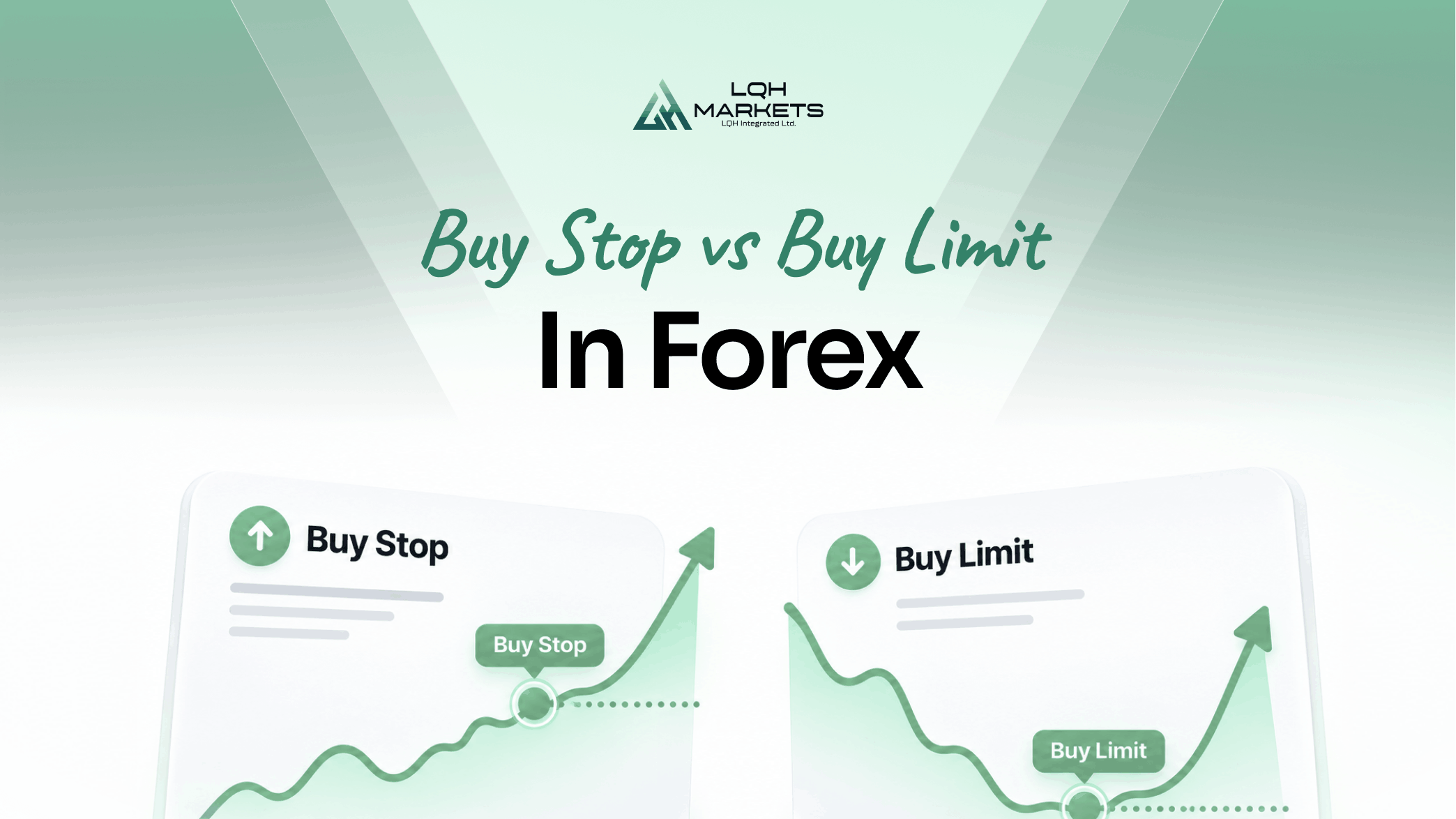
A breakout trader will place a pending “Buy Stop” order just above the resistance line—for example, at $150.05. When the last remaining seller at $150.00 is finally absorbed, the dam breaks. The price violently surges upward as trapped short-sellers are forced to buy back their positions to cover their losses, creating a massive vacuum of liquidity.
The greatest threat to this strategy is the “Fakeout” or “Bull Trap.” This occurs when the price briefly pokes above the resistance line, triggering everyone’s buy orders, only to immediately collapse back into the range. To mitigate this risk, sophisticated entrepreneurs demand volume confirmation. A true, sustainable breakout must be accompanied by a massive spike in trading volume, proving that genuine institutional capital is backing the structural shift, rather than just retail noise.
Range Trading: Exploiting Predictable Market Cycles
Not every trading session is characterized by explosive trends. During the quieter periods of the global market—such as the Asian session before the London open—major currency pairs often lack the macroeconomic catalysts required to break out. Instead, they bounce predictably between a clear floor (support) and a clear ceiling (resistance). This is where Range Trading becomes highly lucrative.
Playing the Intraday Ping-Pong Match
Range trading is the most systematic and easily automated of all day trading strategies. The methodology is straightforward: you buy at the floor and sell at the ceiling.
To execute this, an entrepreneur must first identify a clear horizontal channel on their MT5 platform where the price has touched a support level at least twice and a resistance level at least twice without breaking through. Once the range is established, the trader waits for the price to drop back to the support zone. They utilize an oscillator, like the Stochastic indicator, to confirm that the asset is momentarily oversold. Upon seeing a bullish candlestick confirmation—such as a hammer or a pin bar rejecting the floor—they execute a buy order.
The risk management in range trading is exceptionally clean. The Stop Loss is placed just a few pips below the established support floor. The Take Profit is placed just below the resistance ceiling. This strategy is highly effective for conservative traders who prefer high-win-rate setups over chasing massive, unpredictable market runs.
News Trading: Navigating Macroeconomic Volatility
Financial markets are forward-looking mechanisms, but they aggressively re-price themselves the moment new, unexpected macroeconomic data is released to the public. “News Trading” is a specialized day trading strategy designed to capitalize on the extreme volatility generated by tier-one economic calendar events, such as the US Non-Farm Payrolls (NFP), Consumer Price Index (CPI) inflation reports, or Federal Reserve interest rate decisions.
Surviving the Spread Widening
Trading the news is not for the faint of heart; it is akin to stepping onto a financial battlefield. When a major report is released at exactly 8:30 AM EST, the algorithms that provide liquidity to the market instantly pull their resting orders to protect themselves from uncertainty. This creates a “liquidity vacuum.” In this vacuum, the bid-ask spread can widen from 1 pip to 20 pips in a millisecond, and the price can gap aggressively up or down.
Amateurs often try to guess the outcome of the news report before it is released, placing a trade at 8:29 AM. This is not trading; it is gambling. Due to spread widening, their stop losses are often triggered instantly, regardless of which direction the market ultimately chooses.
The professional day trading strategy for news events is the “Fade” or the “Secondary Breakout.” The disciplined entrepreneur waits completely flat (no open positions) during the initial chaotic release. They watch the first 5-minute candle form, absorbing the initial algorithmic shockwave. Once the spread normalizes and the true institutional direction is established, the trader enters on the first technical pullback, ensuring they are trading the factual market reaction rather than the initial, chaotic algorithm spoofing.
Risk Management: The Ultimate Survival Tool
Even the most sophisticated day trading strategies will fail without rigorous risk controls. To protect your portfolio, you must adhere to these foundational rules:
- The Two Percent Rule: Never risk more than one to two percent of your total account equity on a single setup to prevent unrecoverable drawdowns.
- Calculated Position Sizing: Use a lot size calculator to determine your exact volume based on your stop loss distance.
- Stop Loss Discipline: Place orders that automatically close losing positions at predetermined levels to remove emotional hesitation.
- Capital Preservation: Treat your account balance as your inventory; without it, you cannot stay in business to capture the next winning streak.
Furthermore, always understand the inherent dangers of leveraged products. Regulatory bodies like the Financial Conduct Authority constantly emphasize the importance of understanding leverage risks. It is vital to review our official risk disclaimer to ensure you are fully prepared for the realities of margin trading.
The Mathematics of the Risk-to-Reward Ratio
To truly internalize risk management, you must view your trading operation through the lens of mathematical expectancy. The secret to long-term profitability is not having a 90% win rate; it is mastering your Risk-to-Reward (R/R) ratio.
If a business owner risks $100 on a marketing campaign to generate $300 in sales, they have a 1:3 R/R ratio. In day trading, if your stop loss limits your downside risk to 10 pips, and your take profit targets 30 pips, you operate on that same 1:3 ratio.
The beauty of this mathematical framework is that it forgives human error. With a strict 1:3 R/R ratio, you can execute ten trades, lose seven of them completely, and win only three.
7 Losses x $100 risk = -$700
3 Wins x $300 reward = +$900
Net Result = +$200 Profit.
Despite being wrong 70% of the time, the business remains profitable. This is why strict stop-loss discipline and mechanical position sizing are vastly more important than whichever technical indicator you choose to place on your chart.
Frequently Asked Questions
What is the best time frame for day trading strategies?
The ideal time frame depends entirely on your specific strategy and psychological temperament. Scalpers typically utilize one-minute to five-minute charts for rapid execution, while intraday trend traders prefer fifteen-minute or one-hour charts to gain better structural clarity and filter out market noise.
How much capital do I need to start day trading?
While some brokers allow you to open an account with minimal funds, trading with undercapitalized accounts often leads to excessive leverage and emotional decision-making. A well-funded account provides the necessary buffer to absorb inevitable losing streaks without triggering margin calls or compromising your strategy.
Can day trading strategies work in a bear market?
Yes, one of the primary advantages of active trading is the ability to profit regardless of market direction. By utilizing derivatives like CFDs, traders can speculate on declining asset prices through short-selling with the same ease as they can on rising prices in a bull market.
What is the difference between day trading and swing trading?
Day trading involves opening and closing all positions within the same trading session, meaning you hold no trades overnight to avoid unexpected macroeconomic gaps. Swing trading involves holding positions for several days or weeks, relying on higher timeframes like the 4-hour or Daily charts to capture broader market moves.
Which markets are best for day trading?
The best markets for day trading are those with the highest liquidity and tightest spreads. Major Forex pairs (like EUR/USD or GBP/USD), major global indices (like the US30 or Nasdaq 100 via CFDs), and highly traded commodities like Gold are the preferred instruments for professional day traders.
Do I need multiple monitors to be a successful day trader?
While having multiple screens helps organize complex data (such as watching the economic calendar on one screen and charts on another), it is not a requirement for profitability. A disciplined strategy, a clean charting interface on a single reliable monitor, and lightning-fast execution software are far more important than an overly complex hardware setup.
Why do most day traders fail?
The vast majority of day traders fail due to a lack of risk management and emotional control, rather than a lack of technical knowledge. They over-leverage their accounts, refuse to use stop losses, “revenge trade” after a loss to win their money back, and treat the financial markets like a casino rather than a structured business.
What is the win rate needed to be a profitable day trader?
Your required win rate is entirely dependent on your Risk-to-Reward ratio. If you risk $1 to make $1 (a 1:1 ratio), you need a win rate higher than 50% to be profitable. If you risk $1 to make $2 (a 1:2 ratio), you only need a win rate of 34% to break even. Profitability is a function of math, not perfection.
Treat your trading capital as business inventory; protect it with strict risk management, as market volatility can result in rapid financial losses.