Are you tired of being glued to your screen for 8 hours a day, stressing over every single pip movement? If you want to profit from the financial markets without treating trading like a frantic 9-to-5 job, you are in the right place. Swing trading offers the perfect middle ground allowing you to capture significant market moves without the burnout of day trading or the agonizing wait of long-term investing. In this article, you will discover the exact mechanics of swing trading, proven strategies to identify high-probability setups, and the risk management techniques professional traders use to protect their capital.
For the modern entrepreneur or business professional operating in the United States, time is the ultimate currency. You likely do not have the bandwidth to watch 1-minute candlestick charts while simultaneously running a company, attending board meetings, or managing a team. Yet, you understand the necessity of making your capital work for you in the highly liquid financial markets. Swing trading is the executive’s approach to trading. It removes the frenetic, emotionally exhausting environment of high-frequency day trading and replaces it with calculated, data-driven macro analysis. By treating your trading account like a mid-term commercial project rather than a daily casino, you can actively participate in global wealth generation while maintaining total focus on your primary career or business ventures.
What Exactly is Swing Trading?
Swing trading is a speculative trading strategy where traders hold positions in financial assets such as Forex, Stocks, or Commodities for a period ranging from a few days to several weeks. The goal is simple: capture a “swing” (or a chunk) of a potential price move.
Unlike day traders who close everything before the market bell rings, swing traders are comfortable holding positions overnight to let the market play out. They aren’t trying to catch the exact bottom or top (which is nearly impossible). Instead, they aim to capture the “meat” of the move the middle 60-80% of a trend where the momentum is strongest and the probability of profit is highest. This approach minimizes the “noise” of intraday volatility and focuses on the bigger picture.
The Physics of the Market Wave
To truly understand the mechanics of a “swing,” one must visualize how institutional money moves. In the US financial markets, billions of dollars do not enter a specific asset—like the S&P 500 or the EUR/USD—all at once. They enter in waves.
When a major macroeconomic shift occurs (such as the Federal Reserve announcing a long-term plan to cut interest rates), institutional capital begins flowing into the market. This creates the initial surge. However, markets never move in a straight line. After a few days of upward movement, early buyers take their profits, causing the price to dip temporarily. This dip is not a reversal; it is a structural “breathing” phase. The swing trader patiently waits for this exact dip to conclude, entering the market just as the second, much larger wave of institutional buying resumes. By capturing this middle 60% of the macroeconomic trend, the swing trader avoids the extreme risk of trying to guess the absolute bottom and the greed of trying to hold out for the absolute top.
Swing Trading vs. Day Trading: The Breakdown
To understand if this style suits you, it helps to compare it against the most popular alternative:
- Day Trading: High frequency, high stress. You are in and out in minutes or hours. You need intense focus, fast reflexes, and the ability to make split-second decisions. It typically requires a full-time commitment (6-8 hours a day) and carries a very high risk of burnout due to the constant pressure.
- Swing Trading: Lower frequency, more analysis-focused. You hold trades for days or weeks to capture medium-term trends. You check charts for maybe 30-60 minutes a day, usually around the market close or open. You rely on patient analysis rather than reflexes, resulting in a low-stress environment with a low risk of burnout.
Why choose swing trading? It gives you the freedom to live your life while your money works for you in the background. You don’t need to quit your job to become a successful swing trader.
The Capital Efficiency Advantage
Beyond the psychological benefits, there is a distinct structural advantage for US-based traders. The Pattern Day Trader (PDT) rule in the United States dictates that if you execute four or more day trades within five business days using a margin account, you must maintain a minimum balance of $25,000. For many emerging entrepreneurs, locking up $25,000 strictly for day trading margins is capital inefficient.
Swing trading legally bypasses the PDT rule. Because a swing trader holds their positions overnight, the trades do not classify as “day trades.” This allows individuals to operate highly effective, leveraged strategies using CFDs (Contracts for Difference) or Forex accounts with significantly less starting capital, freeing up their primary liquidity for their physical business operations. Furthermore, because a swing trader is targeting a massive 200-pip move rather than a tiny 10-pip day trading target, the impact of the broker’s Bid/Ask spread becomes mathematically negligible, significantly increasing the net profitability of the strategy.
How Swing Trading Works in the Live Market
Successful swing traders look for multi-day chart patterns. They are essentially surfers waiting for the right wave. They analyze the broader market sentiment and wait for the price to align with their bias. When a market is trending (moving clearly up or down), swing traders rarely chase the price. Instead, they jump on the trend after a “pullback” or a “correction.”
The “Trend Pullback” Example
Imagine the EUR/USD pair is in a clear uptrend, moving from 1.0800 to 1.1000.
- The price surges up to a new high.
- It then dips slightly (the pullback) to 1.0950 because early buyers are taking profits.
- This is your moment. A swing trader buys the dip at 1.0950, anticipating that the larger trend will resume and push the price higher again toward 1.1100.
You hold the trade for 3 to 5 days as the price rallies. You aren’t worried about hourly fluctuations; you are focused on the multi-day momentum. You exit when the momentum starts to fade or hits your pre-determined target.
Executing the Top-Down Analysis
To find these high-probability pullbacks, professional swing traders use a method called “Top-Down Analysis.” You cannot execute a swing trade simply by looking at a 15-minute chart.
The workflow begins on the Weekly or Daily chart. The entrepreneur opens their platform and asks one question: “What is the dominant direction of this asset over the last three months?” If the Daily chart is forming higher highs and higher lows, the macro trend is definitively Bullish.
Once the Bullish bias is confirmed on the Daily chart, the trader drops down to the 4-Hour chart. This is the execution battleground. On the 4-Hour chart, the trader looks for the specific “dip” (pullback) mentioned above. By aligning the micro-entry (the 4-Hour pullback) with the macro-trend (the Daily bullish momentum), the swing trader ensures they have the massive weight of institutional capital pushing their trade into profit, drastically reducing the likelihood of a failed setup.
Top Swing Trading Strategies
You don’t need complex algorithms to succeed. Simple, robust strategies often work best because they are used by thousands of traders, creating a self-fulfilling prophecy.
Support and Resistance Flips with Confirmation
Markets often respect historical price levels. A previous “ceiling” (Resistance) often becomes a “floor” (Support) once broken.
- The Concept: When price breaks a key level, it often returns to “test” that level to see if it holds.
- The Setup: Wait for the price to break above a resistance level, then wait for it to come back down and touch that line again.
- The Trigger: Don’t just buy blindly! Wait for a “confirmation candle,” such as a bullish hammer or engulfing pattern, to prove that buyers are stepping in at that level.
Moving Average Crossovers: Your Key MT5 Indicator
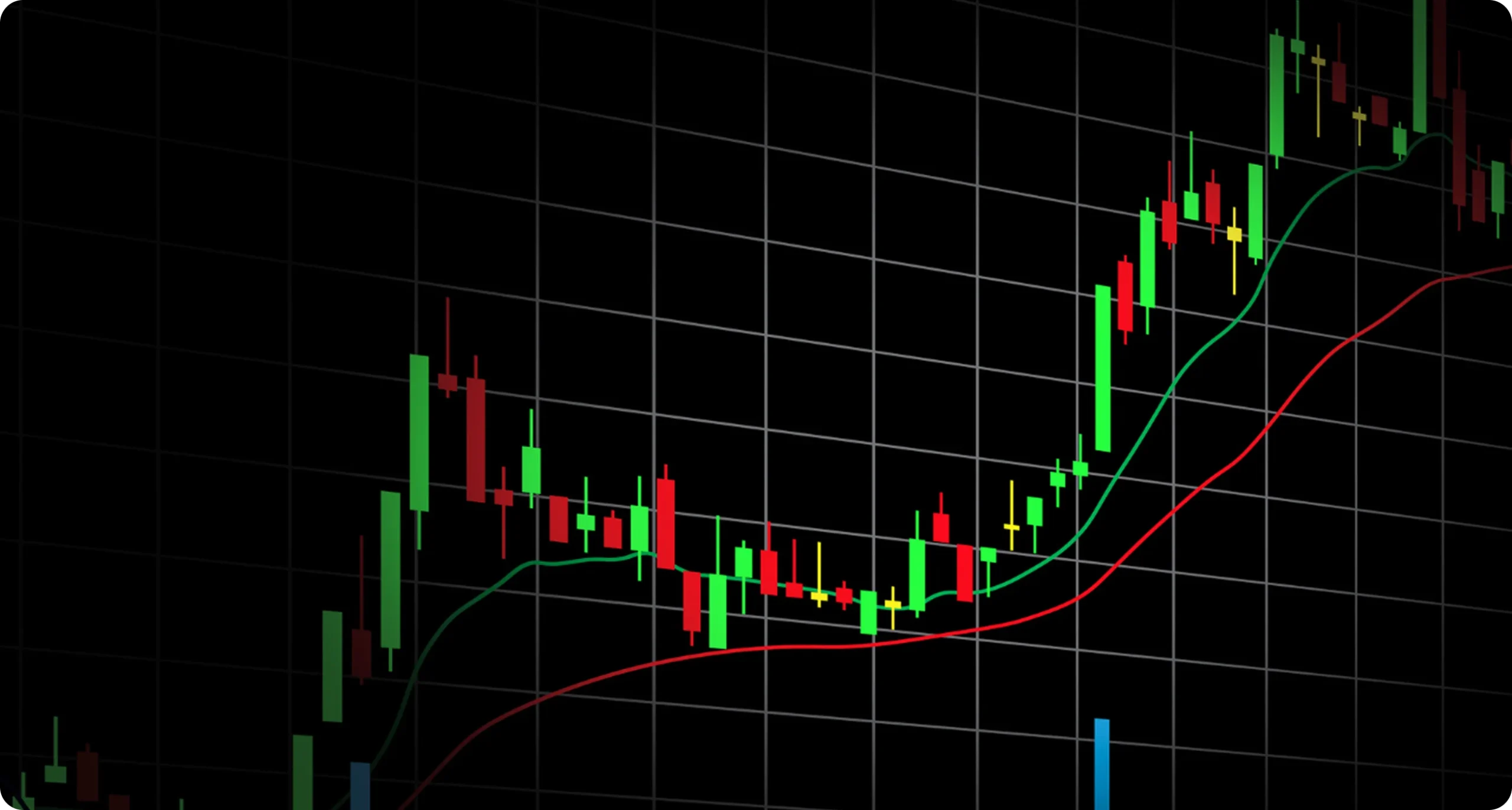
This is a classic trend-following method that helps visualize momentum without getting distracted by individual candlesticks. Use a shorter-term moving average (like the 50-day) and a longer-term one (like the 200-day).
- The Signal: When the 50-day crosses above the 200-day, it signals a potential uptrend (Golden Cross). This indicates a strong swing buying opportunity.
- The Exit: Conversely, if the short-term line crosses back below, it may be time to close the trade and secure your profits.
Fibonacci Retracements: The Golden Zone
Another highly effective, mathematically driven strategy for swing traders is the use of Fibonacci Retracements. When a market surges upward (the impulse leg), it rarely pulls back to its exact starting point before resuming the trend. It usually pulls back by a specific, measurable percentage.
Swing traders draw a Fibonacci tool from the absolute bottom of the recent surge to the absolute top. They then monitor the 50% and 61.8% levels (often called the “Golden Zone”). In a healthy, sustained macroeconomic trend, institutional algorithms are heavily programmed to buy the asset when it hits a 50% or 61.8% discount. If an entrepreneur sees the price pull back into this Golden Zone on a 4-Hour chart and simultaneously form a bullish confirmation candle, they have identified one of the most statistically robust swing trading entries available in the modern financial markets.
Critical Tools for Success
You cannot build a house without a hammer, and you cannot swing trade without the right infrastructure.
The Trading Platform
Since swing trading relies heavily on technical analysis, your charting software is your lifeline. You need a platform that offers custom indicators, robust charting tools, and seamless execution. Most professional swing traders prefer MetaTrader 5 (MT5) because of its superior analytical capabilities and multi-asset support. It allows you to visualize trends clearly on higher timeframes and set price alerts, so you don’t have to stare at the screen all day.
Reliable Execution
When you hold trades overnight or over the weekend, you are exposed to “gaps” in the market (where price jumps from one level to another without trading in between). You need a broker that offers deep liquidity and stability. At LQH Markets, we prioritize transparency and speed, ensuring that your swing trades are executed exactly where you planned them, without hidden interference. Reliable execution is the difference between a winning week and a breakeven one.
Mitigating the “Swap” Fee (Overnight Financing)
Because swing traders hold positions overnight, they must intimately understand the “Swap” or Rollover fee. When you trade leveraged CFDs or Forex, you are essentially borrowing capital from your broker to control a larger position. At the end of the trading day (typically 5:00 PM EST, known as the New York rollover), a small interest fee is calculated based on the central bank interest rates of the assets you are trading.
If you are long (buying) a currency with a high interest rate against a currency with a low interest rate, you might actually get paid a positive swap every night you hold the trade. However, in most CFD trades (like indices or commodities), you will pay a small negative swap fee. For a swing trader holding a position for three weeks, these daily fees accumulate. Therefore, an entrepreneur must calculate their expected profit target and ensure it vastly outweighs the operational cost of the accumulated overnight swap fees before entering the trade.
Forex Risk Management: The #1 Rule of Survival
Here is the harsh truth: You can have the best strategy in the world and still blow up your account if you ignore risk management. Swing trading involves holding positions through market volatility. Sometimes, major news events happen while you are asleep. Therefore, knowing exactly how much you are risking before you click “buy” is mandatory.
Calculate Your Lot Size
Never guess your trade size based on “gut feeling.” A common mistake beginners make is opening a standard lot on a small account, which can lead to a margin call on a simple, routine pullback. To trade professionally, you must align your position size with your stop-loss distance and account equity. Try Our Free Lot Size Calculator. This tool does the math for you, ensuring you never risk more than 1-2% of your capital on a single trade, regardless of how far away your stop loss is.
The “Set and Forget” Mentality
Psychology plays a huge role in swing trading. The urge to micromanage trades can be overwhelming. Once you have calculated your risk and placed your trade, set your Stop Loss and Take Profit orders immediately. This removes emotion from the equation. If the market moves against you, you are protected. If it moves in your favor, you lock in gains automatically. Plan the trade, then trade the plan.
Understanding the Mathematical Expectancy
The greatest advantage of swing trading is the ability to engineer massive Risk-to-Reward (R/R) ratios. A day trader might risk 10 pips to make 15 pips (a 1:1.5 ratio). A swing trader, however, operates on a much larger scale. Because they are catching multi-day trends, a swing trader might risk 50 pips to make 200 pips (a 1:4 ratio).
This mathematical asymmetry is the holy grail of trading for business owners. With a 1:4 Risk-to-Reward ratio, you can execute ten swing trades, suffer seven complete losses, and win only three.
7 Losses x $100 Risk = -$700
3 Wins x $400 Reward = +$1,200
Net Result: +$500 Profit.
Despite a dismal 30% win rate, the business remains highly profitable. By setting hard Stop Loss and Take Profit orders and physically walking away from the computer (“Set and Forget”), the entrepreneur allows the mathematical probabilities to play out without the emotional interference that plagues manual micromanagers.
Frequently Asked Questions
Is it safe to hold swing trades over the weekend?
Since swing trading spans several days or weeks, holding trades over the weekend is very common. However, this introduces “gap risk”—the possibility that the market opens on Monday at a significantly different price due to weekend news. To protect your capital, always have a strict Stop Loss in place and consider reducing your position size before Friday’s close if major geopolitical events are expected.
What specific timeframes should I analyze for swing trading?
While you hold trades for days, your analysis should focus on higher timeframes to filter out intraday noise. Professional swing traders typically use the Daily (D1) or 4-Hour (H4) charts to identify the broader trend and key support/resistance levels. You can then drop down to the 1-Hour (H1) chart to precisely time your entry during a pullback.
What is a common swing trading strategy?
A popular method is the Moving Average Crossover (e.g., the “Golden Cross”). This involves using a shorter-term moving average (like the 50-day) and a longer-term one (like the 200-day). When the 50-day crosses above the 200-day, it signals a strong potential uptrend and a buying opportunity.
Why is risk management so important in swing trading?
Because swing traders hold positions through market volatility and overnight, they are exposed to sudden market “gaps.” It is crucial to always use a lot size calculator to align your position size with your stop-loss distance, ensuring you never risk more than 1-2% of your capital on a single trade.
What are “Swap Fees” and do they affect swing traders?
Yes. A swap (or rollover fee) is an overnight interest rate applied to leveraged trades held past the daily market close (typically 5:00 PM EST). Because swing traders hold positions for days or weeks, these small daily fees accumulate. Traders must factor these operational costs into their overall profit targets before opening a position.
What is the difference between trading Stocks and trading CFDs for swing trading?
When you buy physical stocks, you own the asset but cannot easily profit if the market crashes. CFDs (Contracts for Difference) are derivatives that allow you to use leverage (requiring less upfront capital) and easily “Short” (sell) the market. This gives CFD swing traders the bidirectional flexibility to profit from both economic booms and recessions.
Can fundamental news events ruin a swing trade?
Yes. Major macroeconomic data releases, such as the US Non-Farm Payrolls (NFP) or Federal Reserve interest rate decisions, can instantly reverse a multi-day technical trend. Professional swing traders actively monitor an economic calendar and often tighten their Stop Losses or secure partial profits before these tier-one US data releases occur.
How much capital do I need to start swing trading?
Because swing trading generally uses wider Stop Losses than day trading, a severely undercapitalized account will struggle to maintain the 1% risk rule. While you can open accounts with less, a starting balance of $1,000 to $5,000 is generally recommended. This allows you to trade micro-lots safely, absorbing normal market fluctuations without triggering a margin call.
Market volatility, especially around macroeconomic news events, can cause severe slippage and result in losses that exceed your intended risk parameters.