


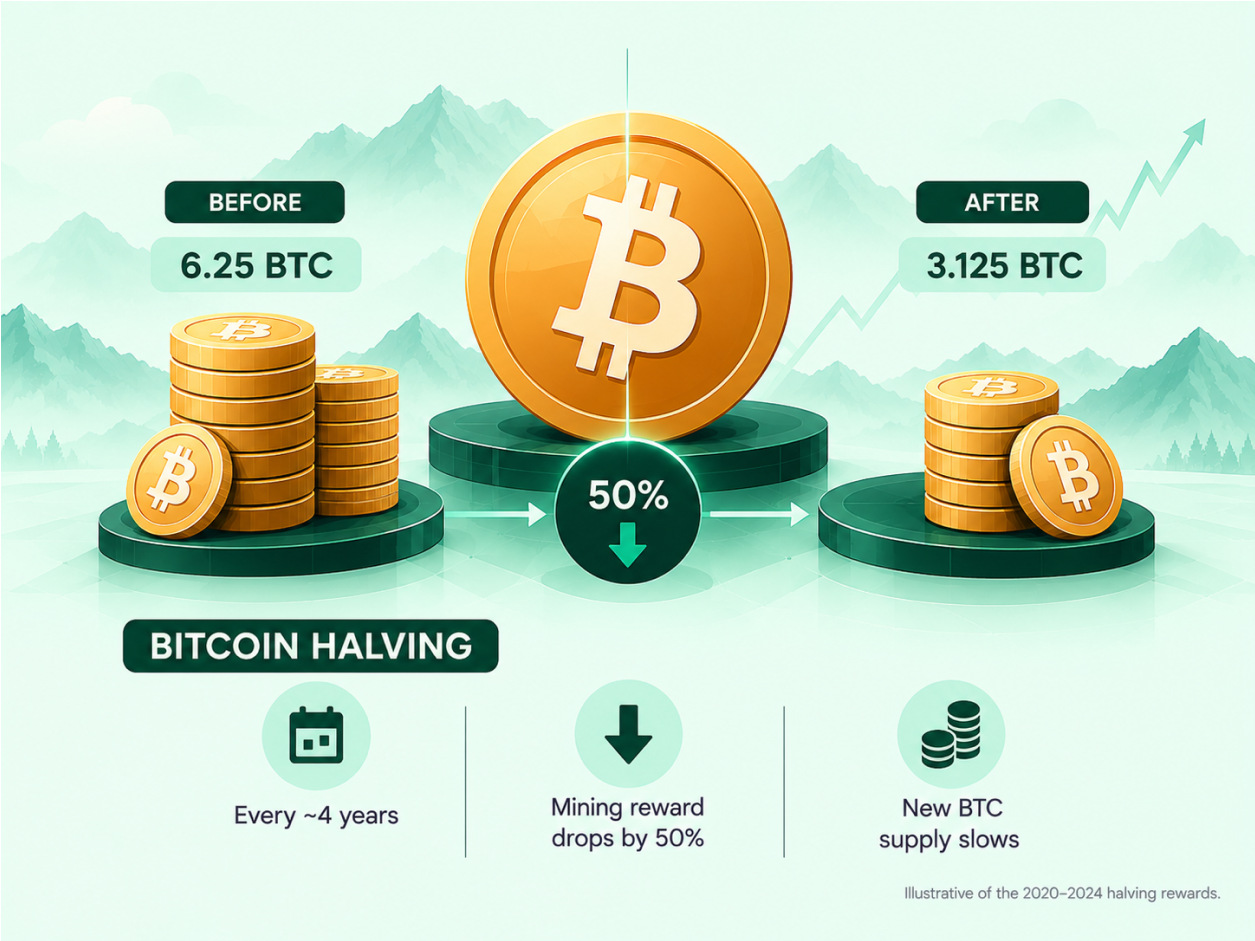
The Bitcoin halving is a pivotal, pre-programmed event embedded in Bitcoin’s code, occurring approximately every four years. It reduces the reward miners receive for validating new blocks by 50%, directly impacting the rate at which new Bitcoin enters circulation.
The Bitcoin halving is a scheduled event that cuts the reward for mining new blocks in half, thereby reducing the supply of new bitcoins. This mechanism is crucial for Bitcoin’s scarcity and its long-term deflationary design.
Understanding the Bitcoin Halving Mechanism
Bitcoin was designed with a fixed maximum supply of 21 million coins, a fundamental characteristic that distinguishes it from traditional fiat currencies. To manage the introduction of new Bitcoin into the market and ensure its scarcity, a unique mechanism known as the “halving” was implemented.
At its core, Bitcoin operates on a decentralized network secured by “miners.” These miners use powerful computers to solve complex cryptographic puzzles, a process known as Proof-of-Work (PoW). The first miner to solve the puzzle successfully adds a new block of verified transactions to the blockchain and is rewarded with a set amount of newly minted Bitcoin, plus transaction fees.
The halving event specifically targets this block reward. For every 210,000 blocks mined, which translates to roughly every four years given Bitcoin’s average block time of approximately 10 minutes, the reward issued to miners for creating a new block is cut in half.
The White Paper’s Vision and Difficulty Adjustment
While the term “halving” isn’t explicitly mentioned in Satoshi Nakamoto’s original Bitcoin white paper, the underlying mechanism for controlled coin issuance is clearly outlined. Nakamoto envisioned a system where “the steady addition of a constant amount of new coins is analogous to gold miners expending resources to add gold to circulation.” This design ensures a predictable, finite supply, contrasting with inflationary fiat currencies.
Crucially, the white paper also details the “difficulty adjustment” mechanism. To compensate for increasing hardware speed and varying interest in running nodes, the computational difficulty of the Proof-of-Work puzzle is dynamically adjusted. This adjustment targets an average block time of approximately 10 minutes. By maintaining this consistent block production rate, the network ensures that roughly 210,000 blocks are mined every four years, thereby preserving the predictable, albeit approximate, four-year halving schedule despite fluctuations in the network’s total hashrate.
This process continues until the maximum supply of 21 million Bitcoin is reached, estimated to be around the year 2140.
Historical Halving Events
Since Bitcoin’s inception in 2009, there have been several halving events, each significantly reducing the rate of new supply:
- 2009 (Genesis Block): Block reward started at 50 BTC per block.
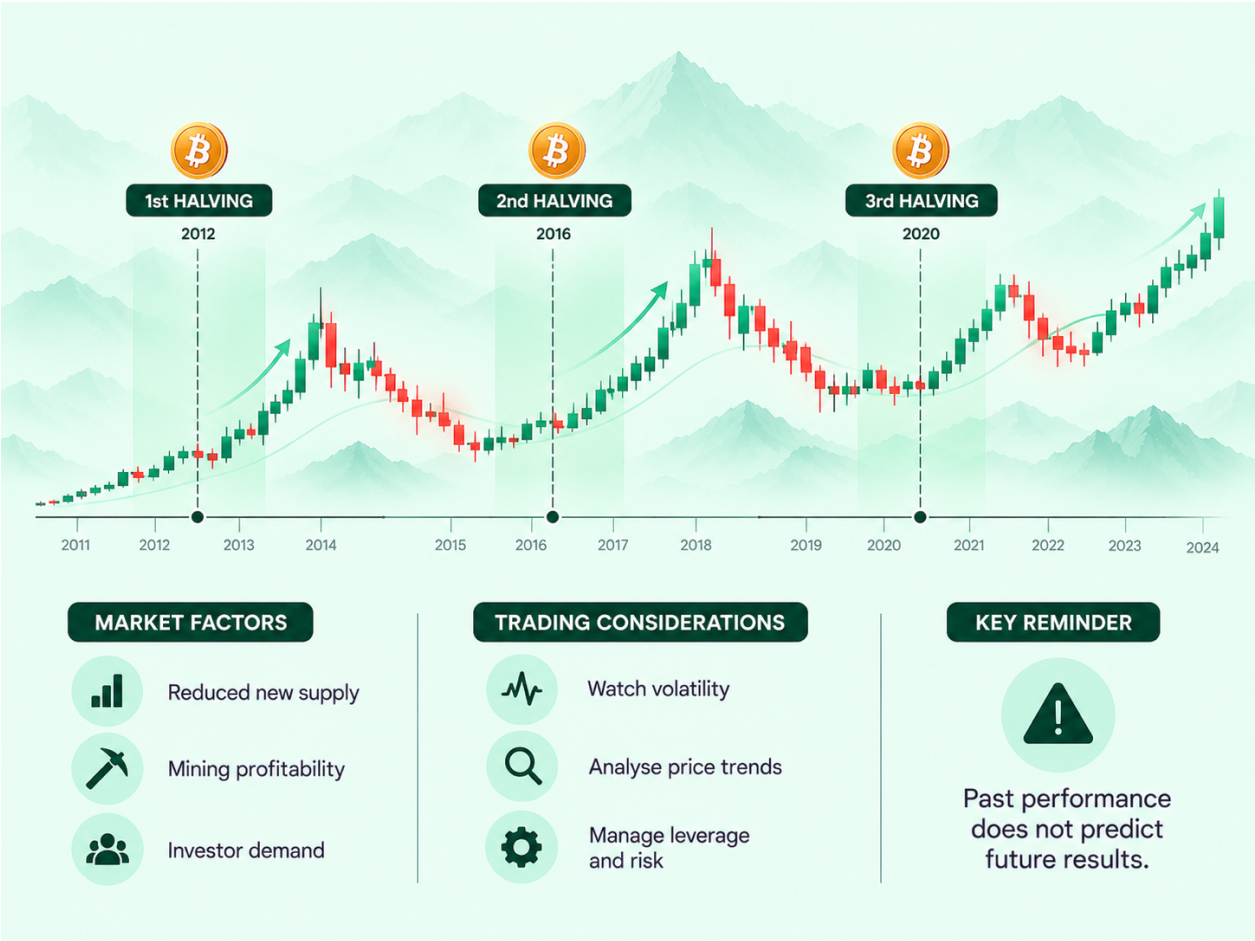
- November 28, 2012: First halving, reducing the reward to 25 BTC per block.
- July 9, 2016: Second halving, reducing the reward to 12.5 BTC per block.
- May 11, 2020: Third halving, reducing the reward to 6.25 BTC per block.
- April 20, 2024: Fourth halving, reducing the reward to 3.125 BTC per block.
The next halving is projected to occur in early 2028, at which point the block reward will further decrease to 1.5625 BTC.
Economic Principles and Market Impact
The Bitcoin halving is not merely a technical adjustment; it’s a fundamental economic event with profound implications for Bitcoin’s supply-demand dynamics, inflation rate, and the broader cryptocurrency market.
Scarcity and Inflation Control
The primary purpose of the halving is to enforce scarcity. By periodically reducing the rate at which new Bitcoin is created, the halving ensures that Bitcoin’s supply remains limited and predictable. This contrasts sharply with fiat currencies, which can be printed by central banks, potentially leading to inflation and a decrease in purchasing power over time.
Bitcoin’s design, with its fixed supply and diminishing issuance rate, positions it as a deflationary asset. Each halving event effectively halves Bitcoin’s inflation rate, making new supply increasingly scarce relative to existing supply. This mechanism is analogous to a precious metal like gold, where the rate of new gold entering circulation (mining output) is limited, contributing to its value as a store of wealth.
Impact on Demand and Price
The relationship between halving and Bitcoin’s price is a subject of ongoing debate among market participants.
Historically, halvings have often been preceded by periods of market consolidation or “bear markets” and followed by significant price appreciation, often referred to as “bull markets.” The reduced influx of new supply, combined with sustained or increasing demand, can create a “supply shock” that pushes prices upward.
However, it’s crucial to understand that past performance is not indicative of future results. The market is influenced by a multitude of factors beyond the halving, including:
- Market Sentiment: Overall investor confidence and speculative interest.
- Regulatory Developments: Government policies, approvals of investment vehicles like Spot Bitcoin ETFs, and legal frameworks. For instance, the approval of Spot Bitcoin ETFs in the U.S. just months before the 2024 halving introduced a new dynamic of institutional demand.
- Macroeconomic Conditions: Global interest rates, inflation, geopolitical events, and the broader “risk-on” or “risk-off” environment.
- Technological Advancements: Developments within the Bitcoin network or the wider blockchain ecosystem.
While the halving creates a fundamental supply constraint, its immediate and long-term price impact depends on how these other factors interact with the reduced supply.
This dynamic was particularly evident around the 2024 halving, where the market narrative began to shift from a pure “supply shock” to a “demand shock.” This shift is largely driven by significant institutional adoption, including the approval of Spot Bitcoin ETFs in the U.S. and increasing corporate treasury allocations to Bitcoin. These new avenues have introduced a substantial influx of capital, making demand-side factors increasingly critical in price discovery. For instance, after a period of consolidation following the 2024 halving, Bitcoin might enter a parabolic phase, potentially culminating in a new all-time high of $126,198 by October 7, 2025. However, the subsequent year, 2026, could bring a traditional “post-cycle” correction, a move that historically aligns with the “Year 2” bear phase of the four-year cycle. This illustrates that while the halving constrains supply, the interplay with evolving demand and broader macroeconomic conditions dictates the ultimate market outcome.
For example, in early 2026, despite a halving in 2024, Bitcoin experienced a correction, demonstrating that macroeconomic headwinds can temporarily outweigh halving-induced supply pressures.
Implications for Bitcoin Mining
The halving directly impacts the profitability of Bitcoin mining. When the block reward is cut in half, miners receive fewer bitcoins for their efforts. This forces miners to become more efficient to maintain profitability.
- Increased Efficiency: Miners must invest in more advanced, energy-efficient Application-Specific Integrated Circuits (ASICs) and seek out cheaper energy sources.
- Industry Consolidation: Smaller, less efficient mining operations may find it unsustainable to continue, leading to consolidation within the industry as larger, well-capitalized firms with economies of scale expand their operations.
- Reliance on Transaction Fees: As block rewards continue to diminish towards zero, transaction fees will become an increasingly important component of miners’ revenue. This incentivizes miners to prioritize blocks with higher transaction fees and ensures the network remains secure even after all 21 million bitcoins have been mined.
For CFD traders, understanding the mining landscape is important as it reflects the underlying health and security of the network, which can indirectly influence market sentiment.
This evolving landscape has shifted the conversation towards “Mining Sustainability.” As block rewards continue to diminish with each halving, miners’ revenue increasingly relies on transaction fees to remain profitable. This reliance is further intensified by growing competition for energy resources, particularly from burgeoning sectors like AI data centers, which drive up operational costs. Therefore, a long-term expectation of a rising Bitcoin value in dollar terms becomes crucial. This appreciation helps offset the decreasing BTC block rewards, ensuring that miners remain sufficiently incentivized to invest in hardware and energy, thereby continuing to secure the network even as the block subsidy eventually approaches zero.
Trading the Bitcoin Halving Cycle with CFDs
For traders utilizing Contracts for Difference (CFDs) on Bitcoin, the halving cycle presents unique opportunities and challenges. CFDs allow traders to speculate on the price movements of Bitcoin without owning the underlying asset, offering flexibility with leverage and the ability to go long or short.
Anticipation and Volatility
The periods leading up to and immediately following a halving event often see increased market speculation and volatility. Traders might attempt to anticipate price movements based on historical patterns or current market narratives.
- Pre-Halving Accumulation: Some traders might accumulate long positions in anticipation of a post-halving price surge, based on the historical “supply shock” theory.
- Post-Halving Reaction: The actual price reaction can vary. While historical data suggests upward trends, the market might also experience a “sell the news” event, where prices temporarily dip after the event itself, as some investors realize profits.
Risk Management is Paramount
Given the potential for heightened volatility, robust risk management strategies are essential when trading Bitcoin CFDs around halving events.
- Position Sizing: Carefully calculate position size to determine the size of your trades relative to your overall capital to avoid overexposure.
- Stop-Loss Orders: Implement tight stop-loss orders to limit potential losses if the market moves against your position.
- Take-Profit Levels: Define clear take-profit targets to secure gains.
- Leverage Management: While CFDs offer leverage, using it judiciously is critical. High leverage amplifies both gains and losses, making it particularly risky during volatile periods.
Combining Analysis
A comprehensive approach often involves combining fundamental and technical analysis.
- Fundamental Analysis: Understand the underlying economic impact of the halving, including supply reduction and its potential long-term implications.
- Technical Analysis: Utilize chart patterns, indicators, and price action to identify potential entry and exit points, gauge market momentum, and manage risk. For example, identifying key support and resistance levels can be crucial during periods of increased volatility.
Long-Term vs. Short-Term Perspectives
The halving’s impact is often viewed through a long-term lens, as the fundamental supply reduction plays out over months and years. However, short-term traders can also look for opportunities arising from the immediate market reactions and increased volatility surrounding the event. It’s important to align your trading strategy with your time horizon and risk tolerance.
The Future of the Bitcoin Halving Cycle
The Bitcoin halving cycle is a permanent feature of the network, continuing until approximately 2140 when the final Bitcoin is mined. At that point, the block reward will cease entirely, and miners will rely solely on transaction fees to incentivize their work and secure the network. This transition underscores Bitcoin’s long-term design for self-sustainability and its evolution towards a transaction-fee-driven economy.
Understanding the Bitcoin halving cycle is fundamental for anyone engaging with Bitcoin, particularly for CFD traders seeking to navigate its dynamic market. While history offers insights, each halving occurs within a unique market context, demanding careful analysis and disciplined risk management.
Frequently Asked Questions
What is the primary purpose of the Bitcoin halving?
The primary purpose of the Bitcoin halving is to control the issuance rate of new bitcoins, ensuring its scarcity and predictable supply. By reducing the block reward, it acts as a deflationary mechanism, similar to how a limited supply impacts the value of precious metals.
How does the Bitcoin halving affect miners?
The halving directly reduces the amount of new Bitcoin miners receive for validating blocks, impacting their profitability. This often leads to increased competition, a need for greater energy efficiency, and potential consolidation within the mining industry, as miners become more reliant on transaction fees for revenue.
Is the Bitcoin halving guaranteed to increase its price?
No, a Bitcoin halving is not guaranteed to increase its price. While historical data often shows price appreciation following halvings due to reduced supply, the market is influenced by numerous other factors such as overall demand, market sentiment, regulatory developments, and macroeconomic conditions.
How many Bitcoin halvings have occurred, and when is the next one expected?
As of April 2024, four Bitcoin halvings have occurred, reducing the block reward from 50 BTC to 3.125 BTC. The next halving is projected to take place in early 2028, further reducing the block reward to 1.5625 BTC per block.
Does Ethereum (ETH) also have halving events like Bitcoin?
No, Ethereum (ETH) does not have halving events in the same way Bitcoin does. Ethereum’s monetary policy and reward structure for validators (under its Proof-of-Stake mechanism) are different and do not involve a pre-programmed halving of block rewards.
Knowledge Check
1. What is the core mechanism of the Bitcoin halving?
- A) It doubles the transaction fees for miners.
- B) It reduces the block reward for miners by 50%.
- C) It increases the total supply of Bitcoin by 50%.
- D) It changes the Proof-of-Work algorithm to Proof-of-Stake.
2. Historically, what has been a common market trend observed after a Bitcoin halving?
- A) Immediate and guaranteed price decline.
- B) Periods of significant price appreciation (bull markets).
- C) A complete halt in Bitcoin mining operations.
- D) No noticeable impact on Bitcoin’s price.
3. Besides block rewards, what other incentive do Bitcoin miners receive for securing the network?
- A) Interest payments from the Bitcoin network.
- B) Subsidies from central banks.
- C) Transaction fees from verified blocks.
- D) Free electricity for their mining operations.
Click to view the answers
1. **B)** – The Bitcoin halving is a pre-programmed event that cuts the reward miners receive for validating a new block by 50%.
2. **B)** – Historically, Bitcoin halvings have often been followed by periods of significant price appreciation, though this is not a guarantee for future events.
3. **C)** – In addition to block rewards, Bitcoin miners also collect transaction fees for the transactions included in the blocks they successfully mine.