


Understanding Contracts for Difference (CFDs)
A Contract for Difference (CFD) is a financial derivative that allows traders to speculate on the price movements of underlying assets without actually owning them. It is an agreement between a trader and a broker to exchange the difference in an asset’s price from the time the contract is opened until it is closed.
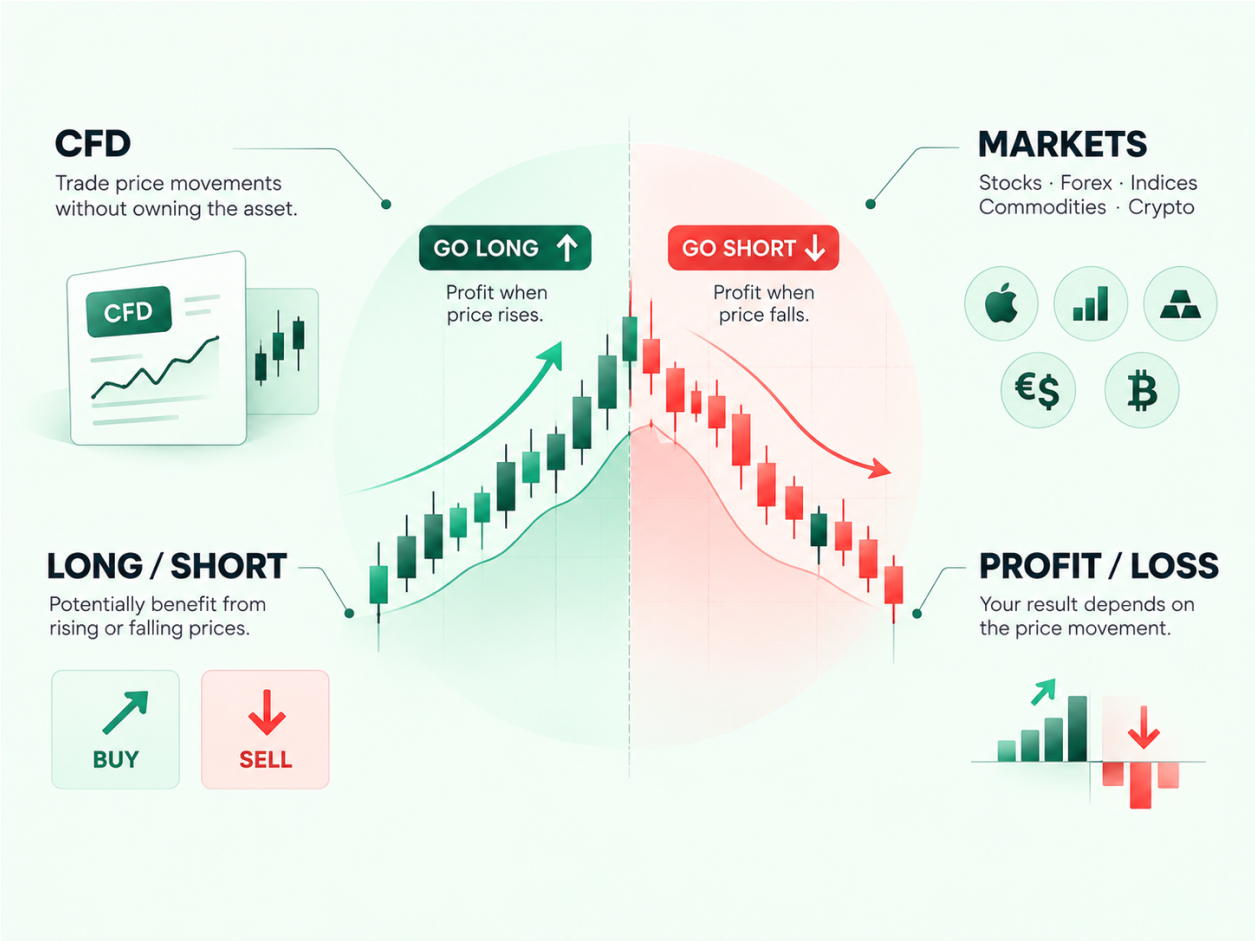
CFD trading has emerged as a popular method for individuals and institutions to participate in global financial markets. Unlike traditional investing, where you buy and own an asset like a stock or a commodity, CFD trading involves entering into a contract to exchange the difference in an asset’s price. This unique characteristic provides significant flexibility, enabling traders to potentially profit from both rising and falling markets, and access a vast array of instruments with a relatively small initial capital outlay through leverage. However, this flexibility comes with amplified risks, making a thorough understanding of CFDs essential for anyone considering this form of trading.
A Brief History of CFDs
The concept of Contracts for Difference originated in London in the early 1990s. Initially, CFDs were developed by investment banks and hedge funds as a way to gain exposure to equity markets without incurring stamp duty tax, which was levied on physical share purchases in the UK. This tax efficiency, combined with the ability to trade on margin and go short, quickly made CFDs attractive to institutional investors.
Over time, the benefits of CFDs, particularly their flexibility and leverage, led to their adoption by retail traders. The first CFD brokers began offering these products to individual investors in the late 1990s and early 2000s, democratizing access to a wider range of financial markets. Today, CFDs are widely available globally, though their regulation and availability vary significantly by jurisdiction, with some countries, like the United States, prohibiting them for retail investors.
How Does CFD Trading Work?
At its core, CFD trading is about speculating on price movements. When you trade a CFD, you are not buying or selling the underlying asset itself (e.g., a physical share of Apple stock or a barrel of crude oil). Instead, you are entering into a contract with your broker based on the asset’s price. The profit or loss you incur is the difference between the price at which you open the contract and the price at which you close it.
Going Long (Buying) vs. Going Short (Selling)
One of the most appealing aspects of CFD trading is the ability to take a position on both upward and downward price movements:
- Going Long (Buy): If you believe the price of an asset will increase, you “buy” a CFD. You profit if the asset’s price rises above your opening price.
- Going Short (Sell): If you anticipate the price of an asset will decrease, you “sell” a CFD. You profit if the asset’s price falls below your opening price.
This dual capability allows traders to capitalize on market volatility regardless of the prevailing trend, offering opportunities in both bullish and bearish environments.
Leverage and Margin Explained
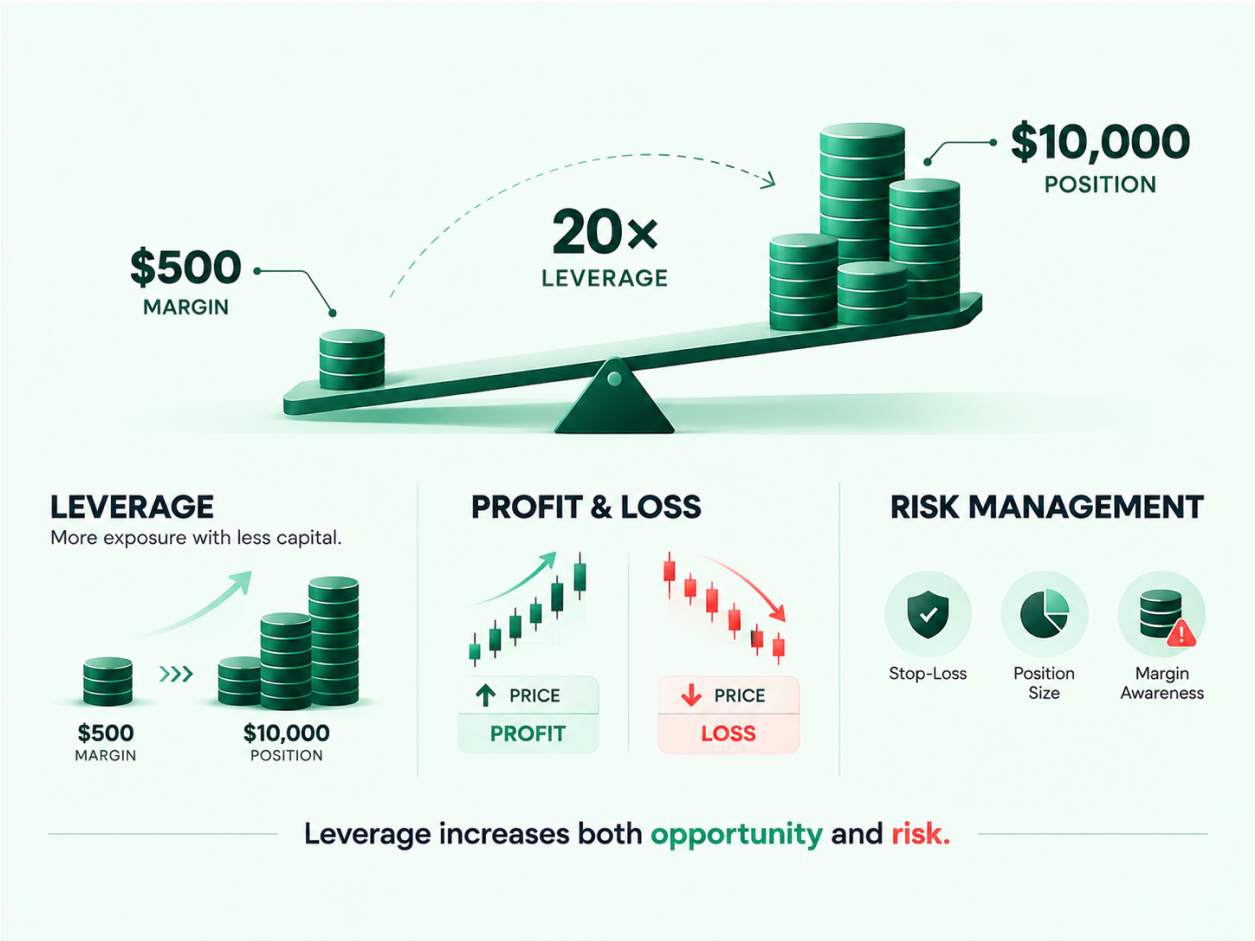
Leverage is a defining characteristic of CFD trading and is both a major advantage and a significant risk factor. It allows you to control a large position in the market with a relatively small amount of capital, known as “margin.”
- Leverage: This is essentially borrowed capital provided by your broker. For example, if a broker offers 1:20 leverage, it means for every $1 of your own capital, you can control $20 worth of the underlying asset. A 1:500 leverage means $1 controls $500.
- Margin: This is the initial deposit required to open and maintain a leveraged position. It’s a percentage of the total trade value. For instance, if you want to open a CFD trade with a total value of $10,000 and the margin requirement is 5%, you only need to put up $500 of your own capital.
Example of Leverage and Margin:
Imagine you want to trade CFDs on a hypothetical tech stock, “Innovate Corp.” Its shares are currently trading at $100. You believe the price will rise and decide to open a “buy” position for 100 shares. The total value of this position would be $10,000 (100 shares * $100/share).
If your broker offers 1:20 leverage (or a 5% margin requirement), you would only need to deposit $500 ($10,000 * 5%) into your trading account to open this position. While you only put up $500, your profit or loss will be calculated based on the full $10,000 value of the trade.
Profit and Loss Calculation
The calculation of profit or loss in CFD trading is straightforward, but its impact is amplified by leverage.
Let’s continue with the Innovate Corp example:
- Initial Position: Buy 100 Innovate Corp CFDs at $100. Total value: $10,000.
- Scenario 1: Price Rises
- Innovate Corp’s price rises to $105. You close your position.
- Profit per share: $105 – $100 = $5.
- Total profit: $5 * 100 shares = $500.
- In this case, your initial $500 margin generated a $500 profit, effectively doubling your capital (before fees).
- Scenario 2: Price Falls
- Innovate Corp’s price falls to $95. You close your position.
- Loss per share: $95 – $100 = -$5.
- Total loss: -$5 * 100 shares = -$500.
- Here, your initial $500 margin has been entirely wiped out.
This example clearly illustrates how leverage magnifies both potential gains and losses. It’s crucial to remember that losses can exceed your initial deposit, especially in highly volatile markets or with high leverage.
CFD Broker Models: Market Maker vs. Direct Market Access (DMA)
The way your CFD trades are executed and priced largely depends on your broker’s operational model. There are two primary models: Market Maker and Direct Market Access (DMA). Understanding these differences is crucial as they impact pricing, execution speed, costs, and potential conflicts of interest.
Market Maker Model
In the Market Maker model, your CFD broker acts as the counterparty to your trades. This means that when you open a position, you are essentially trading directly with your broker, rather than with the broader market. Market makers create their own bid and ask prices for the CFDs they offer. These prices are derived from the underlying market prices but typically include a spread that the broker sets.
Pros of Market Makers:
- Predictable Costs: Often offer fixed spreads, which can be beneficial for traders who prefer predictable trading costs.
- Deep Liquidity: Can provide deep liquidity, especially for less popular assets, as they are always ready to take the opposite side of a trade.
- Accessibility: Often offer a wider range of assets and can be more accessible for beginners due to simpler platforms and lower minimum deposits.
Cons of Market Makers:
- Potential Conflict of Interest: A significant concern is the potential for a conflict of interest, as the broker profits when your trade loses and vice versa.
- Price Discrepancy: Prices may not always perfectly reflect the true market price, as they are set by the broker.
- Execution Speed: Execution speeds can sometimes be slower, especially during periods of high market volatility.
Direct Market Access (DMA) Model
With a Direct Market Access (DMA) CFD, your broker acts as an intermediary, providing you with direct access to the underlying market’s order book. This means your trades are placed directly onto the exchange or liquidity provider, rather than being matched internally by the broker. DMA brokers typically charge a commission per trade, with spreads reflecting the actual market bid and ask prices.
Pros of DMA:
- Transparent Pricing: Offers transparent pricing, as you see the actual market bid and ask prices directly from the exchange or liquidity providers.
- Faster Execution: Generally provides faster execution speeds, especially for large orders, as trades are filled directly from the market.
- No Conflict of Interest: The broker only profits from commissions, eliminating the conflict of interest present in the market maker model.
- Deep Liquidity: Often preferred by experienced traders who require precise execution and deep liquidity, as they can see the full depth of the market.
Cons of DMA:
- Variable Spreads: Typically involves variable spreads, which can widen significantly during volatile periods.
- Higher Costs: Usually involves higher commissions per trade, in addition to variable spreads.
- Complexity: Requires a deeper understanding of market mechanics and order books, making it less suitable for novice traders.
- Higher Minimums: May have higher minimum deposit requirements.
Choosing between a Market Maker and a DMA broker depends on your trading style, experience level, and priorities regarding cost, transparency, and execution.
Margin Calls
When a leveraged position moves against you, your account equity (the total value of your cash and open positions) might fall below a certain threshold required to maintain your open trades. This threshold is known as the “maintenance margin.” If your account equity drops below this level, your broker may issue a “margin call,” requesting you to deposit additional funds to bring your account back up to the required margin level. If you fail to meet the margin call, the broker has the right to automatically close some or all of your positions to prevent further losses, potentially realizing significant losses for you.
Key Characteristics of CFD Trading
CFDs possess several distinct characteristics that differentiate them from traditional investment vehicles:
No Physical Ownership
When you trade CFDs, you never actually own the underlying asset. This means you don’t receive shareholder voting rights for stocks, nor do you take physical delivery of commodities like gold or oil. Your trade is purely a contract based on price movements. This lack of ownership simplifies trading by removing logistical concerns like storage or transfer fees associated with physical assets.
Flexibility to Go Long or Short
As discussed, CFDs allow you to speculate on both rising and falling markets. This provides immense flexibility, enabling traders to implement strategies that profit from market downturns (short-selling) as easily as from upturns (going long).
Access to Diverse Global Markets
A single CFD trading account can provide access to a vast range of financial markets worldwide. This includes global stocks, indices, commodities, forex pairs, and cryptocurrencies, all from one platform. This broad market access allows for diversification and the ability to capitalize on opportunities across different asset classes and geographical regions.
No Fixed Expiry Date (for spot CFDs)
Many CFD contracts, particularly those based on spot prices (current market rates), do not have a fixed expiry date. This means you can keep a position open for as long as you wish, provided you maintain sufficient margin. However, positions held overnight typically incur overnight financing charges. Futures CFDs, on the other hand, are designed to expire on a specific date.
To further clarify, it’s important to distinguish between different types of CFDs and traditional futures contracts:
- Spot CFDs: These are the most common type of CFD, based on the immediate, or “spot,” market price of an asset. They typically do not have a fixed expiry date, allowing traders to hold positions for extended periods, but they incur overnight financing charges for positions held past the daily cut-off.
- Futures CFDs: These CFDs are based on the price of an underlying futures contract. Unlike spot CFDs, futures CFDs have a fixed expiry date, aligning with the expiry of the underlying futures contract. A key advantage is that they often do not incur overnight financing charges, as the financing cost is typically built into the futures price. However, traders must be mindful of the expiry date and roll over their positions if they wish to maintain exposure.
- Traditional Futures Contracts: These are distinct from futures CFDs. Traditional futures are exchange-traded, legally binding agreements to buy or sell an asset at a predetermined price on a specific future date. They always have a fixed expiry date. While most are cash-settled, some can involve physical delivery of the underlying asset. Futures contracts are typically used by larger institutions for hedging or speculation and have different pricing mechanisms (e.g., contango/backwardation) compared to spot prices, reflecting factors like storage costs and interest rates until expiry. Unlike CFDs, which are OTC products with a broker, traditional futures are standardized and traded on regulated exchanges.
This distinction highlights the flexibility within CFD trading, offering options for both short-term speculation (spot CFDs) and longer-term, expiry-bound strategies (futures CFDs), while also clarifying their relationship and differences with the underlying traditional futures market.
Types of CFD Markets
CFDs offer exposure to an extensive range of financial instruments, allowing traders to diversify their portfolios and react to various market conditions.
Stock CFDs
These allow you to speculate on the price movements of individual company shares listed on major global exchanges. Instead of buying actual shares, you trade a contract that mirrors the share’s price. This means you can trade popular stocks like Apple, Amazon, or Tesla without the complexities of direct stock ownership.
Index CFDs
An index CFD allows you to trade on the performance of an entire stock market index, such as the S&P 500, NASDAQ 100, or FTSE 100. This provides broad exposure to a country’s economy or a specific sector without needing to analyze and invest in individual stocks within that index.
Forex (Currency Pair) CFDs
Forex CFDs enable speculation on the exchange rate fluctuations between two currencies. This is similar to traditional forex trading, but instead of exchanging actual currencies, you trade a CFD contract. Popular pairs include EUR/USD, GBP/JPY, and USD/CHF.
Commodity CFDs
With commodity CFDs, you can trade on the price changes of raw materials like precious metals (gold, silver), energy products (crude oil, natural gas), and agricultural goods (corn, wheat). This allows you to gain exposure to commodity markets without the logistical challenges of storing or transporting physical goods.
Cryptocurrency CFDs
Cryptocurrency CFDs allow you to speculate on the volatile price movements of digital currencies such as Bitcoin, Ethereum, and Ripple, without needing to own the actual cryptocurrency or set up a digital wallet. This provides a way to participate in the crypto market through a regulated broker.
Advantages of Trading CFDs
CFD trading offers several compelling benefits that attract a wide range of traders:
Enhanced Capital Efficiency Through Leverage
As discussed, leverage allows you to control a larger market position with a smaller initial capital outlay. This means you can potentially generate significant returns from relatively small price movements, making CFDs highly capital-efficient. However, it’s crucial to remember that leverage also amplifies losses.
Opportunities in Both Rising and Falling Markets
The ability to “go long” or “go short” provides unparalleled flexibility. Traders are not confined to profiting only when markets are rising; they can also seek opportunities during market downturns, making CFDs a versatile tool for various market conditions.
Extensive Market Access from a Single Platform
A single CFD trading account typically offers access to thousands of instruments across multiple asset classes and global exchanges. This eliminates the need for multiple accounts with different brokers for stocks, forex, commodities, etc., streamlining the trading experience and portfolio diversification.
Hedging Existing Portfolios
CFDs can be an effective tool for hedging. If you own a portfolio of physical stocks and anticipate a short-term market downturn, you could open a “short” CFD position on an index or specific stocks within your portfolio. If the market falls, the profits from your short CFD position could offset some of the losses in your physical stock holdings. This acts as a temporary insurance policy for your long-term investments.
No Stamp Duty or Physical Asset Costs
Since you don’t own the underlying asset, CFD trading often bypasses certain taxes (like stamp duty on shares in some jurisdictions) and avoids the logistical costs associated with physical asset ownership, such as storage fees for commodities.
Risks of CFD Trading
Despite their advantages, CFDs are complex and high-risk financial products, primarily due to the inherent leverage. It is paramount for any potential CFD trader to fully understand these risks before engaging in live trading.
Magnified Losses Due to Leverage
While leverage can amplify profits, it equally amplifies losses. A small unfavorable price movement can result in a loss that exceeds your initial margin deposit. It’s possible to lose significantly more than the capital you initially invested, potentially leading to a negative balance in your trading account.
Market Volatility and Sudden Price Swings
Financial markets can be highly volatile, with prices changing rapidly due to economic news, geopolitical events, or unexpected corporate announcements. These sudden price swings can lead to quick and substantial losses, especially if your positions are highly leveraged and you do not have adequate risk management in place.
Overnight Financing Costs
CFD positions held open overnight typically incur a financing charge. This fee, which can be positive or negative depending on the asset and your position, can accumulate over time and significantly erode potential profits, especially for long-term leveraged trades.
Counterparty Risk
Unlike exchange-traded products, CFDs are over-the-counter (OTC) instruments, meaning you are entering into a direct contract with your broker. This introduces counterparty risk – the risk that your broker may default on its obligations. Choosing a reputable, well-regulated broker is crucial to mitigate this risk.
Complexity for Beginners
CFDs are not recommended for novice investors. The intricate mechanics of leverage, margin, various order types, and the fast-paced nature of the markets require a solid understanding of financial markets and robust risk management skills. Beginners should prioritize extensive education and practice on demo accounts before risking real capital.
Emotional Trading
The potential for rapid gains and losses in CFD trading can trigger strong emotions like fear, greed, and overconfidence. These emotions can lead to impulsive decisions, overtrading, or holding onto losing positions for too long, ultimately detrimental to trading performance.
Regulatory Safeguards and Retail Trader Protection
Given the inherent risks of CFD trading, particularly for retail investors, financial regulators globally have implemented significant safeguards to protect clients. These regulations aim to mitigate the amplified risks associated with leverage and market volatility.
A prime example of such intervention is the Australian Securities and Investments Commission (ASIC), which implemented a product intervention order for CFDs in March 2021. This order introduced several crucial measures:
- Reduced Leverage Limits: ASIC significantly reduced the maximum leverage ratio limits for retail client accounts. For instance, leverage for major currency pairs was reduced from as high as 1:500 to 1:30. This drastically curtails the potential for magnified losses, making trades less risky for individual investors.
- Negative Balance Protection: The order also mandated negative balance protection, ensuring that retail clients cannot lose more than the funds in their trading account. This prevents traders from falling into debt with their brokers due to extreme market movements.
- Standardized Margin Close-Out Rules: Regulators often require brokers to automatically close out a retail client’s CFD positions when their account equity falls below 50% of the minimum required margin, further limiting potential losses.
These regulatory actions have demonstrated a tangible positive impact. ASIC reported a remarkable 91% reduction in aggregate net losses by retail client accounts during the first six months following the implementation of its order. Similar regulations, such as those by the European Securities and Markets Authority (ESMA) in Europe, also enforce leverage limits and negative balance protection, underscoring a global effort to enhance retail trader protection in the CFD market. These safeguards are vital for creating a safer trading environment, though they do not eliminate risk entirely.
Who Trades CFDs?
CFDs attract a diverse range of market participants, each drawn by the unique characteristics of these derivative instruments.
Retail Traders
A significant portion of the CFD market comprises individual retail traders. They are often attracted by the accessibility to global markets, the ability to trade with leverage, and the flexibility to profit from both rising and falling prices, often with lower capital requirements than traditional investing.
Active and Professional Traders
Day traders and swing traders frequently utilize CFDs for short-term speculative opportunities. The high liquidity in major CFD markets and the ability to execute trades quickly make them ideal for strategies focused on intraday or short-term price movements.
Institutional Investors
While less common than for retail traders, some hedge funds and investment firms use CFDs. They may employ them for hedging existing portfolios, diversifying exposure to markets that are otherwise difficult to access, or for implementing complex trading strategies that leverage the instrument’s flexibility.
Global Investors
CFDs provide a convenient way for investors to access international shares, indices, and commodities from a single trading account. This is particularly appealing for those looking to engage in markets outside their home country without dealing with multiple international brokerage accounts or currency conversions for each asset.
Starting Your CFD Trading Journey
Embarking on CFD trading requires careful preparation and a disciplined approach. Here’s a structured guide to help you get started:
Step 1: Choose a Regulated CFD Broker
This is perhaps the most critical initial step. Select a broker that is regulated by a recognized financial authority. Regulation ensures that your funds are protected, the broker adheres to strict operational standards, and provides fair trading conditions. Research their reputation, available markets, trading platforms, and customer support.
Step 2: Open and Fund Your Account
Once you’ve selected a broker, you’ll need to complete their account opening process, which typically involves identity verification (KYC – Know Your Customer) and providing proof of address. After your account is approved, you can deposit funds using various methods such as bank transfers, debit cards, or e-wallets. Many brokers allow you to start with a relatively small minimum deposit. At LQH Markets, the minimum deposit requirement to start trading on a Standard account is $10, making professional trading accessible to many.
Step 3: Learn the Basics and Practice with a Demo Account
Before risking real money, dedicate time to understanding the fundamentals of CFD trading. Familiarize yourself with key terms like margin, leverage, spread, stop-loss, and take-profit orders. Most reputable brokers offer free demo accounts loaded with virtual funds. Use this invaluable tool to practice trading strategies, navigate the platform, and build confidence in a risk-free environment.
Step 4: Pick Your Market
Decide which financial markets you want to trade. Beginners often start with highly liquid markets like major forex pairs (e.g., EUR/USD) or well-known stock indices (e.g., S&P 500) because they tend to have tighter spreads and more predictable price action compared to highly volatile or illiquid assets.
Step 5: Place Your First Trade
When you feel confident, you can place your first live trade.
- Determine Direction: Decide whether to “buy” (go long) if you expect the price to rise, or “sell” (go short) if you expect it to fall.
- Set Position Size: Choose the number of contracts you wish to trade. Remember that each contract represents a certain quantity of the underlying asset.
- Implement Risk Management: Crucially, always use stop-loss orders to limit potential losses and consider take-profit orders to secure gains.
Step 6: Continuously Manage Your Risk
Effective risk management is paramount for long-term success in CFD trading.
- Stop-Loss and Take-Profit Orders: These automated orders help you control potential losses and lock in profits. A stop-loss closes your position if the price moves against you to a predefined level, while a take-profit closes it when a target profit level is reached.
- Position Sizing: Never risk more than a small percentage (e.g., 1-2%) of your total trading capital on a single trade.
- Monitor Leverage: Be mindful of the leverage you are using. Higher leverage means higher risk.
- Stay Informed: Keep abreast of market news, economic calendars, and technical analysis to make informed trading decisions.
CFD Trading Costs
Understanding the costs associated with CFD trading is essential for calculating potential profitability.
Spreads
The primary cost in CFD trading is often the “spread,” which is the difference between the buy (ask) price and the sell (bid) price of an asset. When you open a trade, you immediately incur this cost. For example, if EUR/USD has a bid price of 1.1000 and an ask price of 1.1001, the spread is 1 pip. The wider the spread, the more the market needs to move in your favor before your position becomes profitable.
Commissions
While many CFDs (especially forex and indices) are traded with the cost built into the spread, LQH Markets offers various account types with different cost structures. For example, Standard, Pro, and Zero Commission accounts carry no per-trade commission with spreads from 1.0 pip. Raw Spread accounts (such as Institutional and Deposit Bonus accounts) offer spreads from 0.0 pips, with a commission of $3 per side (per standard lot) for Forex, and 0.003% notional value for Metals, Energy & Crypto.
Overnight Financing Fees
If you hold a CFD position open past a certain daily cut-off time (usually the end of the trading day in the underlying market’s time zone), you will be charged an “overnight financing fee” (also known as a swap fee or rollover fee). This fee reflects the cost of borrowing or lending the underlying asset to maintain your leveraged position overnight. It can be a significant cost for positions held for several days or weeks.
Other Potential Fees
Some brokers may charge additional fees, such as:
- Guaranteed Stop-Loss Fees: A small premium for ensuring your stop-loss order is executed at the exact price you specify, even in volatile markets (where regular stop-losses might “slip”).
- Inactivity Fees: Charged if your account remains dormant for a prolonged period.
- Currency Conversion Fees: If you trade an asset denominated in a currency different from your account’s base currency.
Glossary of Key CFD Trading Terms
- CFD (Contract for Difference): A financial derivative that allows speculation on asset price movements without ownership.
- Leverage: The ability to control a large market position with a small initial capital deposit, amplifying both potential profits and losses.
- Margin: The initial deposit required to open and maintain a leveraged CFD trade.
- Spread: The difference between the bid (sell) and ask (buy) price of an asset, representing a primary trading cost.
- Long Position (Go Long): Buying a CFD with the expectation that the underlying asset’s price will rise.
- Short Position (Go Short): Selling a CFD with the expectation that the underlying asset’s price will fall.
- Stop-Loss Order: An automated order to close a trade when the price reaches a predetermined level, used to limit potential losses.
- Take-Profit Order: An automated order to close a trade when the price reaches a specified profit level, used to secure gains.
- Overnight Financing: A daily fee charged for holding a leveraged CFD position open past a specific market cut-off time.
- Lot Size / Contract Size: The standardized quantity of the underlying asset that a single CFD contract represents.
- Liquidity: The ease with which an asset can be bought or sold without significantly impacting its price. Highly liquid markets have tight spreads.
- Volatility: The degree of price fluctuation in a market over a period. High volatility implies larger and faster price swings.
- Counterparty Risk: The risk that the other party in a financial transaction (in CFDs, typically the broker) may default on its obligations.
- Hedging: A risk management strategy used to offset potential losses in an existing investment by taking an opposite position with a CFD.
Frequently Asked Questions
What is the fundamental difference between trading CFDs and buying shares?
When trading CFDs, you speculate on the price movement of an asset without actually owning it. In contrast, when you buy shares, you become a shareholder of the company, gaining ownership rights and potentially receiving dividends.
Can I lose more money than I initially deposit when trading CFDs?
Yes, due to the use of leverage, it is entirely possible to lose more than your initial deposit when trading CFDs. If a leveraged trade moves significantly against your position, your losses can exceed the margin you put up.
Are CFDs suitable for beginners in financial trading?
CFDs are generally not recommended for beginners due to their complexity and the high risks associated with leverage. They are better suited for experienced traders who have a strong understanding of market dynamics and robust risk management strategies.
How do brokers typically make money from CFD trading?
CFD brokers primarily generate revenue through the spread, which is the difference between the buy and sell price of an asset. LQH Markets offers various account types with different cost structures. For example, Standard, Pro, and Zero Commission accounts carry no per-trade commission with spreads from 1.0 pip. Raw Spread accounts (such as Institutional and Deposit Bonus accounts) offer spreads from 0.0 pips, with a commission of $3 per side (per standard lot) for Forex, and 0.003% notional value for Metals, Energy & Crypto. Overnight financing fees are also applied to positions held past the daily cut-off.
What is a margin call in CFD trading?
A margin call occurs when the equity in your trading account falls below the required maintenance margin to keep your leveraged positions open. Your broker will request additional funds to cover the shortfall, and failure to meet it may result in the automatic closure of your positions.
Knowledge Check
1. Which of the following is a defining characteristic of CFD trading?
- A) Traders physically own the underlying asset.
- B) It allows speculation on price movements without asset ownership.
- C) It is only possible to profit when markets are rising.
- D) All CFD contracts have a fixed expiry date.
2. What is the primary risk associated with leverage in CFD trading?
- A) It guarantees higher profits on all trades.
- B) It reduces the spread charged by the broker.
- C) It amplifies both potential profits and potential losses, potentially exceeding the initial deposit.
- D) It eliminates the need for risk management strategies.
3. What is an “overnight financing fee” in CFD trading?
- A) A one-time fee charged when opening any CFD position.
- B) A fee paid to access real-time market data.
- C) A daily charge for holding a leveraged CFD position open past a specific market cut-off time.
- D) A commission charged only on winning trades.
Click to view the answers
1. B) – CFD trading allows individuals to speculate on the price movements of various assets without taking physical ownership of them.
2. C) – Leverage in CFD trading magnifies both potential gains and losses, meaning traders can lose more than their initial margin deposit.
3. C) – Overnight financing fees are daily charges applied to leveraged CFD positions that are held open beyond the market’s daily cut-off time.