


Understanding Weather Seasonality in Soft Commodities
Commodity markets, particularly those for agricultural products, exhibit a distinct rhythm dictated by the natural world. Among the myriad factors influencing prices, weather seasonality stands as a foundational element, profoundly shaping the supply and demand dynamics of “soft” commodities. For traders, recognizing and integrating these recurring weather-driven patterns into their analysis can offer a significant edge in navigating these often-volatile markets.
Weather seasonality in soft commodities refers to the recurring price fluctuations driven by predictable, annual climatic events impacting agricultural production. These patterns are foundational, directly influencing planting, growing, and harvesting cycles, thereby shaping global supply.
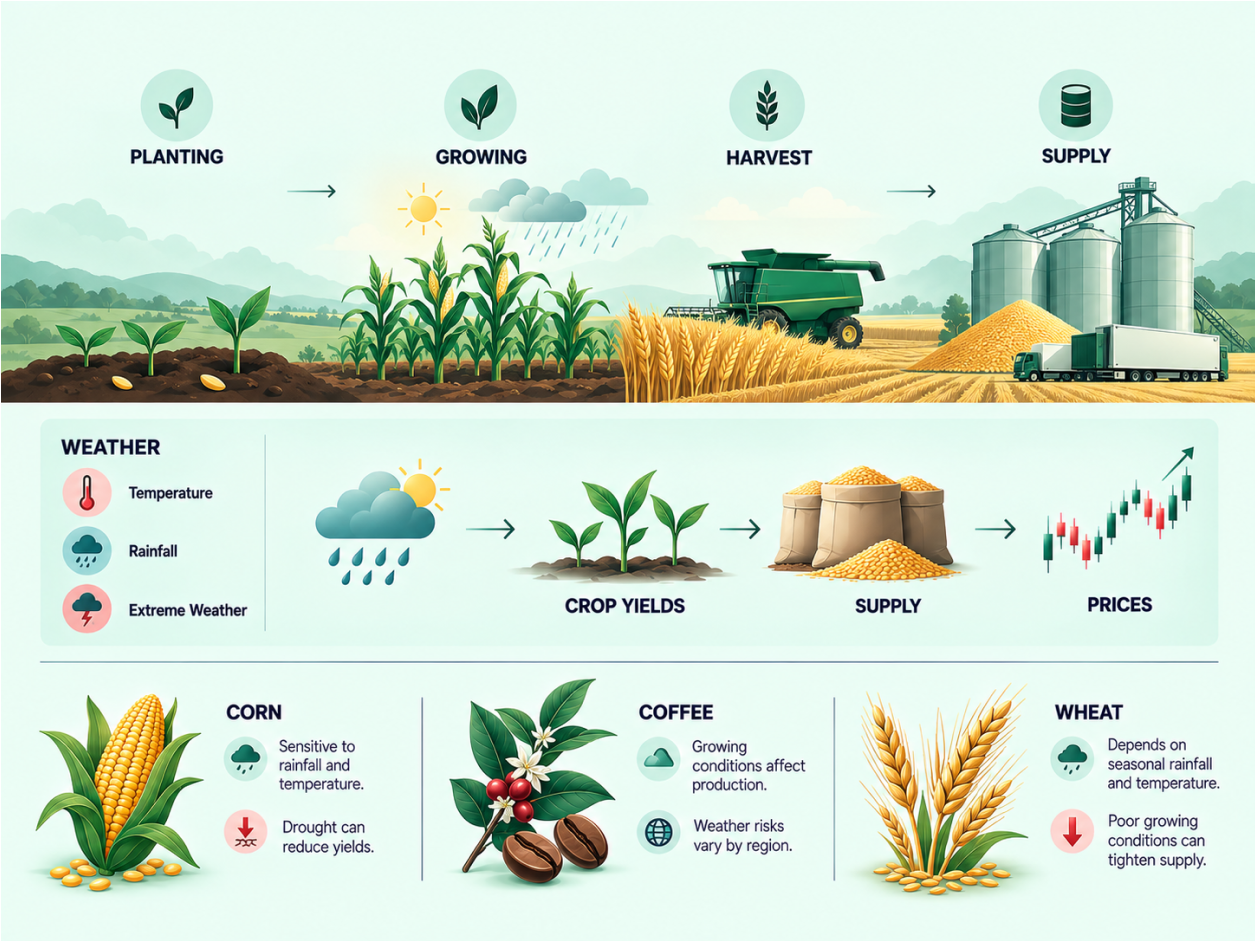
Unlike industrial metals or energy, soft commodities—such as corn, wheat, soybeans, coffee, cocoa, and sugar—are living organisms, directly dependent on specific weather conditions for optimal growth. This inherent biological link makes them exceptionally sensitive to climatic shifts, from predictable seasonal changes to unexpected extreme weather events.
The Foundational Role of Weather in Soft Commodity Cycles
The life cycle of agricultural products is intrinsically tied to the calendar year and its associated weather patterns. Each stage, from initial planting to final harvest, requires a specific set of environmental conditions.
- Planting Season: Favorable weather, such as adequate rainfall and suitable temperatures, is crucial for successful germination and early growth. Conversely, excessive rain can delay planting, leading to reduced acreage or poorer yields, while drought can hinder seed emergence.
- Growing Season: This critical period demands consistent, ideal conditions. For example, corn requires significant moisture and warmth during its pollination phase. A heatwave or drought during this window can severely stress crops, leading to irreversible yield losses. Similarly, coffee cherries need specific rainfall and dry periods for optimal development.
- Harvest Period: Dry, sunny weather is generally preferred during harvest to ensure efficient collection and prevent spoilage. Wet conditions can delay harvest, reduce crop quality, and increase drying costs, impacting the final available supply.
These cycles create predictable periods of potential price strength or weakness. For instance, before harvest, when the new crop’s size is uncertain, prices may incorporate a “weather premium” reflecting potential supply risks. Once the harvest is complete and supply is known, this premium often dissipates.
Key Soft Commodities and Their Weather Dependencies
Understanding the specific weather sensitivities of individual soft commodities is crucial for effective trading.
Grains (Corn, Wheat, Soybeans)
These staples are highly susceptible to weather in major producing regions like the U.S. Midwest, South America, and the Black Sea.
- Corn and Soybeans: The U.S. growing season from May to August is paramount. Droughts or excessive heat during pollination (corn) or pod-filling (soybeans) can lead to significant yield reductions. Conversely, abundant rainfall and moderate temperatures often signal a bumper crop, potentially pressuring prices lower. For example, a severe drought in the U.S. Midwest during the critical pollination phase for corn can dramatically reduce expected yields, leading to sharp price spikes in corn CFDs as futures markets price in tighter supply.
- Wheat: Different varieties have different cycles. Winter wheat, planted in autumn, needs adequate snow cover for insulation, while spring wheat, planted in spring, relies on sufficient moisture. Global weather events, such as droughts in the U.S. Plains or excessive rain in the Black Sea region, can have a profound impact on global supply and prices.
Corn and soybean prices often peak around July due to high uncertainty about the new crop. As the crop matures, market confidence grows, and prices typically decline into the harvest months of September to November. For soybeans, the harvest in Brazil between February and May can buffer the U.S. fall harvest, historically reducing the typical October price drops from around 20% in the 1980s to 10-12% today. This illustrates how global supply dynamics interact with regional seasonality.
Tropical Softs (Coffee, Cocoa, Sugar)
These commodities thrive in specific tropical or subtropical climates, making them vulnerable to regional weather anomalies.
- Coffee: Brazil, the world’s largest coffee producer, is prone to frost events in its growing regions during winter (June-August), which can devastate crops and send Arabica coffee prices soaring. Prolonged droughts can also stress trees, reducing future yields. In Vietnam, heavy rainfall during flowering can impact Robusta output.
- Cocoa: Primarily grown in West Africa (Côte d’Ivoire and Ghana), cocoa requires consistent rainfall and humidity. Droughts or excessive, unseasonal rains can lead to disease outbreaks or poor pod development, directly affecting global supply.
- Sugar: Weather in key producing nations like Brazil (sugar cane) and India (sugar cane) or Europe (sugar beet) is a major driver. Droughts can reduce cane crushing volumes, while excessive rain can hinder harvest and lower sugar content.
Beyond the Calendar: The “Weather Premium”
Markets are forward-looking, and this is particularly true for weather-sensitive soft commodities. Traders often incorporate a “weather premium” into prices during critical growth stages. This premium reflects the market’s anticipation of potential adverse weather events and their impact on future supply.
Consider the U.S. corn market in June. If forecasts suggest a developing drought in the Corn Belt, futures prices (and thus CFD prices) might rise, even before any actual yield damage occurs. This is the weather premium at play, pricing in the risk of reduced supply. If the drought materializes, prices may continue to climb. However, if subsequent forecasts show beneficial rains, the weather premium can quickly evaporate, leading to swift price declines. This dynamic highlights the importance of real-time weather monitoring and understanding its potential impact.
Beyond Annual Cycles: Intra-Month and Event Seasonality
While annual cycles provide a broad framework, commodity markets also exhibit more granular seasonal patterns that astute traders can leverage.
Intra-Month Seasonality
Often overlooked, intra-month seasonality refers to recurring price behaviors that emerge within a given month. These patterns are typically driven by scheduled market mechanics and reporting cycles. For instance, contract rollover periods, options expiries, and inventory reporting schedules (such as weekly oil inventory reports or monthly USDA crop reports) can create predictable shifts in liquidity and price action. Fund positioning adjustments around month-end can also contribute to these patterns. Understanding intra-month seasonality can help traders refine their entry and exit timings, anticipate periods of increased volatility, and avoid low-liquidity windows. For example, agricultural markets may behave differently around USDA report windows, while energy markets can show patterns around inventory reports.
Event Seasonality
Commodity markets are highly responsive to specific, recurring events that can trigger predictable, albeit often short-term, price reactions. This “event seasonality” includes major government reports like the USDA’s World Agricultural Supply and Demand Estimates (WASDE), key weather forecast updates, or even broader economic announcements such as central bank decisions or inflation data, which can indirectly affect commodity financing costs and demand. Traders can study post-event price behavior to observe where spikes tend to extend or reverse and how long momentum typically lasts. For instance, gold often shows a bias for upside with large volatility moves around Federal Reserve meetings, while oil inventory reports can create short-term directional biases. Integrating event seasonality allows for more precise anticipation of volatility clustering and potential trading opportunities.
Leveraging Weather Seasonality in CFD Trading
For CFD traders, integrating weather seasonality requires a multi-faceted approach, combining historical analysis with real-time data and robust risk management.
1. Data Analysis and Monitoring
- Historical Seasonal Charts: Study how soft commodity prices have historically behaved during specific months or periods, correlating these patterns with typical weather events (e.g., pre-harvest rallies, post-harvest dips).
- Weather Forecasts: Monitor short-term (1-7 day) and medium-term (8-14 day) forecasts for key growing regions. Pay attention to temperature anomalies, precipitation levels, and severe weather warnings (frost, hurricanes, floods).
- Crop Progress Reports: Government and private reports (e.g., USDA in the U.S.) provide crucial updates on planting progress, crop conditions, and yield estimates, often highly influenced by recent weather.
- Satellite Imagery: Advanced traders may use satellite data to track vegetation health, soil moisture, and rainfall patterns in real-time.
2. Strategic Application with Futures CFDs
Futures CFDs offer a flexible way to gain exposure to soft commodity price movements driven by weather seasonality without the complexities of physical delivery or large capital requirements of traditional futures.
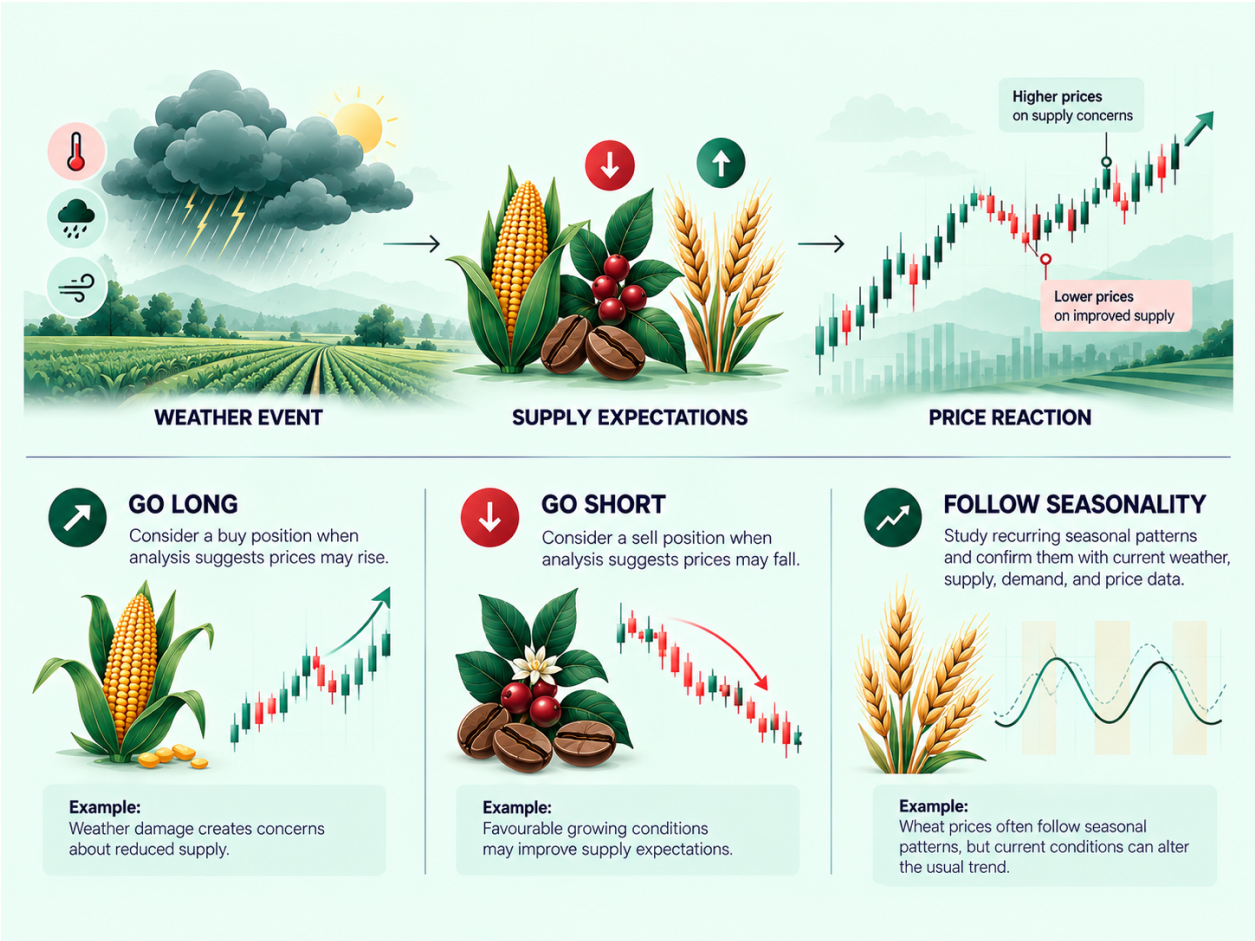
- Directional Trading: If historical patterns and current weather forecasts suggest a strong seasonal rally (e.g., coffee prices rising due to frost risk in Brazil), a trader might open a long position on a coffee CFD. Conversely, anticipating a post-harvest decline due to ample supply might lead to a short position.
- Calendar Spreads: This advanced strategy involves simultaneously buying one futures CFD contract month and selling another for the same commodity. For example, a trader anticipating a strong summer rally in corn due to historical weather patterns might buy a July corn CFD and sell a December corn CFD. This strategy aims to profit from the change in the price relationship between the two contract months, often driven by seasonal supply/demand shifts, rather than the outright price movement of the commodity. This can help isolate the seasonal component and potentially reduce exposure to broader market volatility.
For instance, selling December corn and buying July corn during September-October allows traders to specifically target the seasonal component, neutralizing broader market moves that might affect both contracts equally. This approach is particularly useful when markets are in contango (where future prices are above spot), as spreads can help reduce the cost associated with rolling contracts. While finding dedicated spread charts can be a challenge on some platforms, they are invaluable for visualizing these relationships.
- Event-Driven Trading: Position trades around key weather-related announcements or reports. For instance, a trader might anticipate increased volatility and potential upside in wheat CFDs following a report indicating severe drought in a major producing region.
3. Combining with Technical and Fundamental Analysis
Seasonality is a powerful lens but should not be used in isolation.
- Technical Confirmation: Use technical indicators (e.g., moving averages, support/resistance levels, volume) to confirm seasonal biases. A seasonal upward trend is more compelling if it aligns with a break above a key resistance level.
- Fundamental Context: Always consider the broader fundamental picture, including global demand, inventory levels, geopolitical events, and currency fluctuations, which can amplify or counteract seasonal weather patterns.
Managing Risk in Volatile Weather Markets
Weather-driven markets are inherently volatile. Effective risk management is paramount.
- Position Sizing: Allocate only a small portion of trading capital to any single weather-sensitive trade. Sudden, unexpected weather shifts can lead to rapid price reversals.
- Stop-Loss Orders: Implement strict stop-loss orders to limit potential losses if the market moves against your position. Given the potential for gaps on weather news, consider wider stops.
- Diversification: Avoid over-concentration in a single soft commodity. Diversify across different agricultural products or other asset classes to mitigate weather-specific risks.
- Stay Informed: Continuous monitoring of weather forecasts, agricultural news, and expert analysis is essential. The weather can change quickly, and market reactions can be immediate.
Conclusion
Weather seasonality is a fundamental, recurring force in soft commodity markets, directly influencing supply, demand, and ultimately, prices. For the astute CFD trader, understanding these patterns—from planting risks to harvest pressures—provides a critical framework for analysis. By combining historical seasonal insights with real-time weather data, robust technical analysis, and disciplined risk management, traders can better anticipate market movements and potentially capitalize on the predictable rhythms of nature in the dynamic world of soft commodity trading.
Frequently Asked Questions
How does extreme weather specifically impact soft commodity prices?
Extreme weather events like droughts, floods, or unseasonal frosts can severely disrupt planting, growing, or harvesting cycles, directly reducing crop yields or quality. This supply shock typically leads to sharp price increases in the affected soft commodity CFDs as markets price in tighter availability.
Which soft commodities are most susceptible to weather seasonality?
Agricultural commodities such as corn, wheat, soybeans, coffee, cocoa, and sugar are highly susceptible to weather seasonality. Their growth cycles are directly dependent on specific climatic conditions, making them vulnerable to deviations from typical seasonal weather patterns.
Can climate change alter traditional weather seasonality patterns in softs?
Yes, climate change can significantly alter traditional weather seasonality. It can lead to more frequent and intense extreme weather events, shift growing seasons, and introduce unpredictable volatility, making historical patterns less reliable and requiring traders to adapt their analysis.
What tools help traders monitor weather for soft commodity trading?
Traders can use a variety of tools, including specialized weather forecasting services, government agricultural reports (like USDA), satellite imagery for crop health, and economic calendars highlighting key crop progress updates. These tools provide critical data for assessing potential weather impacts.
How can CFD traders manage the high volatility caused by weather events in softs?
Managing volatility in weather-sensitive softs involves disciplined risk management, including using strict stop-loss orders, appropriate position sizing, and diversifying across different commodities. Traders should also stay continuously informed about weather forecasts and agricultural news to react swiftly to changing conditions.
Knowledge Check
1. What is the primary reason soft commodities are highly susceptible to weather seasonality?
- A) Their prices are solely determined by global economic growth.
- B) They are living organisms directly dependent on specific climatic conditions for growth.
- C) They are used primarily in industrial manufacturing, which has seasonal demand.
- D) Their supply chains are easily disrupted by geopolitical events.
2. What is a “weather premium” in soft commodity markets?
- A) A bonus paid to farmers for exceeding yield expectations.
- B) The additional cost of transporting commodities during adverse weather.
- C) The market’s anticipation of potential adverse weather events and their impact on future supply, priced into current futures CFDs.
- D) A government subsidy provided to offset weather-related crop losses.
3. Which of the following is an effective strategy for CFD traders to leverage weather seasonality in soft commodities?
- A) Ignoring weather forecasts and focusing solely on technical indicators.
- B) Taking large, undiversified positions based on a single weather report.
- C) Using futures CFDs to execute directional trades or calendar spreads based on historical seasonal patterns and current weather forecasts.
- D) Relying exclusively on past seasonal patterns without considering real-time weather or fundamental analysis.
Click to view the answers
1. **B) They are living organisms directly dependent on specific climatic conditions for growth.** – Soft commodities like corn and coffee have biological growth cycles that are directly impacted by weather, making them highly sensitive to seasonal climatic shifts.
2. **C) The market’s anticipation of potential adverse weather events and their impact on future supply, priced into current futures CFDs.** – A weather premium reflects the market’s forward-looking assessment of how potential weather risks might affect future supply and is incorporated into current prices.
3. **C) Using futures CFDs to execute directional trades or calendar spreads based on historical seasonal patterns and current weather forecasts.** – This strategy combines historical analysis with real-time data and utilizes flexible instruments like futures CFDs for targeted exposure to weather-driven movements.