



Market Overview
Global markets are navigating the repercussions of the US Federal Reserve’s first interest rate hike since July 2023. While the initial move contributed to a market sell-off, Fed Chair Kevin Warsh’s firm stance on tackling inflation has since brought a degree of calm to bond markets, leading to mixed equity performance across Asia. Australian shares recorded gains, buoyed by strong performances in the financials and healthcare sectors, while a dip in oil prices signaled easing Middle East supply disruptions. In contrast, Chinese and Hong Kong markets ended the session lower. Looking ahead, investors are keenly awaiting forthcoming interest rate decisions from the Bank of England and the Bank of Japan.
Markets
Asian markets displayed a mixed picture in the wake of the US Federal Reserve’s rate hike. Australia’s S&P/ASX 200 (^AXJO) closed higher at 8,732.40, up 0.41%. Japan’s Nikkei 225 (^N225) also posted gains, ending the session at 64,136.25, a rise of 0.33%. South Korea’s KOSPI (^KS11) was marginally lower at 6,717.09, down 0.01%.
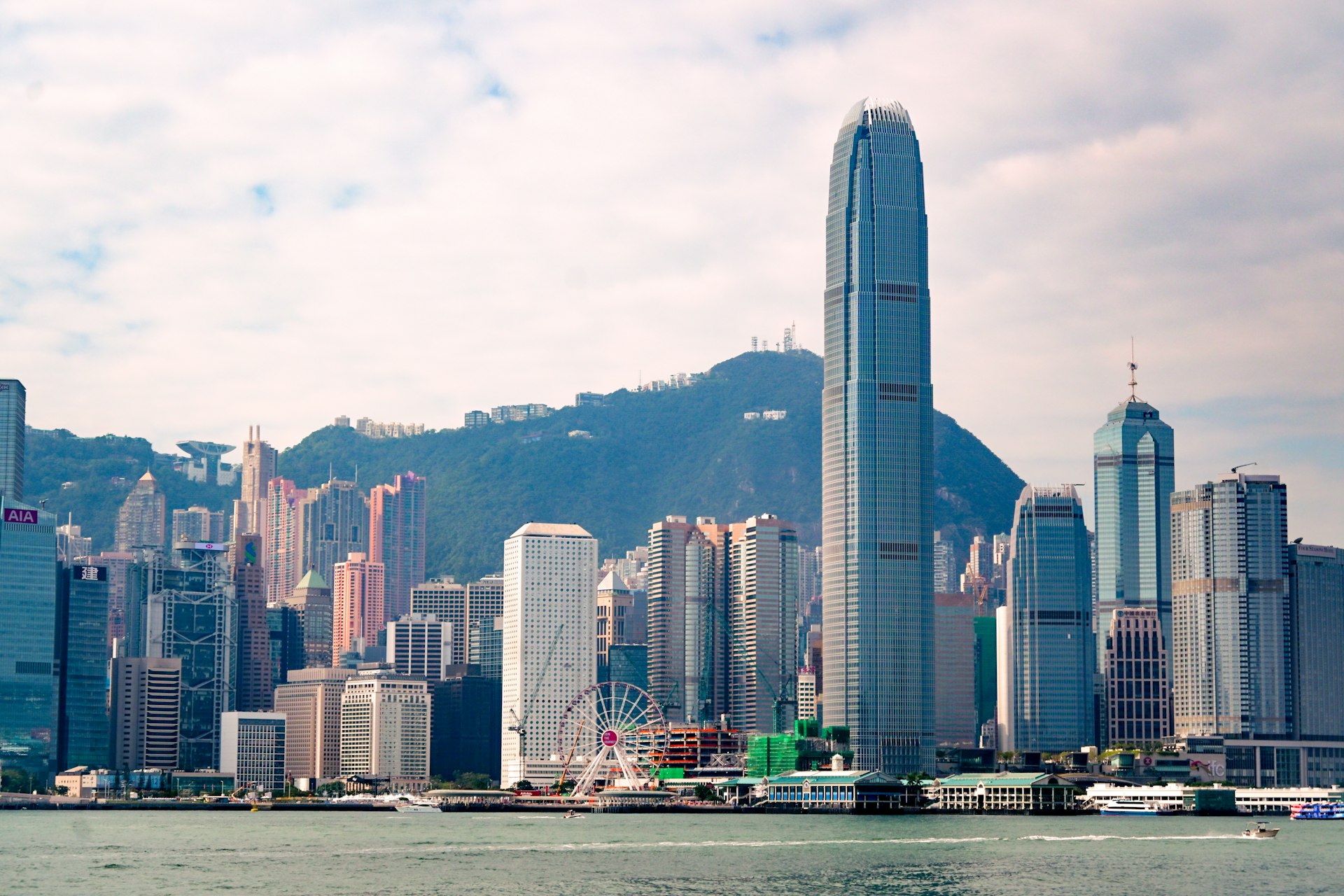
Conversely, Hong Kong’s Hang Seng (^HSI) traded lower at 24,566.43, down 0.60% in afternoon trade, and Mainland China’s CSI 300 (CSI300) ended the session at 3,876.14, down 0.50%. US equity futures were tracking higher in Asian trade.
In bond markets, yields saw mixed movements by the close. The US 10-year Treasury yield (^TNX) stood at 5.006%, up +1.00 bp, while the US 30-year Treasury yield (^TYX) edged lower by -1.50 bp to 5.349%. Earlier in the session, yields on 10-year Treasuries had declined two basis points, ending eight days of gains, which initially helped calm bond markets. Australia’s 10-year yield also reportedly declined two basis points to 5.33 per cent.
Commodity markets saw Brent crude oil (BZ=F) soften for a second day, trading at $103.91 a barrel, down 1.81%, on signs of reduced Middle East supply disruptions. Gold (GC=F) also eased to $4,346.70 an ounce, down 0.93%, typically falling when interest rates are higher.
What Drove Markets
US Federal Reserve’s Hawkish Stance: The Federal Reserve unanimously raised its benchmark rate by a quarter percentage point, bringing the target range to 3.75%-4%. This marked the first hike since July 2023. Policymakers also signaled that another increase could occur later this year. In his post-decision briefing, Fed Chair Kevin Warsh reiterated the threat posed by inflation, which most recently stood at 3.4% according to August’s consumer price index reading. Betashares chief economist David Bassanese noted that the Fed’s decision was a “strong reaffirmation of the central bank’s political independence,” adding that investors were likely taking some comfort from the fact the Fed does seem serious about tackling above-target inflation after all. Money markets are currently pricing about a 50% chance of another hike in October, with a December increase fully priced. TruStage chief economist Steve Rick raised the question of whether this rate increase is “one and done” or the beginning of another tightening cycle, suggesting the Fed should give this increase time to work. DBS strategist Philip Wee stated the Fed decision also reinforced its independence from the White House, putting it on a collision course with President Donald Trump, who has called for rates to be cut to 1% or lower.
Bond Market Dynamics: The Fed’s rate hike, coupled with Warsh’s inflation focus, helped to temper a recent bond-market sell-off. The two-year US Treasury yield reportedly fell 1 basis point to 4.72% after reaching its highest since 2024 in the previous session. Australia’s 10-year yield also declined two basis points to 5.33 per cent.
Commodity Market Sensitivity: Oil prices dropped for a second day. Brent crude (BZ=F) traded at $103.91, down 1.81%, as signs of easing Middle East supply disruptions emerged. This included the restoration of a key pipeline in Saudi Arabia, with Saudi Arabia seeking to restore about half the capacity within days. President Trump also stated that the conflict with Iran would end “very soon.” Gold prices (GC=F) eased, typically falling in an environment of higher interest rates, responding to the Fed’s inflation-fighting rhetoric. Oil prices had previously surpassed $100 per barrel, and higher oil prices stemming from continued conflict in the Middle East could keep inflation elevated.
Divergent Central Bank Paths: The Bank of England is widely expected to leave interest rates unchanged at its upcoming decision on Thursday, diverging from the recent rate hikes by the US Federal Reserve and the European Central Bank. However, investors will be monitoring for any indications that high energy prices could prompt a November hike from the BoE. Meanwhile, the Bank of Japan is expected to raise its key interest rate on Friday, at the end of its two-day meeting, and may signal the possibility of further tightening.
Australian Market Sector Dynamics: On the ASX, financials were among the strongest performers, with Commonwealth Bank (CBA.AX) closing up 1.63% at $154.01 and National Australia Bank (NAB.AX) rising 3.16% to $39.22. The health sector also pushed higher, led by CSL (CSL.AX), which closed up 1.81% at $177.56. CSL chairman Brian McNamee acknowledged shareholder frustration. Energy stocks were the weakest segment, primarily affected by lower oil prices, with Woodside (WDS.AX) closing down 0.87% at $32.98. Macquarie (MQG.AX) edged down 0.08% to $239.64 after Gordon Legal launched a class action against it.
Asian Semiconductor and Chinese Tech: Asian semiconductor shares showed mixed performance as investors weighed the Fed’s decision, the outlook for AI spending, and the impact of higher borrowing costs on technology valuations. SK Hynix (000660.KS) closed down 0.85% at 1,744,000.00 won, and Samsung Electronics (005930.KS) declined 0.20% to 253,000.00 won. Chinese technology giants also saw declines.
Other Geopolitical Notes: Apple’s Cook and OpenAI’s Altman were slated to attend a dinner with Trump and Xi.
Stocks to Watch
- Commonwealth Bank (CBA.AX): Closed at $154.01, up 1.63%, contributing to the strong performance of the financials sector on the ASX.
- National Australia Bank (NAB.AX): Finished at $39.22, up 3.16%, another key driver in the Australian financials sector rally.
- CSL (CSL.AX): Ended the session at $177.56, up 1.81%, as the health sector pushed higher on the ASX. Chairman Brian McNamee acknowledged shareholder frustration.
- Woodside (WDS.AX): Closed at $32.98, down 0.87%, reflecting the weakness in energy stocks due to lower oil prices.
- Macquarie (MQG.AX): Finished at $239.64, down 0.08%, amidst news that Gordon Legal launched a class action against the company.
- SK Hynix (000660.KS): Closed at 1,744,000.00 won, down 0.85%, as Asian semiconductor shares saw mixed performance.
- Samsung Electronics (005930.KS): Closed at 253,000.00 won, down 0.20%, also reflecting the mixed sentiment in the Asian semiconductor market.