

Market Overview
The APAC session concluded with a mixed performance across equity markets, dominated by the Reserve Bank of Australia’s (RBA) decision to raise its cash rate to a 15-year high of 4.60%. While RBA Governor Michele Bullock downplayed the immediate prospect of aggressive further hikes, she highlighted persistent inflation stemming from domestic capacity pressures and the escalating geopolitical situation in the Middle East. Concurrently, global bond markets, particularly US Treasuries, extended their upward march, with benchmarks reaching multi-year highs as investors anticipated more Federal Reserve rate increases than signaled by the Fed itself. This hawkish sentiment contributed to downward pressure on currencies like the Australian dollar and led to declines across most major Asian equity markets, though the Australian benchmark managed to close higher.
Markets
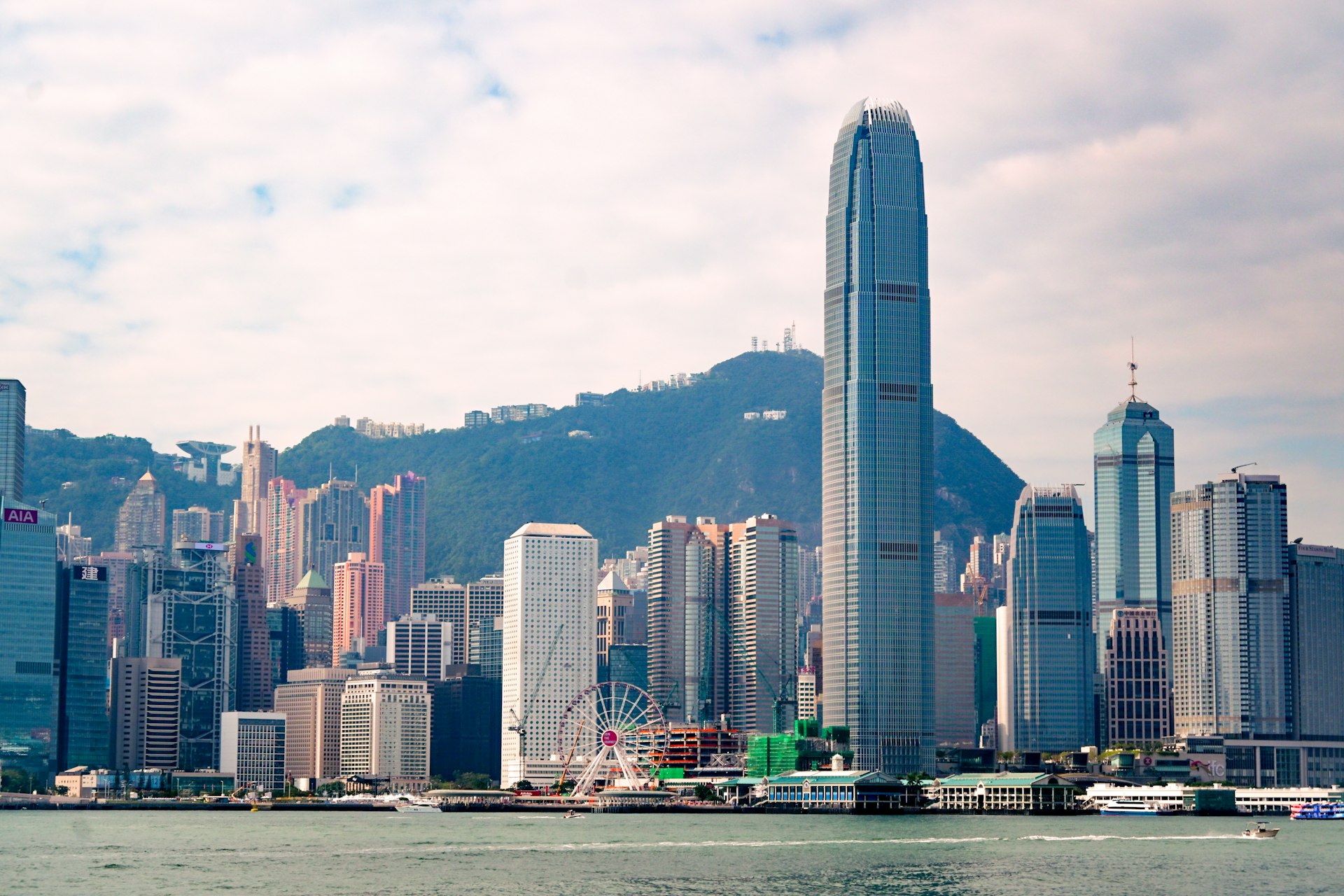
Australian equities bucked the regional trend, with the S&P/ASX 200 (^AXJO) closing up 0.34% at 8,709.30. In contrast, major Asian indices mostly declined, including Japan’s Nikkei 225 (^N225) which fell 0.60% to 65,481.27, South Korea’s KOSPI (^KS11) down 0.27% at 6,870.81, and Hong Kong’s Hang Seng (^HSI) which lost 0.48% to 24,523.57.
In currency markets, the Australian Dollar (AUDUSD=X) remained subdued, trading at 0.6987, down 0.31%, despite the RBA’s rate hike. It faced pressure from a stronger US Dollar Index (DX-Y.NYB), which gained 0.25% to 101.46, and higher Treasury yields.
US Treasury yields continued their sell-off. The benchmark 10-Year Treasury (^TNX) was at 5.240%, up 5.60 bp, while the 30-Year Treasury (^TYX) stood at 5.561%, rising 5.70 bp. Both benchmarks reached levels not seen since 2007 for the 10-year yield and around a 2004 high for the 30-year yield.
Ahead of the US trading session, US stock futures declined early Tuesday, following a session in which equities fell due to rising Treasury yields.
What Drove Markets
The RBA’s unanimous decision to raise its cash rate by 25 basis points to 4.60% marked its fourth hike this year, bringing total hikes this year to 100 basis points, and taking borrowing costs to their highest level in 15 years, or since 2011. The RBA further stated that some of the upside risks to inflation flagged in its August meeting were now materializing. The September rate hike had been largely priced into markets. Governor Bullock acknowledged the difficulty of today’s rate increase for households and businesses, but reiterated that high inflation ultimately harms all Australians, particularly the most vulnerable. RBA Governor Michele Bullock acknowledged that the RBA is currently failing to meet its inflation target. She noted that inflation, at 3.5 per cent, did not constitute stagflation alongside the 4.6 per cent unemployment rate. However, Bullock separately stated that inflation is currently too high and driven by domestic capacity pressures and the escalating Middle East conflict. She attributed domestic capacity pressures to stronger-than-expected domestic spending and investment, tight labor markets, and weak productivity. Policymakers also observed that output growth slowed in Q2 but was slightly stronger than expected, consumer spending is easing, and housing prices fell in most capital cities with new housing loans declining. Additionally, labor market conditions have now eased somewhat. Bullock also clarified that while the Middle East conflict is making things much worse, the RBA had already begun raising interest rates due to pre-existing excess demand even before the conflict started. The RBA also noted that AI-related demand is driving rapid price increases for technology-related goods. While Governor Bullock downplayed the suggestion of the cash rate rising to 5.1 per cent, as predicted by financial markets, she noted that if the restrictiveness from the current interest rate rises proves sufficient to curb inflationary pressures, then further increases might not be necessary. The RBA Board indicated that further tightening may be needed and that it would continue to do what it considers necessary to contain inflation. Bullock noted that the RBA had previously raised rates three times once they identified an inflation problem. She further noted that an aggressive, dramatic increase in the cash rate would not be an appropriate outcome to curb inflation. She also indicated that a recession is not the RBA’s central base case at this point. She emphasized that monetary policy “can’t do anything about productivity” directly, observing that “productivity is doing nothing.”
Globally, US Treasury yields continued their ascent, reflecting investor worries about sustained inflation. The 10-year US Treasury note yield ended the day above 5.2%, nearing levels not seen since 2007, while the 30-year yield topped 5.56%, trading around a 2004 high. According to Evangelos Assimakos, Investment Director of Rathbones, markets are currently pricing in a more hawkish outlook for Federal Reserve rate hikes, expecting “a couple” more hikes, contrasting with 12 out of 18 Fed members who opted for “just one” rate hike this side of Christmas. The RBA stated it is “not alarmed, but alert” to the global surge in bond yields. Governor Bullock indicated the RBA is watching quite closely asset prices in some areas, such as equity markets, particularly in technology areas, which are quite elevated.
The Middle East conflict was highlighted as a “key challenge” by Governor Bullock, as its duration increases the likelihood of businesses passing along cost increases. RBA Governor Michele Bullock acknowledged that tomorrow’s monthly inflation data release is “not ideal” given its proximity to the cash rate decision. Markets are now focused on Australia’s August inflation data, due on Wednesday, for further guidance on price pressures. Investors also await key US economic data today (Tuesday), including the September reading on U.S. consumer confidence and the August jobs opening and labor turnover survey, which could influence Treasury yields.
Stocks to Watch
Chipmaker AMD (AMD) saw its shares close down 3.61% at 607.87. This comes as the company announced its acquisition of AI firm World Labs for $8.2 billion, though its shares were little changed after hours. The RBA’s Financial Stability Review, due on Thursday, will discuss vulnerabilities from these highly elevated asset prices and the risks associated with a disorderly pullback in the bond market.