


Choosing Your Ideal CFD Trading Platform: A Comprehensive Guide
In the dynamic world of online trading, selecting the right platform is a pivotal decision that can significantly impact your trading journey. With an abundance of options available, understanding what to look for is crucial for both novice and experienced traders. This guide will walk you through the essential considerations to help you choose a Contract for Difference (CFD) trading platform that aligns with your objectives and trading style.
A trading platform serves as the digital gateway to financial markets, providing the technology and interface through which traders execute orders, analyze data, and manage their positions. It is the essential software that connects you to the broker, acting as your online marketplace for financial instruments.
Understanding the Role of a Trading Platform and Broker
Trading vs. Investing: Understanding Your Account Type
Before selecting a platform, it’s crucial to differentiate between trading and investing, as these distinct approaches require different account types and platform functionalities. Investing typically involves buying and owning underlying assets like shares, ETFs, or bonds with the goal of long-term capital appreciation or income generation. This often means opening a share trading account. Trading, particularly with CFDs, involves speculating on the price movements of assets without owning them outright, often utilizing leverage for short-to-medium term gains. For this, you’ll need a CFD trading account. Your choice fundamentally impacts the markets you can access, the tools available, and the risk management features provided by your broker.
While often used interchangeably, it’s important to distinguish between a trading platform and a broker. The platform is the software and interface you interact with, offering tools, charts, and order execution capabilities. The broker, on the other hand, is the financial institution that provides this platform and facilitates your trades, acting as the intermediary between you and the broader financial markets. They manage your trading account, execute your orders, and ensure regulatory compliance. For CFD trading, your account with a broker allows you to speculate on asset price movements without owning the underlying asset.
Key Factors for Choosing a CFD Trading Platform
Selecting a platform is not a one-size-fits-all endeavor. Your personal trading goals, risk tolerance, and preferred instruments will dictate which features are most valuable. Here are the critical factors to evaluate:
1. Your Trading Goals and Style
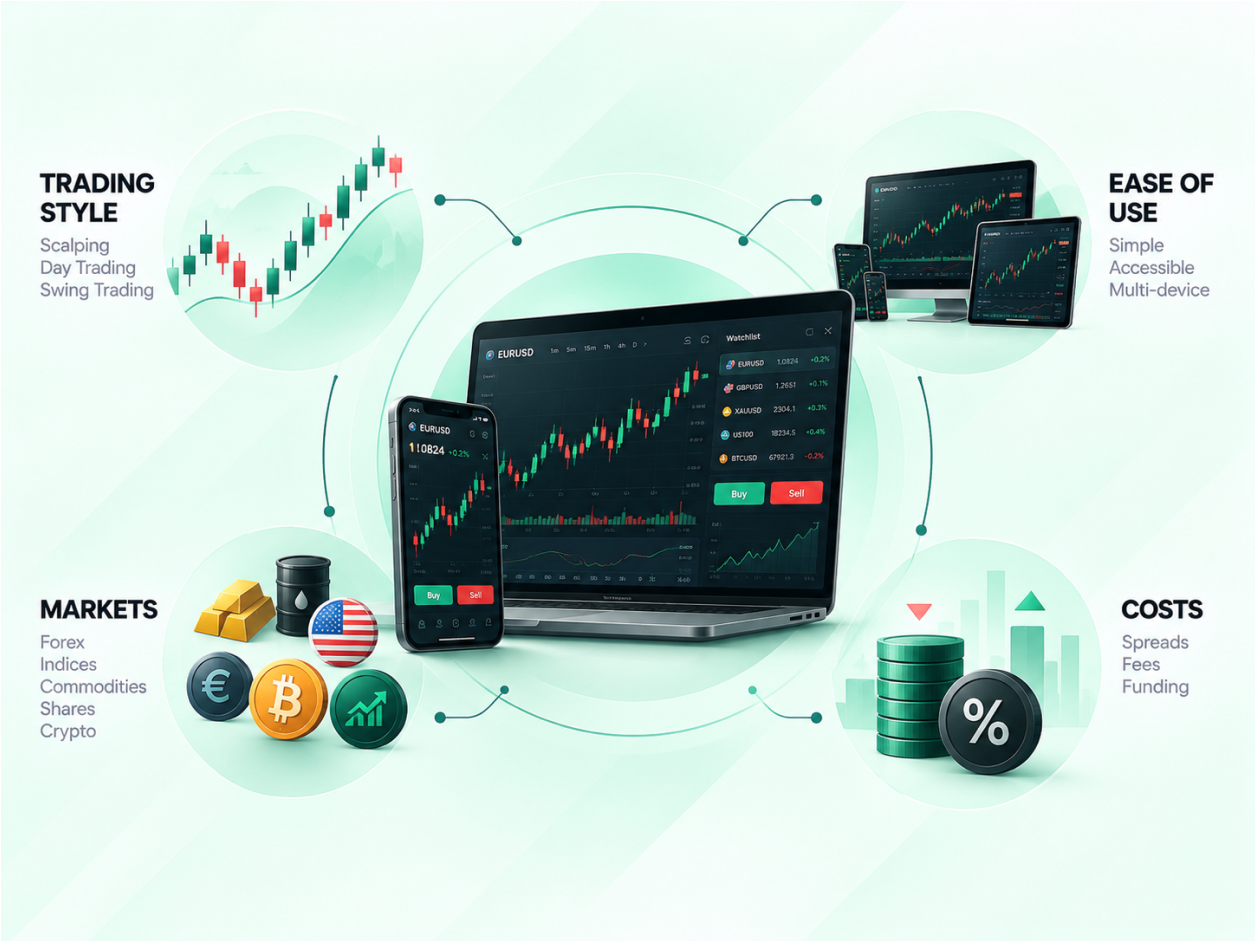
Before diving into platform features, define your trading objectives. Are you aiming for short-term gains through frequent trades or looking to hold positions over longer periods? Your trading style—scalping (seconds to minutes), day trading (intraday), swing trading (days to weeks), or position trading (months to years)—will heavily influence the platform you need. For instance, a scalper requires ultra-fast execution and minimal latency, while a swing trader benefits from comprehensive technical analysis tools for identifying trends over several days. Aligning the platform’s capabilities with your approach is fundamental.
2. Ease of Use and Accessibility
An intuitive and user-friendly interface is crucial, especially for beginners. A complex platform can divert focus from market analysis to navigation. Look for a clean design, intuitive navigation, and seamless multi-device compatibility across desktop, web, and mobile. A demo account is also vital, allowing you to practice trading with virtual funds, familiarize yourself with the platform’s functionalities, and test strategies without financial risk before committing real capital.
3. Products and Markets Offered
The range of financial instruments available determines your trading opportunities. Ensure the platform offers access to the markets you intend to trade. Common CFD markets include Forex (currency pairs), Indices (stock market benchmarks), Commodities (e.g., gold, oil), Metals (e.g., gold, silver), Stocks (CFDs on individual company shares), and Cryptocurrencies. A comprehensive platform provides diverse options for portfolio diversification or specialization in specific asset classes.
Extended Trading Hours
Beyond the sheer variety of products, consider a platform’s market accessibility in terms of trading hours. Many brokers offer extended trading hours, or even weekend trading for specific markets like certain indices, forex pairs, and cryptocurrencies. This flexibility is crucial for traders who need to react swiftly to global news events, manage existing positions outside standard market hours, or capitalize on opportunities that emerge when traditional markets are closed. Access to 24/5 or 24/7 markets can significantly enhance your ability to respond to market dynamics.
4. Trading Costs and Fees
Trading costs significantly impact profitability. Seek transparency in fees, which typically include: Spreads (the bid-ask difference, tighter usually means lower cost), Commissions (a direct charge per trade, applicable to certain account types and instruments), and Overnight Funding (a fee/credit for positions held past market close). Also, consider potential deposit/withdrawal fees or inactivity charges. Always compare the fee structure across platforms, factoring in your trading frequency and typical position holding periods.
5. Advanced Tools and Features
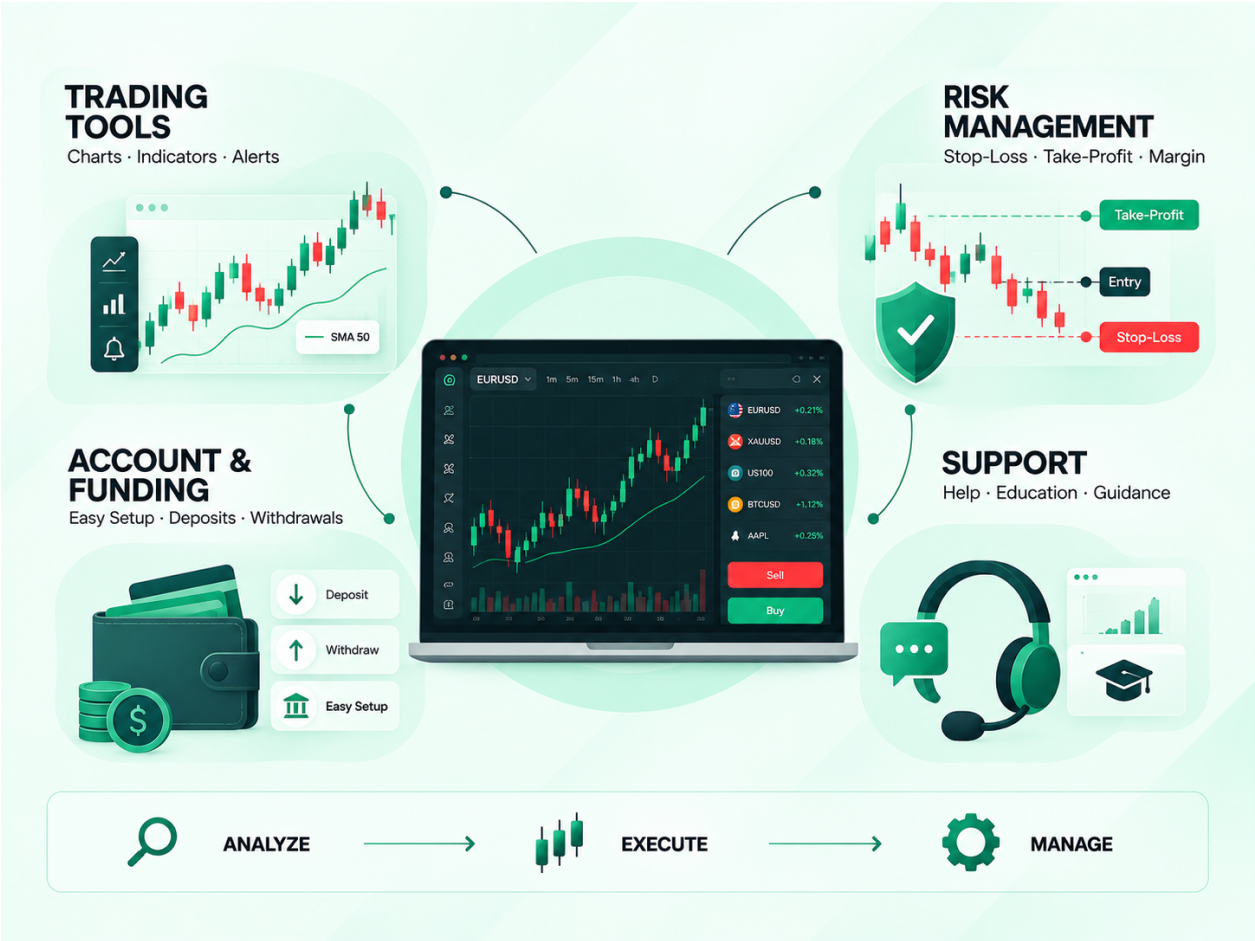
A robust platform provides tools to enhance decision-making. Look for advanced charting capabilities with multiple timeframes, chart types, and a wide array of technical indicators (e.g., Moving Averages, RSI) and drawing tools. Useful features also include trading signals and alerts, real-time economic calendars and news feeds, and performance analytics. For advanced users, compatibility with popular third-party platforms like MetaTrader 4 (MT4), Meta Trade 5 (MT5) or API access for algorithmic trading can be beneficial. LQH Markets offer MT5 as our platform.
6. Robust Risk Management Functionality
Given the leveraged nature of CFDs, effective risk management tools are indispensable. Essential features include Stop-Loss Orders to limit potential losses and Take-Profit Orders to secure gains. Negative Balance Protection is a feature that prevents losses beyond your deposited funds, ensuring your account balance does not fall below zero under normal trading conditions. Understanding margin requirements and how the broker handles margin calls is also critical.
Mitigating Slippage with Guaranteed Stop-Loss Orders
A critical consideration in risk management is “slippage,” which occurs when the actual execution price of a trade differs from the expected price, particularly during periods of high market volatility or rapid price movements. While standard stop-loss orders are designed to limit losses, they can be susceptible to slippage, meaning your trade might close at a less favorable price than intended. To counter this, some platforms offer Guaranteed Stop-Loss Orders (GSLOs). GSLOs ensure your trade is closed at the exact price you specify, regardless of market conditions, providing absolute certainty for your maximum potential loss. This enhanced security often comes with a small premium or a slightly wider spread.
7. Account Management and Funding
The practicality of managing your account should be seamless. Look for an easy, quick, and secure registration and verification process. The platform should offer flexible and convenient deposit/withdrawal methods (e.g., cryptocurrencies, debit/credit cards) with clear processing times and minimal fees. Be aware of any minimum deposit requirements. An efficient and transparent withdrawal process is a sign of a reliable broker.
8. Customer Support and Educational Resources
Reliable support and continuous learning are vital. Seek customer service that is accessible 24/5 during market hours, across multiple channels (live chat, email). The support staff should be knowledgeable, responsive, and capable of providing accurate assistance. Additionally, a comprehensive library of free educational resources, including articles, video tutorials, webinars, and structured courses, is invaluable for developing your trading knowledge and skills.
Conclusion
Choosing the right CFD trading platform is a strategic decision that requires careful consideration of your individual needs and trading aspirations. By thoroughly evaluating factors such as your trading style, the available markets, cost structure, platform features, risk management tools, and the quality of support and education, you can select a platform that empowers you to navigate the financial markets with confidence and efficiency. Remember to utilize demo accounts to test platforms before committing real capital, ensuring a seamless and informed start to your trading journey.
Frequently Asked Questions
What is the primary difference between a trading platform and a broker?
A trading platform is the software interface you use to execute trades and analyze markets, while the broker is the financial institution that provides the platform and facilitates your trades, managing your account and connecting you to the financial markets.
Why is a demo account important when choosing a trading platform?
A demo account is crucial for beginners as it allows you to practice trading with virtual funds, familiarize yourself with the platform’s features, and test various strategies without incurring any financial risk, building confidence before live trading.
How do trading costs like spreads and commissions affect my profitability?
Spreads and commissions are direct costs associated with opening and closing trades. Tighter spreads and lower commissions reduce your transaction expenses, directly impacting your net profit or loss, especially for frequent traders.
What is Negative Balance Protection and why is it important for CFD traders?
Negative Balance Protection is a regulatory feature that ensures a trader cannot lose more money than they have deposited in their account. For CFD traders, who use leverage, this protection is vital as it prevents account balances from falling into negative territory due to sudden, large market movements.
Knowledge Check
1. Which of the following trading styles typically involves holding positions for seconds to minutes?
- A) Position Trading
- B) Swing Trading
- C) Day Trading
- D) Scalping
2. What is the primary benefit of a demo account for a new trader?
- A) It allows trading with real money without any deposit.
- B) It provides access to exclusive market analysis tools.
- C) It enables practice and platform familiarity without financial risk.
- D) It guarantees profits on initial trades.
3. Which risk management tool ensures that a trader cannot lose more than the funds in their account?
- A) Stop-Loss Order
- B) Take-Profit Order
- C) Negative Balance Protection
- D) Guaranteed Stop-Loss Order
Click to view the answers
1. D) Scalping – Scalping is a very short-term trading style focused on small, frequent gains, with positions typically held for seconds to minutes.
2. C) It enables practice and platform familiarity without financial risk. – A demo account provides virtual funds for practicing trades and learning the platform’s features in a risk-free environment.
3. C) Negative Balance Protection – Negative Balance Protection is a regulatory safeguard designed to prevent a trader’s account balance from going below zero, ensuring they cannot lose more than their deposited funds.