


Day trading, the practice of opening and closing financial positions within a single trading day, is a dynamic and demanding style of trading. It involves making numerous rapid decisions to capitalize on small intraday price movements, often utilizing leveraged instruments like Contracts for Difference (CFDs).
Day trading is a trading style characterized by buying and selling financial instruments within the same trading day, with all positions closed before the market closes. Its primary goal is to profit from short-term price fluctuations, often through numerous small gains.
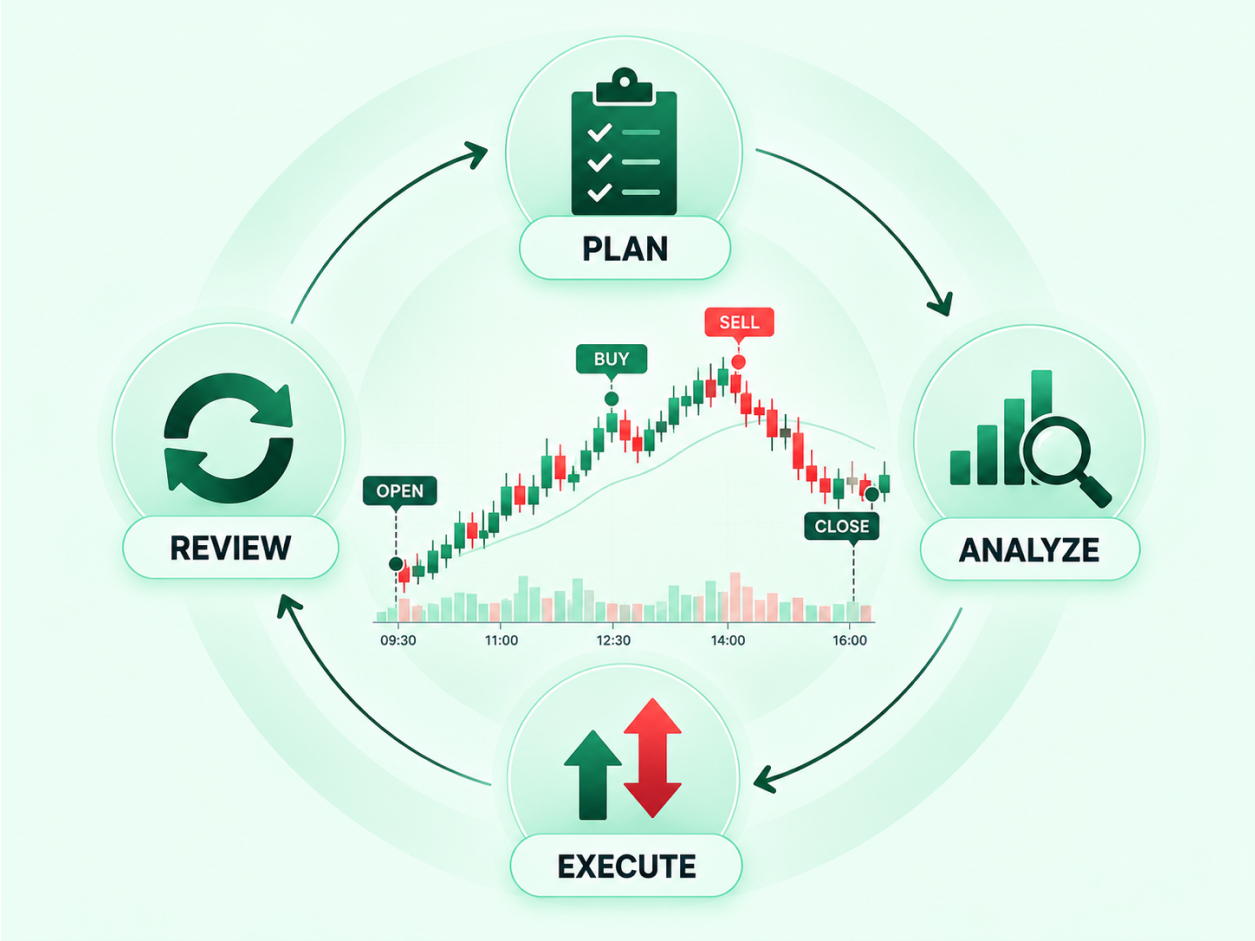
While the allure of quick profits and financial independence can be strong, successful day trading requires a profound understanding of market dynamics, rigorous discipline, substantial capital, and a robust risk management framework. This guide aims to set realistic expectations for aspiring and current CFD day traders, outlining the critical elements necessary for navigating this challenging pursuit.
The Reality of Day Trading: Beyond the Hype
Day trading is fundamentally different from long-term investing. Investors seek to benefit from price movements over extended periods, often holding assets for months or years. Day traders, conversely, focus on micro-movements, closing all positions to avoid overnight risks like “gapping” (when an asset’s price opens significantly higher or lower than its previous close due to overnight news). This intensive, short-term focus means day trading is not a part-time endeavor; it demands full-time attention, dedication, and a specific mindset.
The journey to becoming a consistently profitable day trader is often underestimated. Many hopeful traders enter the market with insufficient preparation, leading to significant losses. Unlike traditional professions where skills are built gradually with a steady income, the “tuition” in day trading often comes in the form of real financial losses.
Essential Capital Requirements for Day Trading
One of the most significant misconceptions about day trading is the amount of capital required. While some platforms allow trading with minimal deposits, truly sustainable day trading demands substantial financial resources.
Trading Capital
While some jurisdictions have specific rules for frequent traders, LQH Markets offers accessible entry with a minimum deposit of just $10, though sustainable day trading generally requires more substantial capital. However, this is merely an entry ticket. Experts widely agree that a realistic dedicated trading capital should be significantly higher, often in the range of $75,000 to $100,000, to allow for proper position sizing, diversification, and the ability to withstand drawdowns without excessive risk.
Regulatory Capital & Small Account Challenges
The Financial Industry Regulatory Authority (FINRA) in the United States, for example, enforces the Pattern Day Trader (PDT) rule. This regulation mandates that traders utilizing margin accounts to execute four or more day trades within any five-business-day period must maintain a minimum equity of $25,000. While LQH Markets provides accessible entry with a low minimum deposit, this regulatory threshold, where applicable, is often merely a “ticket to entry” rather than sufficient capital for sustained profitability. Even with $25,000, adhering to sound risk management principles like the 1% rule means risking only $250 per trade. This limited capital per position makes it incredibly challenging to withstand normal market “noise,” diversify effectively across different assets, or recover from a few consecutive losses, often dooming undercapitalized traders early in their journey.
Living Expenses and Emergency Funds
Crucially, dedicated trading capital must be entirely separate from your living expenses. Aspiring full-time traders should have a financial cushion covering at least 6 to 18 months of living costs. For an average individual with annual expenses of $50,000, this could mean an additional $30,000 to $75,000 in cash reserves. This buffer is vital to prevent emotional trading decisions driven by the immediate need to pay bills, which often leads to poor outcomes.
The “Trading for a Living” Benchmark
For those aiming to make a living solely from trading, a common rule of thumb suggests having trading capital equivalent to at least 20 times your annual expenses. For example, if your yearly expenses are $50,000, you would ideally need $1,000,000 in trading capital to generate a sustainable income (assuming a consistent, but not guaranteed, annual return of 15% after expenses). This substantial capital base allows for compounding profits and reduces the pressure to take on excessive risk for daily income.
The Intricate Learning Process
Becoming a proficient day trader is a complex, ongoing learning process. It requires more than just understanding market mechanics; it involves developing a deep grasp of technical analysis, fundamental drivers, and, critically, self-awareness.
Developing a Trading Plan
A comprehensive trading plan is non-negotiable. This blueprint should detail your chosen markets, specific strategies (e.g., scalping, trend trading, mean reversion), entry and exit criteria, position sizing rules, and clear risk parameters. Whether you lean on technical analysis (chart patterns, indicators) or fundamental analysis (economic data, news events), your methodology must be well-defined and consistently applied.
Practice and Validation
Before risking substantial capital, extensive practice on a demo account is essential. This allows you to test strategies, familiarize yourself with the trading platform, and develop execution speed in a risk-free environment. Treat demo trading as seriously as live trading to build genuine skills and a track record.
The Cost of Education
While some educational resources are available for free, many traders invest in courses or mentorships. However, caution is advised, as the quality and legitimacy of such programs vary widely. The most valuable education often comes from experience, which can be costly in terms of early losses.
Mastering Risk Management
Effective risk management is paramount in day trading, arguably more critical than identifying winning trades. A single poorly managed trade can wipe out weeks or months of profits.
The 1% Rule and Risk-to-Reward
Professional traders often adhere to a strict rule: never risk more than 1% of their total trading capital on any single trade. For a $100,000 account, this means a maximum loss of $1,000 per trade. This discipline ensures that even a string of losing trades does not decimate the account.
Equally important is the risk-to-reward ratio. A common target is a 1:2 ratio, meaning you aim to profit twice as much as you risk on a trade. For example, if you risk $100, you aim for a $200 profit. This allows traders to be profitable even with a win rate below 50%, as long as their winning trades are significantly larger than their losing ones.
Stop-Loss and Take-Profit Orders
These are indispensable tools. A stop-loss order automatically closes a position when it reaches a predetermined loss level, limiting downside. A take-profit order closes a position when it reaches a target profit level, securing gains. It’s crucial to understand that in highly volatile markets or during “gaps” (sudden price jumps or drops), stop-loss orders may execute at a price worse than specified. This phenomenon is known as slippage. Slippage occurs when a stop-loss order is triggered but the market moves so rapidly that the order cannot be filled at the exact specified price. Instead, it executes at the next available price, which can be significantly worse. This is particularly prevalent during periods of extreme volatility, rapid market movements, or when major overnight news events cause prices to “gap” past the intended stop-loss level. For CFD traders, understanding and accounting for slippage and gapping risk is critical, as it can lead to larger-than-intended losses and significantly impact overall risk management.
The Perils of Leverage and Margin
CFDs are leveraged instruments, meaning you can control a large position with a relatively small amount of capital (margin). While leverage amplifies potential profits, it equally magnifies potential losses. In a volatile market, a leveraged position can lead to rapid and substantial losses, potentially resulting in a “margin call” where you’re required to deposit additional funds or face automatic liquidation of your positions by the broker. LQH Markets also offers Negative Balance Protection (NBP) to ensure your account balance does not fall below zero under normal trading conditions. Understanding and managing leverage is a cornerstone of responsible CFD day trading.
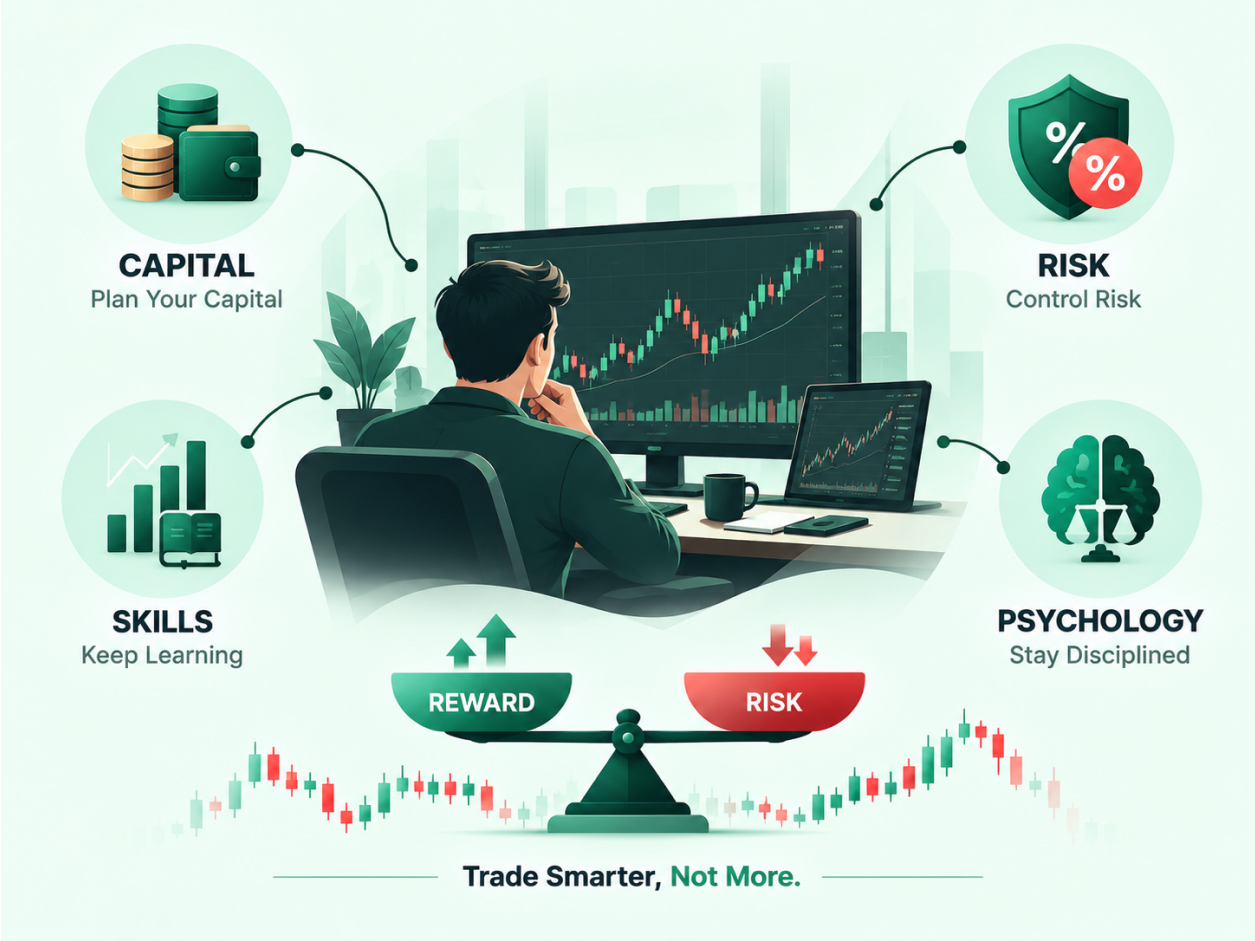
The Psychological Gauntlet
Day trading is as much a psychological battle as it is an analytical one. Emotions like fear, greed, hope, and overconfidence can severely impair judgment and lead to irrational decisions.
Isolation and Stress
Trading from home, while seemingly appealing, can be incredibly isolating. The lack of colleagues and direct feedback, combined with the intense financial pressure and irregular income, can take a significant toll on mental health. Relationships with loved ones can also suffer if they don’t understand the emotional rollercoaster and time commitment involved.
Overtrading and Revenge Trading
New traders often fall prey to overtrading (excessive trading, often without a clear edge) or revenge trading (trying to recoup losses by taking impulsive, larger-than-planned trades). Both are detrimental and typically lead to further losses. A disciplined approach, sticking to the trading plan, and knowing when to step away are vital.
Competing with Advanced Systems
Individual retail traders also face a formidable challenge: competing against institutional high-frequency trading (HFT) firms. These firms employ sophisticated algorithms, specialized hardware, and direct market access to execute thousands of trades in microseconds, exploiting tiny price discrepancies that are invisible and inaccessible to the average trader. This speed advantage makes it extremely difficult for individuals to consistently profit from fleeting market movements.
Markets and Strategies for Day Trading CFDs
Day trading can be applied across various financial markets, each with its characteristics:
- Stocks: Popular for beginners due to variety. Day traders often close positions to avoid overnight gapping risk.
- Indices: Speculating on the performance of a group of shares (e.g., a major market index). Similar gapping risks to individual stocks.
- Cryptocurrencies: A 24/7 market, allowing traders to avoid overnight funding costs and gapping risks. Highly volatile.
- Forex: High liquidity and 24-hour nature make it popular. Day trading often used to eliminate overnight rollover fees and exposure to weekend gaps.
Popular day trading strategies include:
- Trend Trading: Identifying and trading in the direction of an established price trend.
- Swing Trading: Capturing short-term price “swings” or reversals within a larger trend.
- Scalping: Making numerous small profits from tiny price changes, often holding positions for seconds or minutes. Requires strict exit strategies.
- Mean Reversion: Betting that prices will return to their historical average after a significant deviation.
- Money Flow: Using volume and price data to identify overbought or oversold conditions.
Understanding Intraday Market Dynamics
Successful day trading hinges on a keen understanding of specific intraday market dynamics: liquidity, volatility, and trading volume. Each plays a crucial role in a trader’s ability to execute strategies effectively and profitably.
- Liquidity: This refers to how easily and quickly a financial instrument can be bought or sold without significantly impacting its price. High liquidity is paramount for day traders, as they often execute multiple trades throughout the day and need to enter and exit positions swiftly without incurring substantial slippage or affecting market prices.
- Volatility: The rapidness and magnitude of price movements are key for day traders. Volatility creates the price fluctuations necessary to generate profit opportunities within a single day. Without sufficient volatility, even the best strategies may struggle to find enough movement to capitalize on.
- Trading Volume: This measures the total number of shares or contracts traded for a particular asset over a specific period. High trading volume indicates strong market interest and can be useful for confirming trends, validating price movements, and identifying reliable entry and exit points.
As a practical application of these dynamics, the Money Flow indicator is a valuable tool. It signals whether an asset might be overbought or oversold by incorporating both volume and price data, rather than just price alone. The indicator works by comparing the number of trades from the previous day to the current day to determine the direction of money flow. Typically, a reading of 80 or higher indicates overbought conditions, often signaling a potential selling opportunity. Conversely, a reading of 20 or below suggests oversold market conditions, which can be interpreted as a signal to buy.
When to Consider Full-Time Day Trading
Transitioning to full-time day trading is a monumental decision that should only be made after extensive, deliberate preparation. A cautious and methodical approach significantly increases the chances of success. Consider the following checklist:
- Documented Profitability: At least two years of consistent, documented profits from part-time trading across various market conditions.
- Sufficient Capital: A minimum of $100,000 in dedicated trading capital, entirely separate from living expenses.
- Financial Cushion: One year (12-18 months) of living expenses saved in cash, independent of trading capital.
- Healthcare & Benefits: A clear plan for replacing health insurance and other benefits previously provided by employment.
- Advanced Tools: Access to MetaTrader 5 (MT5), our exclusive high-quality trading platform, which provides real-time data feeds and advanced analytical tools.
- Psychological Readiness: A proven ability to manage emotions under pressure and comfort with income uncertainty.
- Robust Risk Management: A well-defined and strictly adhered-to risk management strategy.
- Debt-Free: Zero high-interest debt to avoid additional financial pressure.
- Business Plan: A written business plan detailing strategies, goals, and worst-case scenarios.
- Family Support: Full understanding and support from loved ones regarding the risks and time commitment.
- Tax Advisor: Consultation with a professional tax advisor familiar with trading tax implications.
Conclusion
Day trading with CFDs offers unique opportunities for speculating on market movements. However, it is a high-risk, high-reward endeavor that demands exceptional discipline, significant capital, continuous learning, and robust emotional resilience. Setting realistic expectations, meticulously preparing, and prioritizing risk management are not just advisable—they are essential for anyone hoping to navigate the complexities of day trading successfully. For most individuals, pursuing day trading as a part-time activity while maintaining a steady income is the most prudent path, allowing for skill development without undue financial pressure.
Frequently Asked Questions
Is it possible for an average person to make a living solely from day trading?
While a small percentage of highly skilled and disciplined individuals do make a living from day trading, it is exceptionally challenging and far from guaranteed. Most aspiring traders find it difficult to achieve consistent profitability due to the intense demands, significant capital requirements, and psychological pressures involved.
How much capital is truly needed to start day trading effectively?
Beyond any regulatory minimums (e.g., $25,000 for pattern day traders in some regions), experts recommend having at least $75,000 to $100,000 in dedicated trading capital. Additionally, a separate reserve of 6-18 months of living expenses is crucial to avoid emotional trading decisions driven by financial pressure.
What role does psychology play in day trading success?
Psychology is a critical factor. Emotions like fear, greed, and overconfidence can lead to impulsive decisions, overtrading, and significant losses. Successful day traders must develop strong emotional discipline, adhere strictly to their trading plan, and manage stress effectively to maintain objectivity.
Why are CFDs popular instruments for day trading?
CFDs are popular for day trading because they allow traders to speculate on both rising and falling market prices without owning the underlying asset. Their leveraged nature can amplify returns (and losses), and they often allow for faster entry and exit, making them suitable for capturing short-term intraday movements and potentially avoiding overnight funding costs.
Knowledge Check
1. Which of the following is NOT typically considered a core requirement for successful full-time day trading?
- A) A dedicated trading capital of at least $100,000.
- B) A robust risk management strategy with a focus on a 1:2 risk-to-reward ratio.
- C) The ability to consistently outperform high-frequency trading algorithms.
- D) A separate financial cushion covering 6-18 months of living expenses.
2. What is a primary reason day traders close all positions before the end of the trading day?
- A) To avoid paying daily commissions on open trades.
- B) To minimize exposure to overnight risks such as “gapping.”
- C) To ensure their daily profit targets are met.
- D) To simplify their tax calculations for the day.
3. What does the “1% rule” in risk management for day trading primarily advocate?
- A) Traders should aim for a 1% profit on every trade.
- B) Traders should only invest 1% of their total capital into a single market.
- C) Traders should risk no more than 1% of their total trading capital on any single trade.
- D) Traders should allocate 1% of their daily profits to an emergency fund.
Click to view the answers
1. C) – While competition from HFT is a reality, consistently outperforming these advanced algorithms is not a realistic or necessary core requirement for individual day trading success.
2. B) – Day traders close positions to avoid “gapping risk,” where overnight news can cause significant price changes before the next market open.
3. C) – The 1% rule is a fundamental risk management principle stating that a trader should risk no more than 1% of their total trading capital on any single trade to protect their account from substantial losses.