


The allure of the foreign exchange (Forex) market often conjures images of rapid wealth accumulation. While Forex trading can be highly profitable for seasoned professionals and institutional investors, it presents significant challenges for retail traders. Understanding realistic profitability expectations is crucial for navigating this dynamic market successfully and avoiding common pitfalls.
Forex profitability expectations refer to the realistic and sustainable returns a trader can anticipate from their trading activities, considering market dynamics, risk management, and individual skill. These expectations emphasize consistent, disciplined execution over speculative, high-risk endeavors.
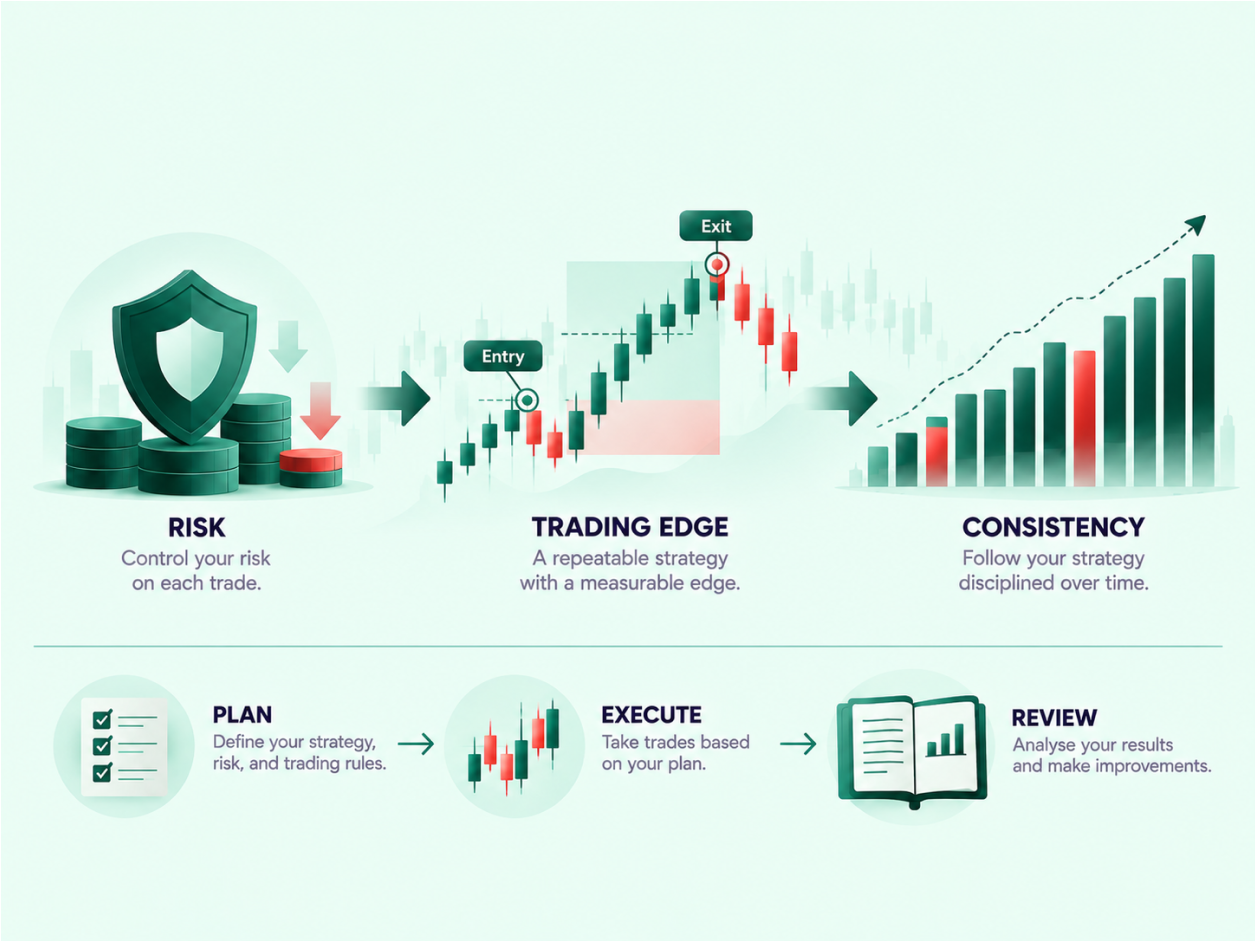
This guide aims to provide a clear, objective perspective on what retail traders can realistically expect from the Forex market, emphasizing the critical role of process, risk management, and informed decision-making.
The Reality of Forex Profitability
The Forex market is the largest and most liquid financial market globally, with trillions of dollars exchanged daily. This immense scale often leads new traders to believe that substantial, quick profits are easily attainable. However, the reality is far more nuanced. Professional currency traders and hedge fund managers, equipped with vast capital, proprietary information, and advanced algorithms, operate with distinct advantages. For the individual retail trader, the path to consistent profitability is a marathon, not a sprint, demanding rigorous discipline and a deep understanding of market mechanics.
Massive, sudden wins, often highlighted in media, are exceptions driven by unique market events or extraordinary circumstances, not typical outcomes for the majority of participants. The vast majority of retail traders face an uphill battle, with many not lasting beyond a few months or years.
Core Drivers of Forex Profitability
Sustainable profitability in Forex trading is a complex interplay of several key factors:
Understanding Leverage: A Double-Edged Sword
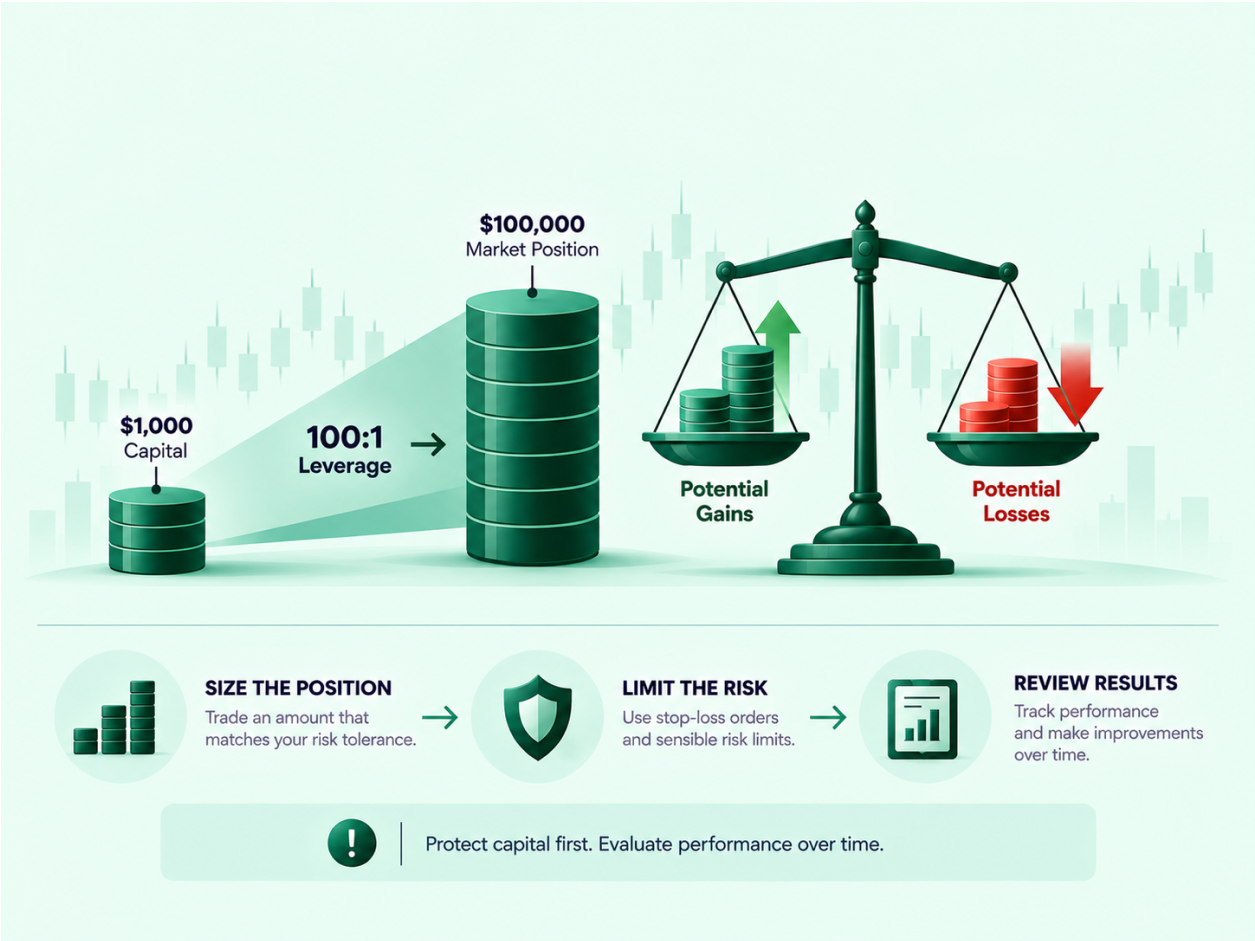
Leverage is fundamental to Forex trading, allowing traders to control large positions with a relatively small amount of capital. Since currency pairs typically move in tiny increments (pips), leverage is essential to magnify potential gains. For instance, a 50:1 leverage means a trader can control $50,000 worth of currency with just $1,000 of their own capital.
- Magnified Gains: If a trader uses 50:1 leverage on a $1,000 account and makes a 1% favorable move on a $50,000 position, their profit is $500, representing a 50% return on their initial capital.
- Magnified Losses: Conversely, a 1% unfavorable move on the same leveraged position would result in a $500 loss, wiping out half of the initial capital.
Excessive leverage is arguably the single biggest risk factor in retail Forex trading. While it offers the potential for significant returns, it equally magnifies losses, often leading to rapid account depletion. Regulators in various jurisdictions impose limits on available leverage precisely to protect retail traders from this inherent risk.
Risk Management: Preserving Capital
Effective risk management is paramount. Professional traders prioritize capital preservation, keeping losses small and offsetting them with larger gains. Retail traders, unfortunately, often do the opposite: taking small profits but holding onto losing trades for too long, incurring substantial losses.
Key risk management principles include:
- Risk per Trade: Never risk more than a small percentage (e.g., 0.5% to 2%) of your total trading capital on any single trade. If you have a $5,000 account and risk 1% per trade, your maximum loss on any single trade is $50.
- Stop-Loss Orders: Always use stop-loss orders to automatically close a position if the market moves against you to a predetermined level. This limits potential losses. However, in highly volatile or illiquid markets, stop-losses may experience slippage, executing at a less favorable price than intended.
- Position Sizing: Adjust your position size based on your risk per trade and the distance to your stop-loss. For example, if your maximum risk is $50 and your stop-loss is 5 pips away, you can trade up to 1 standard lot (where 1 pip movement is $10).
Trading Strategy and Edge
A consistently profitable trading strategy is built upon a combination of:
- Win Rate: The percentage of trades that are profitable.
- Reward-to-Risk Ratio: The average profit on winning trades compared to the average loss on losing trades. A 2:1 ratio means you aim to make twice as much on winners as you lose on losers.
- Number of Trades: The frequency of trading opportunities your strategy generates.
Consider a trader with a $10,000 account who risks 1% ($100) per trade.
- Scenario 1 (Balanced): 60 trades per month, 50% win rate, 2:1 reward-to-risk.
- Winning trades: (30 trades * $200 profit) = $6,000
- Losing trades: (30 trades * $100 loss) = $3,000
- Gross Profit: $3,000 (30% monthly return)
- Scenario 2 (High Win Rate): 60 trades per month, 60% win rate, 1.5:1 reward-to-risk.
- Winning trades: (36 trades * $150 profit) = $5,400
- Losing trades: (24 trades * $100 loss) = $2,400
- Gross Profit: $3,000 (30% monthly return)
These scenarios illustrate theoretical possibilities but underscore that achieving such returns consistently is exceptionally difficult. Most traders struggle to maintain these statistics over time due to psychological factors and changing market conditions.
Commissions and Spreads
The cost of trading directly impacts net profitability. Brokers typically charge commissions per trade (especially with ECN accounts offering tighter spreads) or build their profit into wider bid-ask spreads. LQH Markets offers both commission-free accounts (such as Standard, Pro, and Zero Commission accounts) and Raw Spread accounts with commissions.
For a day trader making 60 round-trip trades a month (120 transactions), even a low commission of $1 per standard lot can accumulate. If a trader in Scenario 1 above (30% gross profit) trades 1 standard lot per trade on a Raw Spread account, their monthly commission would be $360 (120 transactions * $3/lot). This reduces their net profit from $3,000 to $2,640. With higher commission rates or wider spreads, these costs can significantly erode profits, sometimes even turning a gross profit into a net loss.
The “Process Over Profit” Philosophy
A fundamental shift in mindset is required for long-term success: prioritizing the trading process over immediate monetary goals. Focusing solely on how much money can be made each month often leads to overtrading, excessive leverage, and emotional decisions – all precursors to account depletion.
Think of a master craftsman: their focus is on the precision of their tools, the quality of their materials, and the meticulous execution of each step. The beautiful, valuable end product is a byproduct of this unwavering commitment to process. Similarly, a successful Forex trader focuses on:
- Discipline: Adhering strictly to a pre-defined trading plan.
- Patience: Waiting for high-quality setups that align with their strategy.
- Risk Management: Consistently applying stop-losses and appropriate position sizing.
- Continuous Learning: Adapting to market changes and refining their strategy.
By mastering these elements, consistent profits become a natural consequence, rather than an elusive target.
Setting Realistic Profit Targets
Forget promises of 10%, 20%, or 30% monthly returns. While such gains might occur in exceptional months, they are generally unsustainable and indicative of excessive risk-taking. For experienced, disciplined retail traders, a conservative monthly return of 2% to 5% is often considered a reasonable and sustainable target.
This might seem modest, but the power of compounding over time is immense. A consistent 3% monthly return on a $10,000 account, reinvesting profits, could grow significantly over several years. The goal is not to “knock it out of the park” every month, but to consistently grow capital while preserving it. If a trader aims for 5% and achieves 40%, it often signals that they took on too much risk, which is not a sustainable habit.
The Long-Term Journey: Lessons in Patience and Compounding
The Daily Price Action source stresses that “The business of trading is a marathon, not a sprint.” It’s a slow, incremental process demanding immense discipline. While the allure of quick riches is strong, true wealth in Forex is accumulated over years, not months. Many successful traders, who eventually built substantial capital, started with relatively modest sums. Their success wasn’t due to aggressive, high-risk strategies yielding instant gratification, but rather a relentless focus on consistent execution, stringent risk management, and the powerful effect of compounding small, sustainable gains over extended periods. This long-term perspective reinforces the “process over profit” mindset, where patience and adherence to a well-defined strategy are far more valuable than chasing fleeting, high-percentage monthly returns. It’s about building a robust trading habit that allows capital to grow steadily, understanding that significant wealth accumulation is a byproduct of sustained effort and disciplined compounding.
Major Hurdles to Consistent Profitability
Even with a sound process, traders face numerous challenges:
Unexpected Market Events
Sudden, high-impact events can trigger extreme volatility, leading to massive losses. Examples include:
- Swiss National Bank (SNB) De-pegging (2015): The SNB’s surprise removal of the Swiss franc’s cap against the euro caused the franc to soar by over 40% in minutes, inflicting hundreds of millions in losses and rendering some brokers insolvent.
- “Flash Crashes”: Sudden, unexplained drops in currency values (e.g., the British Pound flash crash in 2016) can trigger stop-losses at severely unfavorable prices due to liquidity drying up.
Information Asymmetry
Large institutional players (banks, hedge funds) have a significant information edge. They possess access to real-time commercial forex flows, proprietary data, and sometimes even covert government intervention signals that are simply unavailable to retail traders. This creates an uneven playing field.
A prime example of this institutional advantage is George Soros’s famous 1992 trade against the British Pound, often referred to as “Black Wednesday.” Soros’s Quantum Fund famously shorted over $10 billion worth of sterling, forcing the Bank of England to withdraw the pound from the European Exchange Rate Mechanism (ERM) and devalue it. This single trade reportedly netted Soros over $1 billion (some sources say $2 billion). Such a monumental profit was not merely due to superior analysis but also the immense capital deployed, the ability to influence market sentiment, and access to a level of market intelligence and political insight fundamentally inaccessible to individual retail traders. This illustrates the vast difference in scale and resources between institutional behemoths and the average individual trader, highlighting the inherent information asymmetry.
Market Manipulation and Fraud
The decentralized nature of the Forex OTC market makes it susceptible to manipulation.
This decentralized structure means that trades are executed directly between two parties (e.g., a retail trader and their broker) without the guarantee of a central clearing organization, unlike regulated exchanges for stocks or futures. This introduces counterparty risk, meaning there’s a risk that the other party to the trade might not fulfill their obligations. While reputable, regulated brokers mitigate much of this risk, the absence of a central guarantor means retail traders are more exposed to the solvency and integrity of their chosen broker.
Historically, some major banks have been fined for colluding to manipulate exchange rates. Strategies like “stop-loss hunting,” where large organizations coordinate price movements to trigger retail stop-loss orders, can create cascading selling and profit for manipulators.
This strategy involves large, well-capitalized entities identifying clusters of retail stop-loss orders, often visible through their brokers’ aggregated data. They then execute large trades to push the price to these specific levels. Once triggered, these stop-loss orders become market orders, creating a cascade of selling (or buying) pressure that further moves the price in the manipulators’ favor, allowing them to profit from the subsequent price reversal or continued momentum.
Cases of outright fraud, where trading platforms disappear with investor funds, also occur.
Platform or System Malfunctions
Technical issues can severely impact a trader. Imagine being unable to close a highly leveraged position due to:
- A power outage or internet failure.
- A trading platform crash.
- Account freezing due to security protocols.
Such malfunctions can lead to significant, uncontrollable losses.
Psychological Pitfalls
Beyond technical and market challenges, a trader’s own psychology is often the biggest hurdle:
- Greed: Chasing unrealistic profits, leading to overleveraging and overtrading.
- Fear: Exiting profitable trades too early or holding onto losing trades too long.
- Lack of Discipline: Deviating from the trading plan, taking impulsive trades, or failing to use stop-losses.
Strategies for Enhancing Profitability and Minimizing Loss
To navigate the Forex market with realistic expectations and a higher chance of success:
- Start Small, Scale Gradually: Begin with a modest account and minimal leverage. Only increase position size and risk per trade as you demonstrate consistent profitability over an extended period.
- Limit Leverage: Use leverage conservatively. While some jurisdictions allow very high leverage, opting for lower ratios significantly reduces the risk of rapid account depletion.
- Develop a Robust Trading Plan: This plan should detail your strategy, entry/exit rules, risk management parameters (stop-loss, take-profit, position sizing), and psychological guidelines. Stick to it rigorously.
- Continuous Education: The market is constantly evolving. Stay informed about economic indicators, geopolitical events, and technical analysis techniques.
- Utilize Reputable Brokers: Choose a broker that is well-regulated, transparent with its fees and spreads, and offers reliable technology and customer support.
- Avoid High-Impact News Trading: Unless you have a specific, tested strategy for news events, it’s generally safer to close leveraged positions a few minutes before major economic announcements to avoid extreme volatility and slippage.
- Focus on Long-Term Consistency: Embrace the idea that trading is a long-term endeavor. Celebrate small, consistent gains and learn from every trade, win or lose.
In conclusion, while the Forex market offers immense potential, it demands a realistic understanding of profitability, rigorous risk management, and an unwavering commitment to a disciplined trading process. By focusing on these fundamentals, retail traders can build a sustainable approach to navigating this challenging yet rewarding financial landscape.
Frequently Asked Questions
Is it possible to get rich quickly trading Forex?
No, it is highly improbable for retail traders to get rich quickly through Forex trading. While the market offers significant profit potential, it is a long-term endeavor that requires immense discipline, consistent learning, and robust risk management, making rapid wealth accumulation an unrealistic expectation for most.
What is a realistic monthly profit expectation for a retail Forex trader?
For experienced and disciplined retail Forex traders, a realistic and sustainable monthly profit expectation is typically in the range of 2% to 5% of their trading capital. Aggressive targets often lead to excessive risk-taking and are generally unsustainable over the long term.
How does leverage impact Forex profitability?
Leverage significantly impacts Forex profitability by allowing traders to control larger positions with less capital, thereby magnifying both potential gains and potential losses. While it can enhance profits, excessive leverage is the primary reason for rapid account depletion among retail traders due to magnified losses.
Why is “process over profit” important in Forex trading?
Focusing on “process over profit” is crucial because it shifts a trader’s attention from immediate monetary outcomes to the disciplined execution of their trading plan, risk management, and continuous learning. This approach fosters consistent habits that, over time, lead to sustainable profitability as a byproduct of sound trading practices.
Knowledge Check
1. Which of the following best describes the role of leverage in Forex trading?
- A) It guarantees higher profits by increasing trade volume without additional risk.
- B) It allows traders to control larger positions with less capital, magnifying both potential gains and losses.
- C) It is a tool primarily used by institutional traders to minimize market volatility.
- D) It eliminates the need for stop-loss orders by providing a capital buffer.
2. What is generally considered a realistic and sustainable monthly profit expectation for an experienced retail Forex trader?
- A) 20% to 30%
- B) 50% or more
- C) 2% to 5%
- D) Any amount, as long as it’s positive
3. The “process over profit” philosophy in Forex trading emphasizes:
- A) Prioritizing immediate high returns over long-term strategy.
- B) Focusing on the disciplined execution of a trading plan and risk management.
- C) Relying on market manipulation to secure large gains.
- D) Trading as frequently as possible to maximize opportunities.
Click to view the answers
1. **B) It allows traders to control larger positions with less capital, magnifying both potential gains and losses.** – Leverage is a double-edged sword, amplifying both positive and negative market movements relative to a trader’s capital.
2. **C) 2% to 5%** – For experienced, disciplined retail traders, a conservative monthly return of 2% to 5% is considered a realistic and sustainable target.
3. **B) Focusing on the disciplined execution of a trading plan and risk management.** – This philosophy stresses that consistent profits are a byproduct of rigorous adherence to a sound trading process, rather than the primary goal.