


Crude oil, often dubbed “black gold” or “the mother of all commodities,” is an indispensable resource powering global industries, transportation, and countless products from plastics to pharmaceuticals. Its profound impact on the world economy makes it the most actively traded commodity, subject to constant price fluctuations that create significant opportunities for traders.
Oil CFDs (Contracts for Difference) allow traders to speculate on the rising or falling price of crude oil without owning the underlying physical asset. This derivative instrument provides flexibility, leverage, and access to speculate on the dynamic global energy market, with LQH Markets acting as your direct counterparty for all trades executed over-the-counter (OTC).
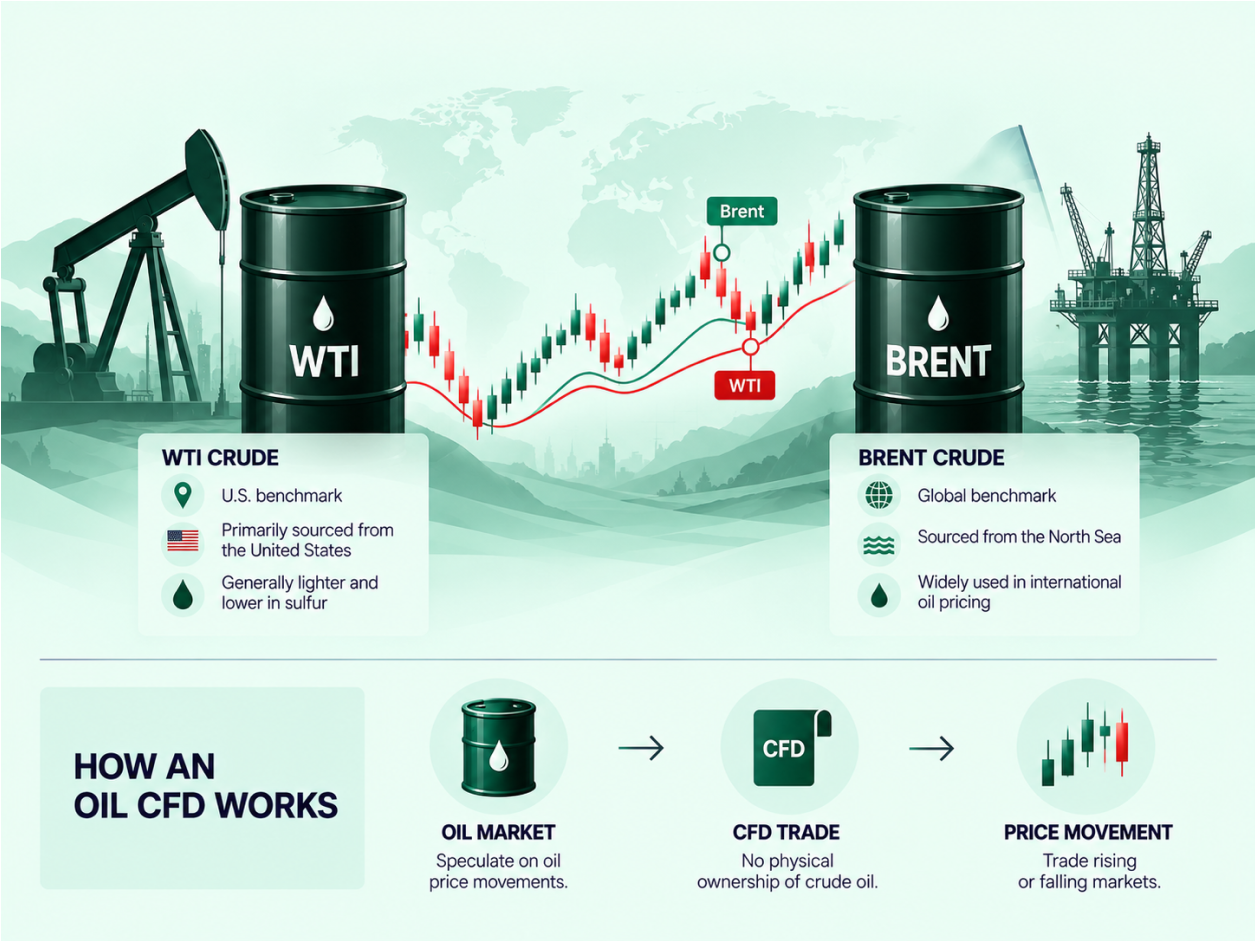
This comprehensive guide will delve into the intricacies of trading oil CFDs, focusing on the two primary global benchmarks: West Texas Intermediate (WTI) and Brent Crude. We will explore what drives their prices, effective trading strategies, and essential risk management techniques to navigate this volatile market confidently.
Understanding the Main Types of Crude Oil
While hundreds of crude oil types exist, two benchmarks dominate global trading, influencing pricing for most oil contracts worldwide. Understanding their characteristics and market relevance is crucial for any oil CFD trader.
West Texas Intermediate (WTI) Crude Oil
WTI is a high-quality, “light sweet crude oil” primarily sourced from U.S. oil fields, notably in Texas, Louisiana, and North Dakota. Its “light” designation refers to its low density, making it easier and less expensive to refine into gasoline and diesel. “Sweet” indicates its low sulfur content, which is desirable for processing. WTI serves as the main benchmark for oil consumed in the United States and is predominantly traded on the New York Mercantile Exchange (NYMEX).
Brent Crude Oil
Brent Crude originates from approximately 15 oil fields in the North Sea. It is also classified as a “light sweet” crude, though it is marginally heavier and has a slightly higher sulfur content than WTI. Brent is the leading international pricing benchmark, with up to two-thirds of global oil contracts referencing its price. Its widespread adoption makes it a critical indicator for European, African, and Middle Eastern oil markets.
Key Differences and Price Spreads
Historically, the price spread between WTI and Brent was narrow. However, divergences have occurred due to shifts in regional supply and demand, infrastructure bottlenecks (like those at Cushing, Oklahoma, a major WTI storage hub), and geopolitical factors. For instance, increased U.S. shale oil production, coupled with past export restrictions, could sometimes depress WTI prices relative to Brent. Traders often monitor this spread, as it can present arbitrage opportunities or signal underlying market imbalances.
Why Trade Oil CFDs?
Trading oil via Contracts for Difference offers several distinct advantages, making it a popular choice for retail and institutional traders alike.
Leverage Opportunities
CFDs are leveraged products, meaning you can control a larger position in the market with a relatively small initial deposit, known as margin. For example, a 1:20 leverage allows you to open a position worth $1,000 with just $50 of your capital. This can significantly amplify potential profits from even small price movements. However, it’s crucial to remember that leverage also magnifies potential losses, making robust risk management indispensable.
Profit from Rising or Falling Markets
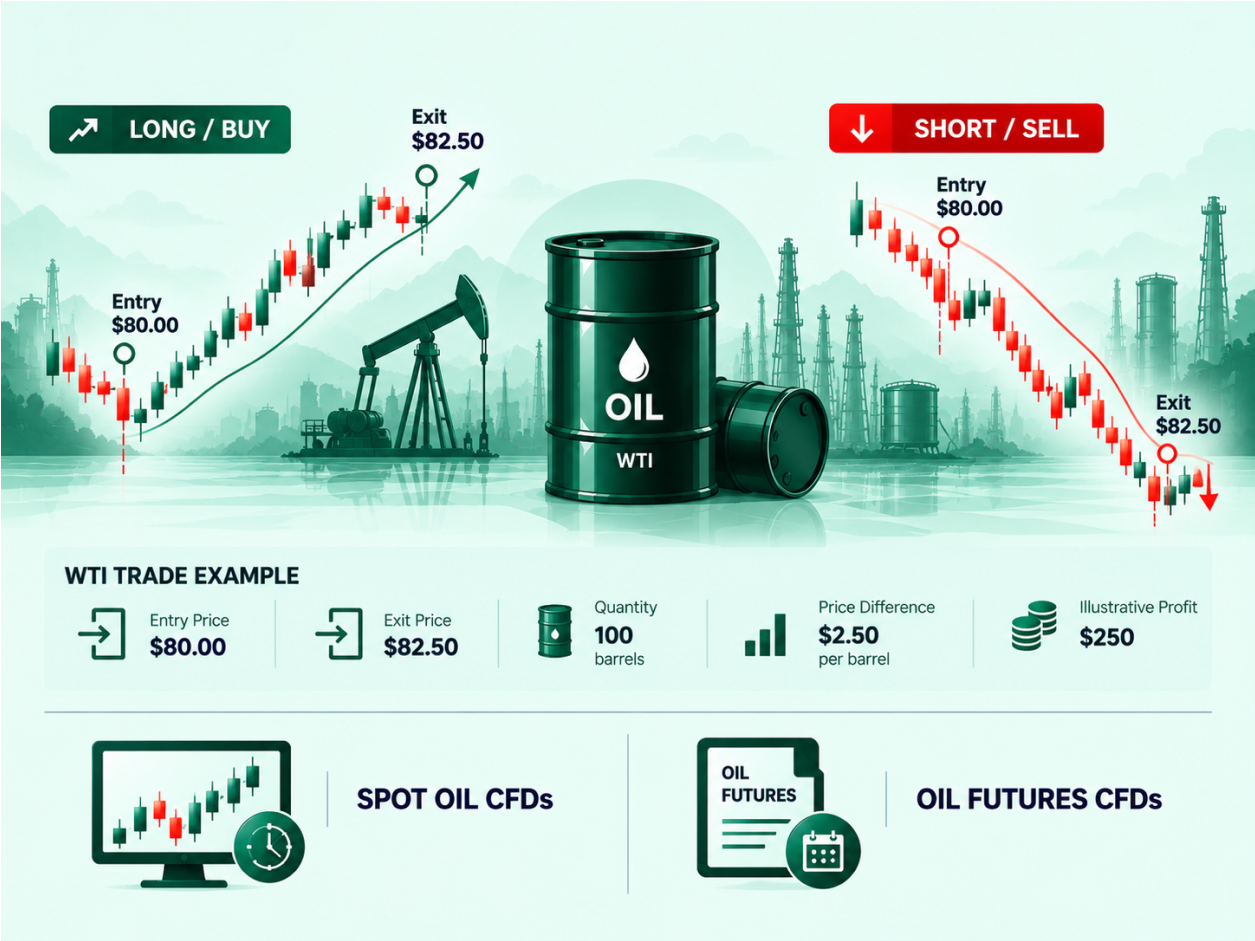
One of the most compelling features of CFDs is the ability to go both long (buy) and short (sell). If you anticipate oil prices will rise, you can open a buy position. Conversely, if you expect prices to fall, you can open a sell position. This flexibility allows traders to seek profit opportunities in virtually any market condition, whether bullish or bearish.
No Physical Ownership or Storage Hassles
Unlike traditional oil futures or physical oil, CFDs do not involve the actual purchase, delivery, or storage of crude oil barrels. This eliminates the complex logistics, transportation costs, and storage fees associated with the physical commodity, simplifying the trading process significantly.
High Liquidity and Volatility
Oil is one of the most liquid commodities globally, ensuring that traders can typically enter and exit positions quickly, though slippage can occur in fast-moving markets. This liquidity, combined with oil’s inherent volatility—driven by a myriad of global factors—creates frequent and substantial price swings, offering numerous trading opportunities for those who can effectively analyze market dynamics.
Portfolio Diversification
Adding oil CFDs to a trading portfolio can provide diversification. Oil prices often react differently to economic and geopolitical events compared to traditional assets like stocks or currencies. This can help balance overall portfolio risk and potentially enhance returns during specific market cycles.
Key Drivers of Oil Prices
Oil prices are notoriously volatile, influenced by a complex interplay of supply, demand, and geopolitical factors. Understanding these drivers is paramount for making informed trading decisions.
1. Supply and Demand Dynamics
This is the most fundamental driver. When global oil supply outpaces demand, prices tend to fall. Conversely, when demand exceeds supply, prices typically rise.
- OPEC+ Decisions: The Organization of the Petroleum Exporting Countries and its allies (OPEC+) collectively control a significant portion of global oil production. Their decisions on production quotas can dramatically impact supply and, consequently, prices. Traders closely monitor OPEC+ meetings and announcements.
- U.S. Production: The United States is the world’s largest oil producer. Changes in U.S. shale output, driven by technological advancements and drilling activity, can significantly affect global supply balances.
- Inventory Data: Weekly reports from entities like the U.S. Energy Information Administration (EIA) and the American Petroleum Institute (API) detail crude oil inventories. Rising inventories often signal weak demand or oversupply, putting downward pressure on prices, while falling inventories suggest tighter supply.
2. Geopolitical Events
Given that much of the world’s oil comes from politically sensitive regions, geopolitical tensions, conflicts, sanctions, or civil unrest can lead to supply disruptions and sharp price spikes. For example, escalating tensions in the Middle East or disruptions to shipping lanes can send crude prices surging almost instantly.
3. Global Economic Health
The health of the global economy directly correlates with oil demand. Robust economic growth, particularly in industrial sectors and emerging markets, increases energy consumption and boosts oil demand. Conversely, economic slowdowns or recessions reduce industrial activity and transportation, leading to decreased demand and downward pressure on prices.
- U.S. Dollar Strength: As oil is primarily priced in U.S. dollars, a stronger dollar makes oil more expensive for countries using other currencies, potentially dampening demand and putting downward pressure on prices. A weaker dollar can have the opposite effect.
4. Market Sentiment and Speculation
Trader sentiment, often fueled by news headlines, economic forecasts, and technical analysis, plays a significant role in short-term price movements. During periods of high confidence (“risk-on”), traders may bid up oil prices based on expectations of future demand. In times of uncertainty (“risk-off”), they might sell oil and move towards safe-haven assets. Speculative trading activities, particularly in futures markets, can also amplify price trends.
5. Technological Advancements and Alternative Fuels
Developments in extraction technologies, such as hydraulic fracturing, can increase supply efficiency. Conversely, advancements in renewable energy sources and electric vehicles can gradually reduce long-term demand for crude oil, influencing future price expectations.
Trading Oil CFDs: Spot vs. Futures
When trading oil CFDs, you typically have two main options: spot CFDs or futures CFDs. Each has distinct characteristics suited for different trading styles.
Spot Oil CFDs (Undated/Cash)
Spot oil CFDs track the current, real-time market price of crude oil. They are often preferred by day traders and those looking for short-term opportunities due to their generally tighter spreads. However, holding spot CFD positions overnight usually incurs “swap” or overnight financing charges, which can accumulate over longer periods.
Oil Futures CFDs
Oil futures CFDs are based on underlying futures contracts, which are agreements to buy or sell a specified quantity of oil at a predetermined price on a future date. However, futures CFDs usually have wider spreads compared to spot CFDs, and their prices can be influenced by factors like contango and backwardation (where future prices are higher or lower than the spot price, respectively).
Practical Oil CFD Trading Strategies
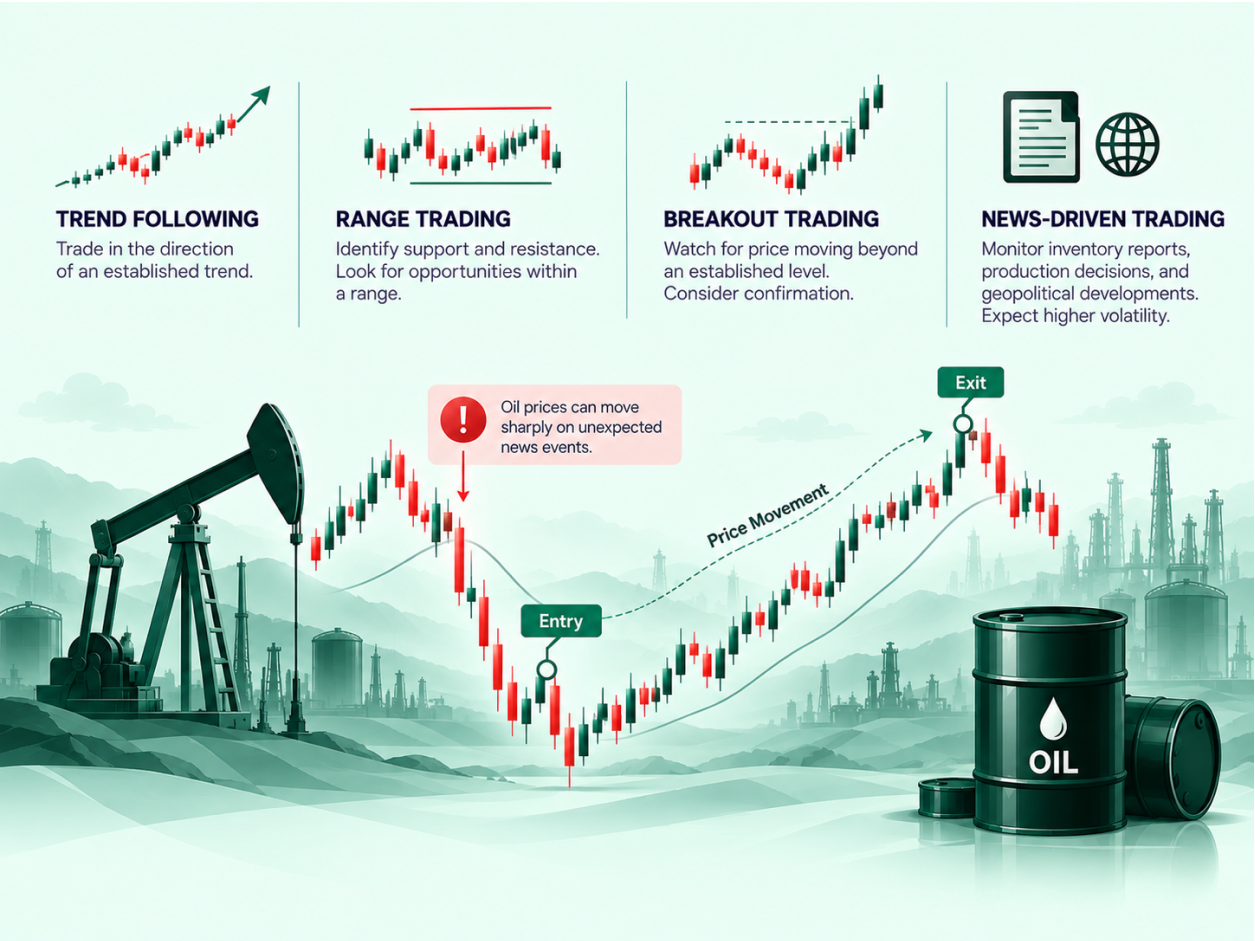
Navigating the oil market requires a structured approach. Here are several beginner-friendly strategies that can be adapted for oil CFDs:
1. Trend Following
Oil prices frequently exhibit strong, sustained trends driven by significant shifts in supply, demand, or geopolitics. Trend followers aim to identify and ride these movements.
- Approach: Use technical indicators like moving averages (e.g., 50-period and 200-period moving averages) or the Moving Average Convergence Divergence (MACD) to confirm the direction and strength of a trend.
- Example: If Brent Crude’s 50-period moving average crosses above its 200-period moving average, signaling a bullish trend, a trader might enter a long CFD position. They would hold the position as long as the trend remains intact, using a trailing stop-loss to protect profits.
2. Range Trading
When oil prices consolidate, they often trade within a defined range, bouncing between clear support and resistance levels. Range traders capitalize on these predictable oscillations.
- Approach: Identify horizontal support (price floor) and resistance (price ceiling) levels.
- Example: If WTI has consistently traded between $78 (support) and $82 (resistance) per barrel, a range trader might buy a CFD position when the price approaches $78, setting a stop-loss just below support and targeting a profit near $82. They would then consider selling short near resistance.
3. Breakout Trading
Breakout strategies involve entering a trade when oil prices move decisively beyond a established support or resistance level, signaling the potential start of a new trend. These breakouts are often triggered by significant news events.
- Approach: Monitor key price levels and look for increased volume accompanying a breach.
- Example: Suppose Brent Crude has been consolidating below $85. If a bullish EIA inventory report is released, and the price surges above $85 with strong momentum, a breakout trader might enter a long CFD position, anticipating further upside movement.
4. News-Driven Trading
Oil prices react instantly and often dramatically to major geopolitical developments, economic data releases, or OPEC+ announcements. News traders aim to capitalize on these immediate reactions.
- Approach: Stay constantly updated with global headlines, economic calendars, and scheduled reports. Quick execution is critical.
- Example: A sudden, unexpected escalation of conflict in a major oil-producing region could send WTI prices soaring. A news trader, upon seeing the headline, would quickly assess the potential impact and consider opening a long CFD position to capture the initial surge.
Essential Risk Management for Oil CFDs
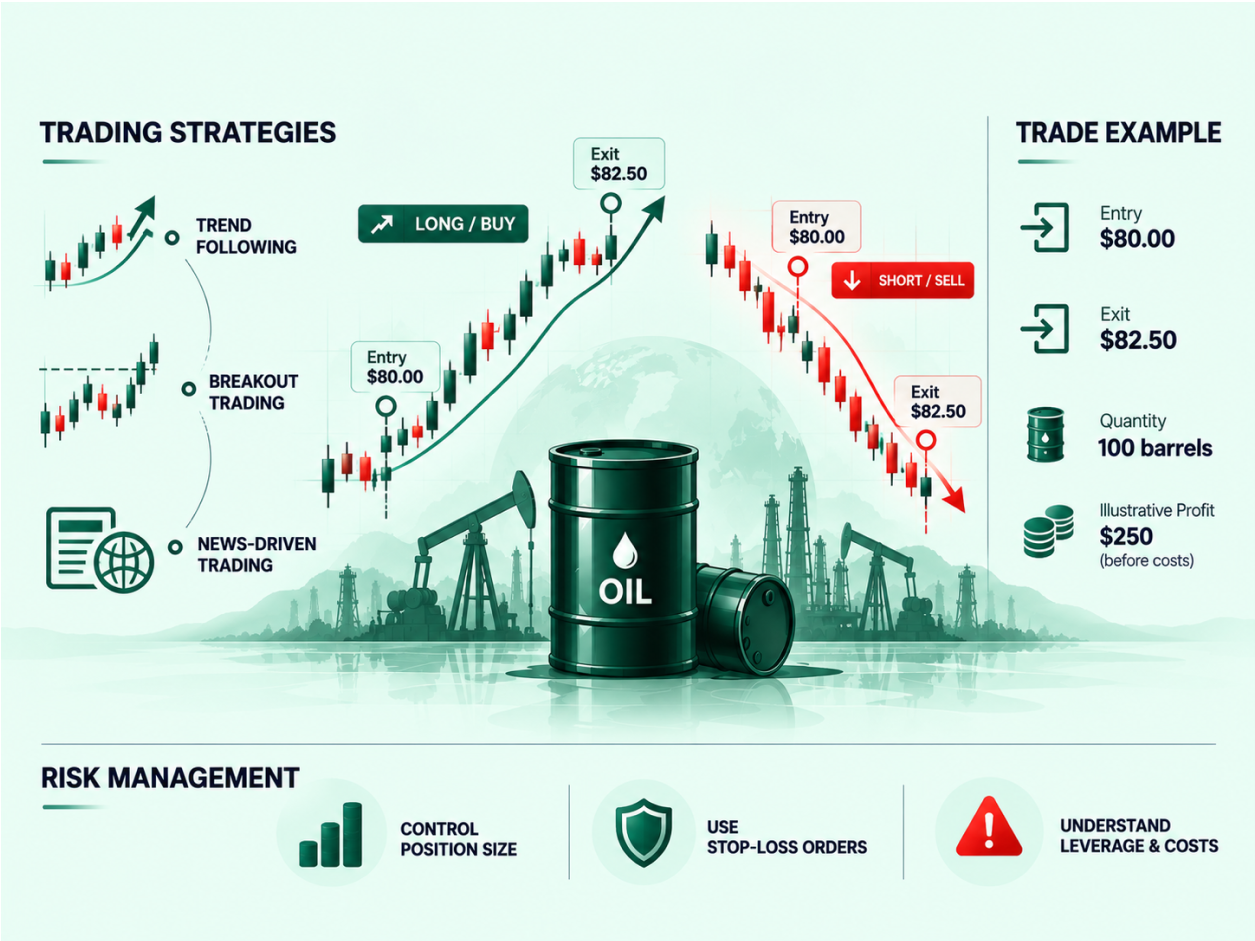
Given oil’s inherent volatility and the magnifying effect of leverage, robust risk management is not just advisable—it’s absolutely essential.
1. Utilize Stop-Loss and Take-Profit Orders
Always define your exit points before entering a trade.
- Stop-Loss Orders: Automatically close your position if the market moves against you by a predetermined amount, limiting potential losses.
- Take-Profit Orders: Automatically close your position once it reaches a specified profit target, helping you lock in gains.
2. Control Your Position Size
Never risk more capital than you can comfortably afford to lose on a single trade. A common guideline is to risk only 1-2% of your total trading capital per position. This prevents a single adverse move from significantly depleting your account.
3. Understand Leverage
While leverage can amplify profits, it equally amplifies losses. Be mindful of your margin requirements and ensure you have sufficient funds in your account to cover potential drawdowns, avoiding margin calls.
4. Monitor Overnight Costs (Swaps)
If trading spot oil CFDs, be aware of the daily swap charges. These costs can accumulate, especially for positions held over several days or weeks, and should be factored into your overall trading plan.
5. Be Aware of Volatility Spikes
Anticipate periods of heightened volatility, such as around major economic data releases, OPEC+ meetings, or significant geopolitical events. Consider reducing your position size or even temporarily stepping aside during these times to mitigate risk.
Conclusion
Trading oil CFDs offers a dynamic and potentially rewarding avenue for speculating on one of the world’s most critical commodities. By understanding the distinct characteristics of WTI and Brent crude, recognizing the powerful forces that drive their prices, and employing disciplined trading strategies coupled with stringent risk management, traders can position themselves to navigate this exciting market effectively. Always prioritize continuous learning and practice to refine your skills in this ever-evolving landscape.
Frequently Asked Questions
What are the primary types of crude oil traded as CFDs?
The two primary types of crude oil traded as CFDs are West Texas Intermediate (WTI) and Brent Crude. WTI is a U.S. benchmark, while Brent Crude serves as the leading international benchmark, each with distinct characteristics and geographical pricing influences.
How does leverage work with oil CFDs?
Leverage in oil CFDs allows traders to control a larger market position with a smaller initial capital outlay (margin). While it can amplify potential profits from price movements, it’s crucial to understand that leverage also magnifies potential losses.
What are the main factors influencing oil prices?
Oil prices are primarily influenced by global supply and demand dynamics (including OPEC+ decisions and inventory reports), geopolitical events, the health of the global economy (and the strength of the U.S. dollar), and overall market sentiment.
What are some common strategies for trading oil CFDs?
Common strategies include trend following (identifying and riding sustained price movements), range trading (buying at support and selling at resistance within a defined price channel), breakout trading (entering positions when prices breach key levels), and news-driven trading (reacting to significant geopolitical or economic announcements).
Why is risk management crucial when trading oil CFDs?
Risk management is crucial because oil is a highly volatile asset, and CFDs are leveraged instruments. Without proper risk management tools like stop-loss orders and appropriate position sizing, rapid price swings can lead to significant and potentially magnified losses.
Knowledge Check
1. Which of the following is a key characteristic of West Texas Intermediate (WTI) crude oil?
- A) It is primarily sourced from North Sea oil fields.
- B) It is known for its high sulfur content, making it “sour” crude.
- C) It is a “light sweet crude oil” with low density and low sulfur content.
- D) It serves as the main international pricing benchmark for two-thirds of global oil contracts.
2. What is a primary benefit of trading oil CFDs compared to owning physical oil?
- A) CFDs guarantee profits due to leverage.
- B) CFDs eliminate the need for physical storage and delivery logistics.
- C) CFDs allow you to directly influence global oil supply.
- D) CFDs are not affected by global economic conditions.
3. Which factor would most likely lead to an increase in crude oil prices?
- A) A significant increase in global oil inventories.
- B) An unexpected increase in OPEC+ production quotas.
- C) A major economic recession leading to decreased industrial activity.
- D) Escalating geopolitical tensions in a major oil-producing region.
Click to view the answers
1. **C) It is a “light sweet crude oil” with low density and low sulfur content.** – WTI is characterized by its low density and low sulfur, making it easy to refine.
2. **B) CFDs eliminate the need for physical storage and delivery logistics.** – Trading oil CFDs allows speculation on price without the complexities and costs of physical ownership.
3. **D) Escalating geopolitical tensions in a major oil-producing region.** – Geopolitical instability in oil-rich areas often leads to supply disruptions and pushes crude oil prices higher.