


Trading in financial markets inherently involves risk, especially with leveraged products like Contracts for Difference (CFDs). To navigate this landscape effectively, traders of all experience levels can benefit immensely from a powerful educational tool: the trading simulator, often provided as a demo account.
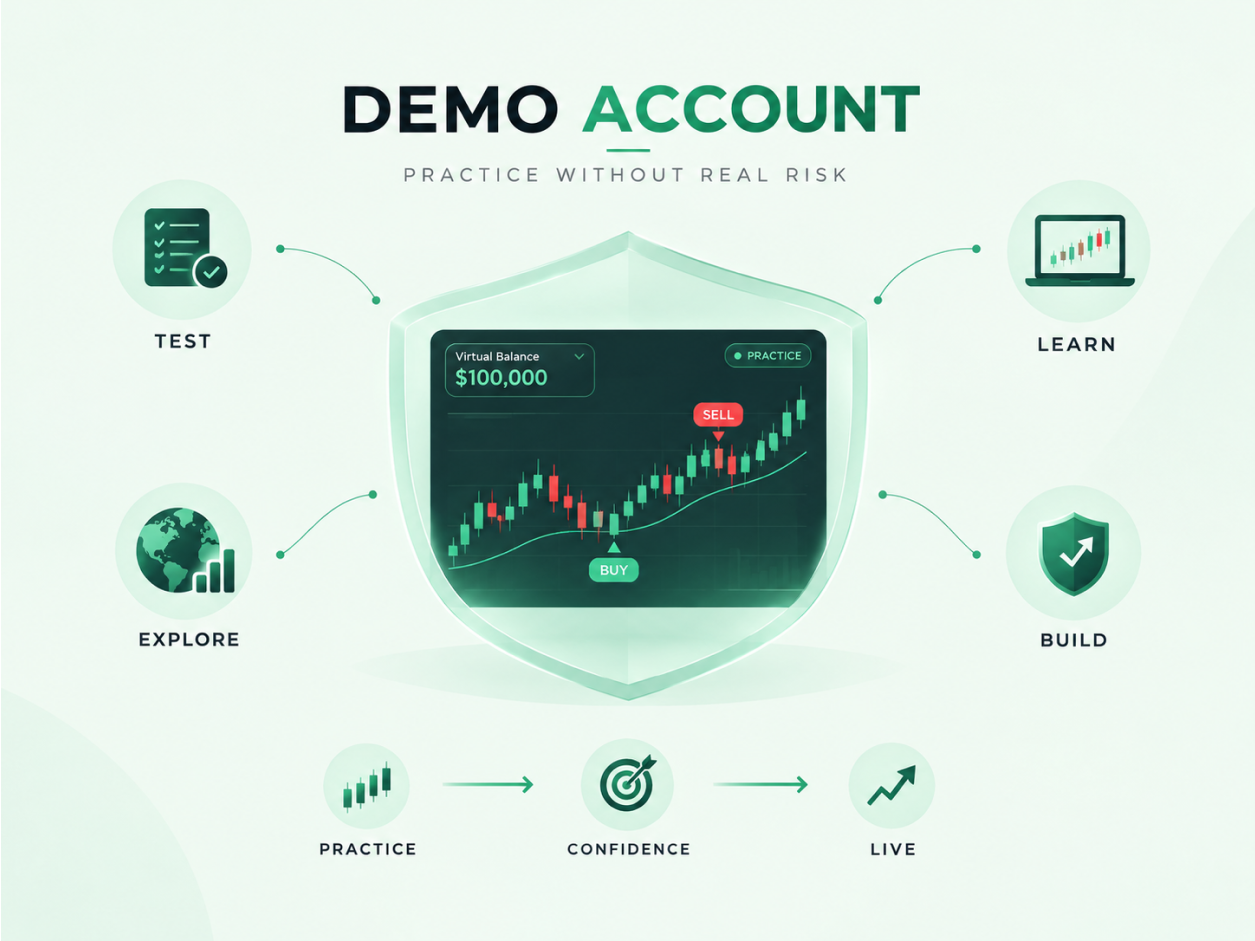
A trading simulator, or virtual trading account, provides a virtual environment where users can practice trading financial instruments using simulated funds without risking real capital. It replicates live market conditions, allowing traders to test strategies, learn platform functionality, and build confidence.
This comprehensive guide will delve into the critical role of demo accounts in CFD trading, exploring their functionalities, benefits, and how to leverage them to sharpen your trading acumen before engaging with real capital.
The Indispensable Role of a Demo Account
Think of a demo trading account as your personal financial laboratory. Just as scientists conduct experiments in a controlled setting, traders can test hypotheses, refine techniques, and research markets in a risk-free environment. This is particularly vital for CFDs, where leverage can amplify both gains and losses.
Why Use a Demo Account for CFD Trading?
Regardless of your experience level, a demo account offers tailored benefits:
- For Beginners: If you’re new to the world of trading, a demo account is your foundational classroom. It allows you to grasp fundamental concepts like bid/ask spreads, margin requirements, and order types (market, limit, stop-loss) without the pressure of financial loss. You can familiarize yourself with the trading platform’s interface, learn to open and close positions, and understand how different financial products behave.
- For Intermediate Traders: Even with some experience, you might want to explore new strategies or expand into unfamiliar markets (e.g., moving from forex to commodities or indices). A demo account provides the perfect sandbox to experiment with new approaches, observe market dynamics in different asset classes, and understand their unique influences and margin requirements.
- For Advanced Traders: Experienced traders can use demo accounts to refine existing strategies, address consistent weaknesses, or test complex trading systems. For instance, if you find certain market conditions consistently challenge your profitability, you can use the demo environment to deliberately practice in those scenarios, taking calculated risks you might avoid in a live account to learn from the outcomes.
Ultimately, a demo account allows you to bridge the gap between theoretical knowledge and practical application, building the confidence and competence necessary for successful live trading.
Key Functionalities of a Robust Demo Platform
A high-quality demo trading platform should mirror its live counterpart as closely as possible, offering a suite of tools essential for effective analysis and execution.
Workspace Customization
Your workspace is your command center. A good demo platform allows you to:
- Access Diverse Instruments: Explore various CFD markets, including forex pairs, stock indices, commodities (like crude oil or gold), cryptocurrencies, and individual shares.
- Arrange Information: Open multiple windows to display charts, watchlists, order tickets, account balances, and news feeds simultaneously.
- Save Layouts: Create and save customized workspaces for different market analyses or trading strategies, ensuring quick access to your preferred setup.
Watchlists
An organized watchlist is crucial for monitoring potential trading opportunities. It enables you to:
- Group Assets: Compile a list of CFDs you are interested in trading, such as EUR/USD, S&P 500, Gold, or specific tech stocks.
- Streamline Monitoring: Quickly access and track the performance of your selected assets without manually searching for them each time you log in.
Advanced Trading Charts
Charts are the visual language of the markets. A comprehensive demo account will offer:
- Multiple Chart Types: Familiarize yourself with line, bar, and candlestick charts, each offering unique insights into price action. Candlestick charts, for example, provide open, high, low, and close prices within a single visual.
- Timeframe Analysis: Analyze price performance across various timeframes, from minute charts for scalping strategies to daily or weekly charts for position trading.
- Technical Indicators: Apply a wide array of technical indicators like Moving Averages, Bollinger Bands, Relative Strength Index (RSI), and MACD to identify trends, momentum, and potential overbought/oversold conditions.
- Drawing Tools: Utilize tools to draw trendlines, support and resistance levels, Fibonacci retracements, and chart patterns, helping you visualize market structure and potential price movements.
- Direct Trading from Charts: Many advanced platforms allow you to open, close, and modify positions directly from the chart interface, enhancing execution efficiency.
Understanding Hedging
Hedging is a risk management technique where you make a trade to offset potential adverse price movements in another asset. In the context of CFDs, you might:
- Offset a Long Position: If you hold a long CFD position on a stock index but anticipate short-term volatility, you could open a short CFD position on a related index or an inverse ETF to mitigate potential losses.
- Currency Risk: For example, if you have a long-term investment in a company whose primary revenue is in Euros, but your base currency is USD, you might open a short EUR/USD CFD position to hedge against a weakening Euro.
Practicing hedging strategies in a demo account allows you to understand their mechanics and impact on your overall portfolio without real financial exposure.
Alerts
Market volatility can create rapid price movements. A valuable functionality in a demo account is the ability to set up customizable alerts. These alerts can notify you of specific price levels being reached, significant percentage changes, or news events related to your monitored assets. Practicing with alerts helps you develop the discipline to react promptly to market opportunities or potential risks, without constantly monitoring charts.
Key Differences Between Demo and Live Accounts
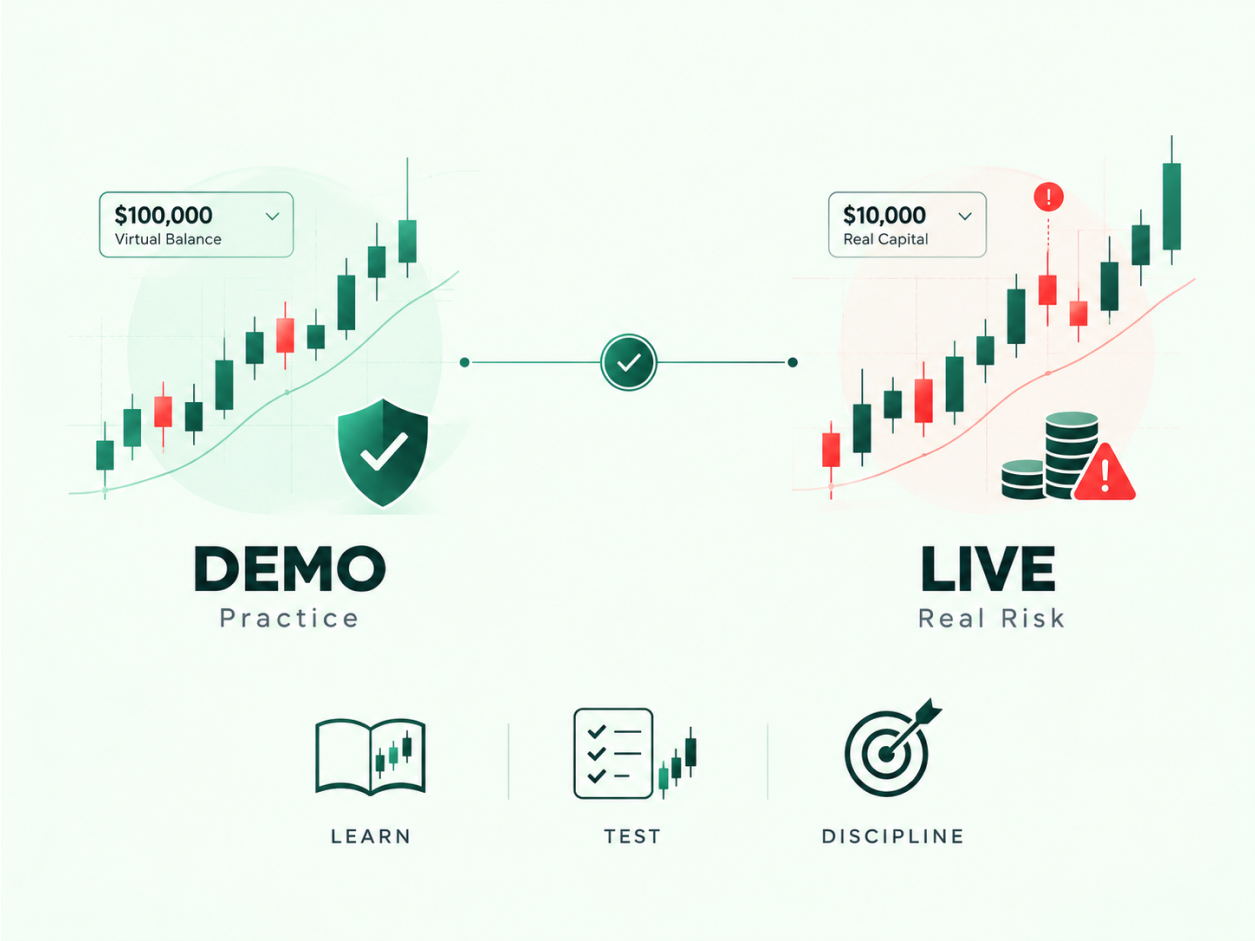
While demo accounts strive for realism, it’s crucial to acknowledge their inherent differences from live trading to avoid developing unrealistic expectations:
- No Real Monetary Risk or Reward: The most obvious difference is the absence of real capital. This can lead to a psychological disconnect, as traders might take risks in a demo account they wouldn’t in a live environment.
- Slippage: In live markets, especially volatile ones, your order might be executed at a slightly different price than intended due to rapid price changes. Demo accounts typically do not simulate slippage as accurately.
- Interest and Dividend Adjustments: Live CFD positions held overnight may incur financing charges (interest) or receive dividend adjustments. These are often not fully replicated in demo environments.
- Out-of-Hours Price Movements: Significant price gaps can occur when markets open after a weekend or holiday. Demo accounts may not always reflect these “gaps” with the same precision as live markets.
- Margin Calls and Order Rejections: In a live account, if your equity falls below the maintenance margin, you could face a real margin call, potentially leading to forced liquidation of positions. Similarly, orders might be rejected due to insufficient funds or a lack of market depth for large orders. However, demo accounts typically do not execute real margin calls, and orders are generally never rejected on the grounds of size or price, only if you have insufficient virtual funds. This can create an unrealistic expectation of seamless execution. Furthermore, demo accounts usually do not charge for chart packages, and any updates to the live trading platform might take time to reflect in the demo environment.
Always be mindful of these distinctions and strive to treat your demo account with the same discipline you would a live account.
Popular Trading Strategies to Practice
A demo account is the ideal place to experiment with various trading strategies to find what aligns with your personality, risk tolerance, and goals.
News Trading Strategy
This strategy involves making trading decisions based on economic news announcements, company reports, or geopolitical events.
- Concept: Markets often react sharply to unexpected news. Traders aim to capitalize on this volatility.
- Example: Ahead of a major central bank interest rate decision, a news trader might analyze consensus forecasts. If the actual announcement deviates significantly, they might quickly open a CFD position on a relevant currency pair (e.g., USD/JPY) expecting a strong directional move. The saying “buy the rumor, sell the news” often applies here, where positions are opened on speculation before the official announcement.
Swing Trading Strategy
Swing trading is a short-to-medium term strategy focused on capturing “swings” in price within a larger trend.
- Concept: Traders aim to profit from price movements lasting a few days to several weeks, cutting losses quickly and letting profits run.
- Trend Trading: This involves identifying the prevailing market direction (uptrend or downtrend) using technical indicators and entering trades in alignment with that trend. For example, a swing trader might identify an uptrend in a stock index CFD using moving averages and enter a long position on a pullback, aiming to ride the next upward swing.
- Breakout Trading: This strategy focuses on entering a position when the price “breaks out” of a defined range (e.g., above a resistance level or below a support level), anticipating a sustained move in the direction of the breakout. A trader might place a buy stop order just above a key resistance level on a commodity CFD, expecting a significant upward move once that barrier is breached.
Position Trading Strategy
Position trading is a longer-term approach where traders hold positions for weeks, months, or even years, largely ignoring minor price fluctuations.
- Concept: This strategy seeks to profit from major long-term trends, often relying heavily on fundamental analysis and broader market sentiment.
- Example: A position trader might analyze the long-term growth prospects of a particular industry, such as renewable energy. Based on this fundamental analysis, they might open a long CFD position on an index composed of renewable energy companies, holding it for several months, aiming to capture a substantial long-term appreciation, even if there are short-term dips. This strategy requires patience and a high tolerance for temporary drawdowns.
Developing Your Trading Plan
Before you even place your first virtual trade, you need a trading plan. This isn’t just for live accounts; it’s crucial for maximizing your demo account experience. Your plan should outline:
- Your Goals: Are you aiming to master a specific indicator, test a new strategy, or simply understand market mechanics?
- Risk Management Rules: Even with virtual money, define your stop-loss and take-profit levels.
- Entry and Exit Criteria: Clearly define the conditions under which you will open and close trades.
- Markets to Focus On: Decide which asset classes you will practice with.
By treating your demo account practice with the discipline of a live trading environment, you lay the groundwork for a more successful and sustainable trading journey.
Frequently Asked Questions
Can I make real money from a demo trading account?
No, demo trading accounts use virtual funds and simulate market conditions. While you can track your virtual profits and losses, these do not translate into real monetary gains or losses. The primary purpose is risk-free learning and practice.
How realistic are demo trading accounts compared to live trading?
Demo accounts aim to replicate live market conditions as closely as possible, including real-time price feeds and platform functionality. However, they typically do not account for factors like slippage, interest/dividend adjustments, or certain order rejection scenarios that occur in live trading, which can impact execution and profitability.
What is the ideal amount of virtual funds to start with in a demo account?
The ideal amount of virtual funds should reflect what you realistically plan to deposit in a live account. If you intend to start with $5,000, request a demo account with a similar virtual balance (e.g., $10,000 or $20,000) to practice managing capital proportional to your future live trading.
How long should I use a demo account before switching to live trading?
There’s no fixed timeframe; it depends on your learning curve and confidence. Most traders use a demo account until they consistently demonstrate profitability, discipline, and a thorough understanding of their chosen strategies and the trading platform, typically ranging from a few weeks to several months.
Knowledge Check
1. What is the primary purpose of a trading simulator or demo account?
- A) To earn real profits without risking personal capital.
- B) To provide a risk-free environment for practicing trading strategies and learning platform functionality.
- C) To guarantee successful trading outcomes in future live accounts.
- D) To allow experienced traders to bypass market analysis.
2. Which of the following is a key difference between a demo account and a live trading account?
- A) Demo accounts always accurately simulate slippage and out-of-hours price movements.
- B) Live accounts use virtual funds, while demo accounts use real money.
- C) Demo accounts typically do not incur real margin calls or accurately reflect interest/dividend adjustments.
- D) Trading charts are only available on live trading platforms.
3. If a trader opens a long CFD position on a stock index but simultaneously opens a short CFD position on a related index to mitigate potential short-term volatility, what risk management technique are they practicing?
- A) Position trading
- B) Breakout trading
- C) Hedging
- D) News trading
Click to view the answers
1. B) – The article emphasizes that demo accounts are for learning and practice without real financial risk.
2. C) – The section “Key Differences Between Demo and Live Accounts” highlights these specific distinctions.
3. C) – The example directly describes the concept of hedging, where one trade is made to offset potential losses in another.